What is efficient production planning?
Efficient production planning is the strategic process of organizing and optimizing all aspects of production in industries such as manufacturing and healthcare. At its core, it involves detailed scheduling of resources, materials, and labor to meet production targets while minimizing costs and waste. In manufacturing, efficient production planning ensures that every stage of the production process is carefully coordinated to meet demand forecasts and production goals. Healthcare, on the other hand, uses production planning to manage patient care processes, staffing, and resource allocation effectively.
Key components of efficient production planning include demand forecasting, capacity planning, and real-time monitoring. By accurately predicting demand, organizations can align their production schedules and resource allocation to match market needs. Capacity planning ensures that the necessary resources are available when needed, thereby avoiding bottlenecks. Real-time monitoring enhances transparency, allowing for quick adjustments in response to unexpected changes.
Efficient production planning is not just about optimizing resources—it’s about creating a flexible system that can adapt to changes in demand and unforeseen disruptions.
What production scheduling is designed to achieve
Production scheduling sits at the operational heart of any planning process. It translates high-level production plans into a concrete sequence of work orders, machine assignments, and time windows — and the quality of that sequencing directly determines production scheduling accuracy, throughput, and service levels.
Effective scheduling pursues several interconnected objectives:
- Resource optimization: Ensuring machines, labor, and materials are utilized as fully as possible without creating overload at any single point.
- Cost minimization: Reducing idle time, overtime, and unnecessary inventory by aligning production volume closely with actual demand.
- On-time order fulfillment: Sequencing work so that customer commitments are met consistently, protecting delivery reliability and customer trust.
- Lead time reduction: Compressing the time from order receipt to shipment by eliminating waiting time between production steps.
- Bottleneck identification: Surfacing constrained work centers before they disrupt the wider schedule, enabling proactive intervention.
- Priority management: Ensuring that high-value or time-critical orders are processed in the right sequence without unnecessarily displacing other work.
Achieving these objectives depends on understanding the factors that shape every scheduling decision:
- Customer demand patterns: Seasonal peaks, promotional spikes, and long-term volume trends all influence how schedules must be structured.
- Available production capacity: The realistic output ceiling of each work center, accounting for planned maintenance and shift patterns.
- Resource and material availability: The confirmed presence of components, tooling, and labor at the moment they are needed.
- Lead times: Both internal processing times and supplier lead times that define the outer boundaries of any feasible schedule.
- Setup times and changeovers: Minimizing changeover time between product runs is one of the highest-leverage scheduling decisions available to a production team. A well-designed sequencing logic groups similar products, reduces cleaning and retooling intervals, and directly cuts idle time between runs. In time-sensitive industries — food production, pharmaceuticals, or any environment where product freshness matters — the order in which products are run is not merely an efficiency question but a quality and compliance one. Advanced planning and scheduling (APS) tools apply rule-based and algorithmic sequencing to make these decisions systematically rather than by intuition.
How does efficient planning improve competitiveness?
Efficient production planning significantly boosts an organization’s competitiveness by enhancing transparency, improving process efficiency, and facilitating change management. Transparency is achieved through real-time data insights that allow managers to make informed decisions and quickly respond to market changes. This level of insight is crucial for maintaining a competitive edge in rapidly changing industries like manufacturing and healthcare.
Process efficiency is another critical benefit—by streamlining operations and eliminating waste, companies can reduce costs and improve delivery times. Efficient change management ensures that any alterations in production plans are smoothly implemented, minimizing disruptions. Organizations that excel in these areas are better positioned to outperform competitors and meet customer expectations consistently.
Best practices for production planning
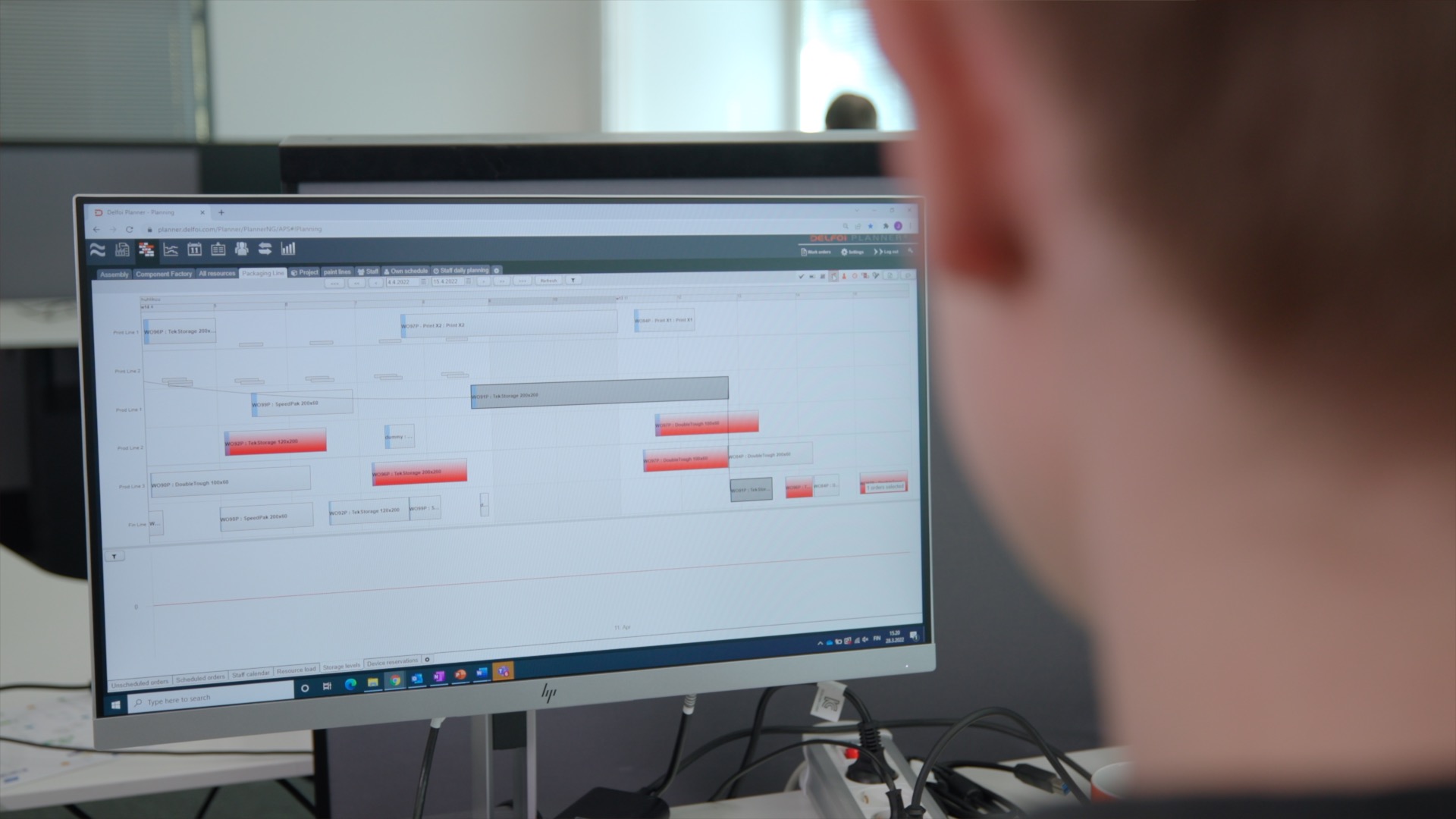
To optimize production planning, organizations should adopt industry best practices such as leveraging advanced planning and scheduling (APS) systems, implementing lean manufacturing principles, and fostering cross-departmental collaboration. APS systems like Delfoi Planner provide a comprehensive framework for managing complex production schedules and real-time adjustments.
Lean manufacturing principles emphasize eliminating waste and maximizing value by optimizing each step of the production process. Fostering collaboration between departments ensures that all parts of the organization are aligned and working towards common goals. This holistic approach to production planning leads to more efficient operations and better resource management.
Common challenges in production planning and solutions
Production planning rarely fails in a single dramatic moment — it erodes through a series of specific, recurring disruptions that compound over time. Recognizing these disruption types is the first step toward meaningful production planning improvement.
Capacity constraints. A single overloaded work center does not create a local delay — it creates a cascade. When one machine or team becomes a bottleneck, downstream operations queue up, lead times inflate across the board, and on-time delivery rates fall. The constraint is often invisible until the schedule has already slipped, because traditional planning tools lack the granularity to surface it in advance. The solution lies in constraint-aware scheduling that models capacity realistically and flags overloads before they materialize.
Demand volatility. Sudden demand spikes or drops — particularly in seasonal or promotional contexts — force reactive schedule changes at short notice. Each unplanned change increases changeover frequency, disrupts established run sequences, and raises per-unit costs as shorter, less efficient runs replace optimized ones. Organizations that rely on static, periodic forecasting are structurally exposed to this problem. Rolling, data-driven forecast updates give planners the lead time they need to absorb demand shifts without destabilizing the schedule.
Material and supply chain disruptions. A single late supplier delivery can idle an entire production line. When a critical component arrives outside its expected window, the schedule must be re-sequenced around the gap — a process that is time-consuming, error-prone, and often creates secondary disruptions elsewhere. Building supplier lead time variability into the planning model, and maintaining visibility into inbound material status in real time, significantly reduces the operational impact of these events.
Data errors and manual process failures. Spreadsheet-based planning introduces version conflicts, formula errors, and invisible assumptions that accumulate over time. As the plan is copied, modified, and shared across teams, the original schedule becomes increasingly disconnected from operational reality. These errors are rarely caught until a missed delivery or a stock-out makes them visible. Replacing manual processes with a connected planning system eliminates the version-control problem at its source and gives every stakeholder a single, authoritative view of the schedule.
Implementing advanced production planning tools
Advanced production planning tools enable organizations to streamline operations and increase efficiency. When selecting a tool, consider factors such as ease of integration with existing systems, scalability, and user-friendliness. Tools that offer real-time data analytics and customizable dashboards provide valuable insights into production processes and help in making informed decisions.
Integration of these tools should be strategic, focusing on areas where they can deliver the most impact. Training staff to effectively use these tools is equally important, ensuring that the organization can fully leverage the capabilities they offer. This approach not only enhances operational efficiency but also supports continuous improvement initiatives.
How to evaluate your production planning process
Improving production planning starts with knowing where you stand. The following KPIs provide a structured baseline for assessing your current process and identifying the highest-impact improvement opportunities.
Efficiency KPIs
- Resource utilization rate: Measures what percentage of available capacity is actively producing value. A low score typically signals poor scheduling logic or excessive idle time between jobs.
- Overall Equipment Effectiveness (OEE): Combines availability, performance, and quality into a single equipment productivity score. A declining OEE often points to unplanned downtime or quality losses that the schedule is not accounting for.
- Changeover time: Tracks the average time lost between production runs during setup and transition. Persistently high changeover times suggest that sequencing decisions are not being optimized — one of the clearest signals that scheduling logic needs review.
Service KPIs
- On-time delivery rate: The percentage of orders shipped by the committed date. A falling rate is a lagging indicator that capacity, sequencing, or demand forecasting has broken down upstream.
- Schedule adherence: Measures how closely actual production follows the planned schedule. Low adherence reveals that the plan is not realistic or that unplanned events are regularly overriding it — both of which directly undermine production scheduling accuracy.
- Order lead time: The elapsed time from order receipt to delivery. Excessive lead times relative to competitors erode commercial positioning and are often a symptom of queuing and bottleneck problems within the schedule.
Financial KPIs
- Production cost per unit: Captures the total cost of producing a single unit, including labor, materials, and overhead. Rising unit costs without a corresponding volume increase usually indicate waste or inefficiency in the production sequence.
- Inventory carrying cost: The cost of holding finished goods, work-in-progress, and raw materials. High carrying costs often reflect overproduction or poor synchronization between the schedule and actual demand.
- Waste and scrap rate: The proportion of output that does not meet quality standards. Elevated scrap rates can indicate that changeover sequences are introducing contamination or quality risk — particularly relevant in food, pharmaceutical, and precision manufacturing environments.
Tracking these metrics consistently — and reviewing them at regular planning cadences — creates the feedback loop that turns production planning from a reactive function into a continuously improving one. Over time, the goal is not just to measure performance but to use those measurements to make each planning cycle more accurate and more resilient than the last.
Efficient production planning is essential for maintaining competitiveness in today’s dynamic business environment. By embracing advanced tools and best practices, organizations can optimize their production processes, overcome challenges, and achieve sustainable growth.