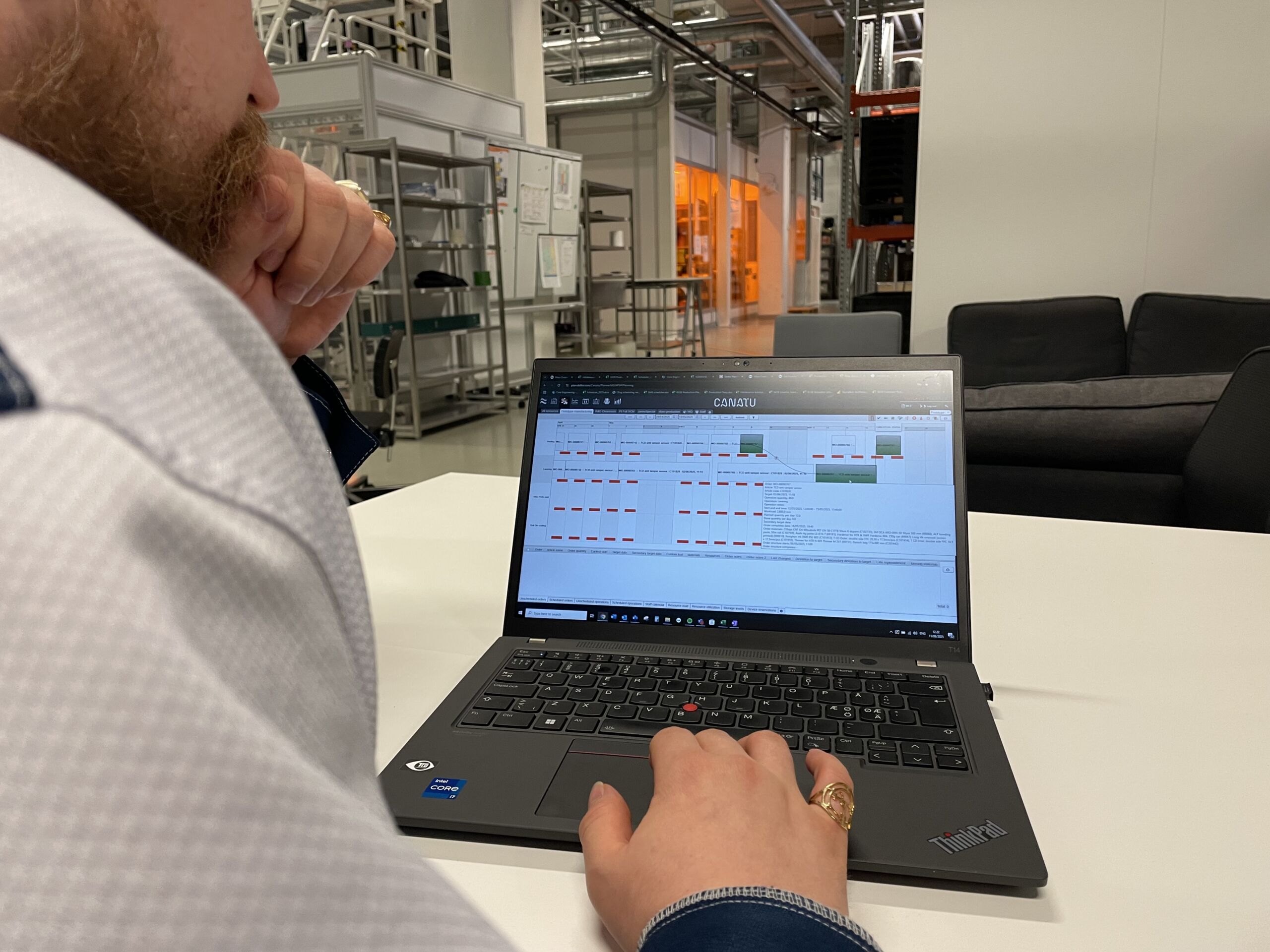
It’s 9 a.m. and the production schedule your ERP generated overnight is already obsolete. A machine went down at 6, a priority order landed at 8, and your planner is now spending the next two hours manually rebuilding a plan the system cannot adapt on its own. The root cause is architectural: ERP was designed for business process management and transactional data, not real-time production optimization. This article explains what ERP can and cannot do, what APS adds to your system landscape, and how the two work together without replacing either.
Specifically, we cover five areas: the technical distinction between APS and ERP, the structural limitations of ERP in production scheduling, the problem-solving capabilities APS brings, the hidden productivity costs of relying on ERP alone, and how integration between the two systems works in practice.
What’s the Difference Between APS and ERP Systems?
APS (Advanced Planning and Scheduling) systems focus specifically on optimizing production schedules and resource allocation, while ERP (Enterprise Resource Planning) systems manage broader business processes, including finance, inventory, and order management. APS uses sophisticated algorithms for finite-capacity scheduling, whereas ERP typically relies on infinite-capacity assumptions.
The core distinction lies in their approach to production planning. ERP systems excel at managing data flows and business transactions across departments, providing a centralized database for all business operations. They handle everything from purchase orders and invoicing to inventory tracking and financial reporting with remarkable efficiency.
APS systems, however, are purpose-built for the complexities of modern manufacturing. They consider real-world constraints such as machine capacity, labor availability, material shortages, and setup times to create realistic, optimized production schedules. While ERP tells you what needs to be produced, APS determines the best way and the best time to produce it.
This specialization makes APS systems invaluable for manufacturers dealing with complex production environments, multiple product lines, or fluctuating demand patterns that require dynamic scheduling adjustments.
Why Can’t ERP Handle Complex Production Planning?
ERP systems cannot handle complex production planning because they rely on infinite-capacity scheduling assumptions and lack the sophisticated optimization algorithms needed for real-time constraint management. Most ERP systems treat production planning as a simple calculation based on lead times rather than considering actual resource limitations and dependencies.
The fundamental limitation is architectural. ERP platforms were built to manage business processes and data flows across the enterprise, not to solve combinatorial optimization problems. When it comes to production scheduling, most ERP systems use basic Material Requirements Planning (MRP) logic that assumes unlimited capacity and fixed lead times. That assumption is rarely true on a real shop floor.
This approach breaks down quickly in real manufacturing environments where machines have limited capacity, workers have specific skills, materials arrive late, and rush orders disrupt planned sequences. ERP systems struggle with scenarios such as overlapping operations, alternative routings, or the need to balance conflicting priorities across multiple production lines.
The result is production schedules that look good on paper but fail in practice, leading to bottlenecks, missed deadlines, and inefficient resource utilization. Without finite scheduling capabilities, ERP systems cannot provide the visibility and agility that modern manufacturing demands.
How Does APS Solve Production Planning Problems That ERP Can’t?
APS solves production planning problems through finite-capacity scheduling, real-time optimization algorithms, and constraint-based planning that considers actual resource limitations, setup times, and material availability. Unlike ERP systems, APS can instantly reschedule production when disruptions occur and optimize for multiple objectives simultaneously.
The power of APS lies in its ability to model the real world accurately. Advanced planning and scheduling systems use intelligent algorithms to balance workloads across machines, minimize idle time, and optimize resource utilization while considering hundreds of constraints simultaneously.
Key problem-solving capabilities include dynamic rescheduling when rush orders arrive, automatic bottleneck identification and resolution, and scenario planning that allows manufacturers to test different approaches before committing to a schedule. APS production scheduling and optimization can handle complex manufacturing scenarios such as make-to-order, engineer-to-order, and mixed-mode production that would overwhelm traditional ERP planning modules.
Real-time visibility is another crucial advantage. APS provides instant feedback on the impact of changes, showing how a new order affects existing schedules or how a machine breakdown ripples through the production plan. This transparency enables proactive decision-making rather than reactive firefighting.
Key Benefits of APS Systems for Manufacturers
APS systems deliver value across the entire production planning cycle. Here are the capabilities that matter most for manufacturers evaluating whether to extend their current ERP environment with a dedicated scheduling layer.
- Finite-capacity scheduling: Schedules are built against real machine and labor availability, not theoretical capacity, producing plans that are executable from the moment they are released.
- Real-time rescheduling: The production plan adapts instantly when rush orders arrive, equipment goes down, or material is delayed, eliminating hours of manual replanning.
- Bottleneck identification: Capacity constraints are surfaced automatically before they cause delays, giving planners time to act rather than react.
- Multi-objective optimization: The scheduling engine simultaneously balances due dates, setup times, and resource utilization rather than optimizing for a single variable.
- Scenario planning: Planners can model what-if alternatives, such as accepting a priority order or shifting a production run, and evaluate the downstream impact before committing.
- Reduced inventory: Tighter, more accurate scheduling reduces work-in-progress accumulation and the need for safety stock buffers built around schedule uncertainty.
- Improved on-time delivery: Reliable, constraint-aware schedules translate directly into higher delivery performance and more consistent customer commitments.
- Planner productivity: Automation of routine scheduling decisions frees planners to focus on exceptions, escalations, and strategic capacity decisions instead of daily firefighting.
What Are the Hidden Costs of Relying Only on ERP?
Relying only on ERP for production planning creates hidden costs through excessive inventory, missed delivery deadlines, inefficient resource utilization, and constant manual intervention to fix scheduling conflicts. These inefficiencies typically cost manufacturers 10–20% of their potential productivity and significantly impact customer satisfaction.
The most significant hidden cost is opportunity cost. When production schedules are suboptimal, manufacturers cannot maximize their existing capacity, often leading to expensive overtime or the perceived need for additional equipment. Poor scheduling also creates inventory imbalances, with some materials sitting idle while others become bottlenecks.
Manual intervention represents another major cost drain. Production planners spend countless hours manually adjusting ERP-generated schedules, resolving conflicts, and communicating changes across the organization. This reactive approach consumes valuable human resources that could be focused on strategic improvements.
Customer relationship costs are often overlooked but equally damaging. Late deliveries and unreliable lead times erode customer trust and can result in lost business or penalty clauses. In competitive markets, delivery reliability often matters more than price, making ERP limitations a strategic vulnerability.
How Do APS and ERP Work Together in Manufacturing?
APS and ERP work together by integrating through bidirectional data exchange, where ERP provides master data and order information while APS returns optimized production schedules and capacity plans. This collaboration combines ERP’s business process management strengths with APS’s advanced scheduling capabilities, and it does so without replacing or restructuring your existing ERP investment.
The integration creates a clear separation of concerns in which each system focuses on what it does best. ERP continues to manage customer orders, inventory levels, purchasing, and financial transactions while feeding this information to the APS system in real time. The APS system then uses this data to create optimized production schedules that account for all active constraints and competing objectives.
From an IT architecture perspective, this means APS sits as a specialized layer within your broader system landscape, consuming structured data from ERP and writing optimized schedule data back. The ERP remains the system of record for master data, and APS operates as the system of intelligence for production sequencing and capacity management. No core ERP data model changes are required, and the integration surface is well-defined and maintainable.
The result is a comprehensive manufacturing planning ecosystem in which strategic business decisions flow through ERP while tactical production optimization happens in APS. This separation allows manufacturers to leverage the strengths of both systems without compromising either.
How We Approach APS Implementation: Delfoi Planner
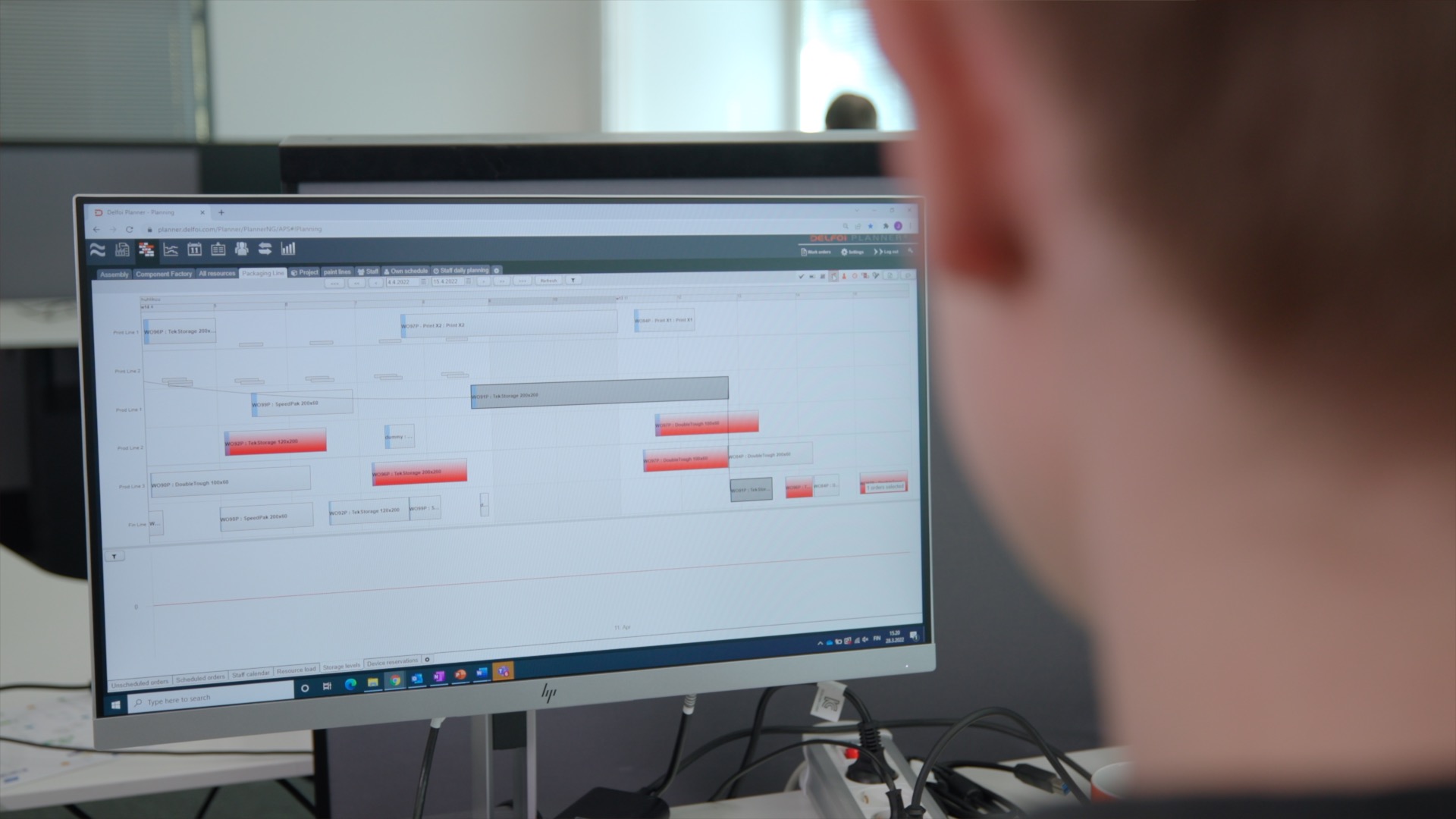
Our APS solution, Delfoi Planner, is a visual production planning platform built specifically for discrete and mixed-mode manufacturing environments. It connects to your existing ERP, reads the master data and order information already maintained there, and returns optimized schedules without requiring you to rebuild or replace any part of your current system landscape.
Delfoi Planner carries proven, tested integrations with SAP, Oracle NetSuite, and Microsoft Dynamics 365. Bills of materials, routings, work orders, resource calendars, and inventory levels flow automatically into the planning environment, eliminating manual data transfers and ensuring the scheduling engine always works from current, accurate data. For NetSuite users specifically, the integration is pre-built and validated, which shortens implementation timelines and reduces the technical risk typically associated with connecting a new planning system to a live ERP.
The solution supports discrete manufacturing, make-to-order, make-to-stock, and project-based operations, including mixed environments where multiple production modes run concurrently across different lines. Implementation is scoped to your data structure and production complexity, and because the integration layer is standardized, the ongoing maintenance burden on your IT team is low once the connection is established.
If you are evaluating how a dedicated APS layer would fit into your current technology stack, contact our experts to discuss your environment and integration requirements in detail.
Frequently Asked Questions About APS and ERP
Can APS work with our existing ERP system?
Yes. Modern APS solutions are designed to integrate with major ERP platforms rather than replace them. Established connectors exist for SAP, Oracle NetSuite, and Microsoft Dynamics 365, enabling bidirectional data exchange through well-defined integration interfaces. Your ERP remains the system of record for master data and business transactions. APS reads from it and writes optimized schedule data back, so no core ERP configuration changes are required.
How long does APS implementation typically take?
Implementation timelines vary based on ERP data quality, production environment complexity, and the number of resources and constraints being modeled. In practice, implementations for manufacturers with well-structured ERP data and a clearly defined scope can be completed in as few as four to six weeks. More complex environments with multiple production lines, mixed production modes, or custom integration requirements typically fall in the eight-to-twelve-week range. Data readiness on the ERP side is usually the single largest factor influencing timeline.
What is the difference between finite and infinite scheduling?
Finite scheduling builds a production plan that respects the actual capacity limits of each machine, workstation, and labor resource. If a resource is already fully loaded on a given day, the system schedules the next job for when capacity genuinely becomes available. Infinite scheduling, which is the default approach in most ERP planning modules, assumes that resources have unlimited availability and produces plans based on lead times alone. Those plans routinely overload specific resources and require significant manual correction before they can be executed on the shop floor.
Which production environments benefit most from APS?
APS delivers the greatest measurable value in environments where scheduling complexity exceeds what rule-based MRP logic can handle reliably. This includes mixed make-to-order and make-to-stock operations running across multiple production lines, high-mix discrete manufacturing with frequent changeovers and setup dependencies, and project-based manufacturing where resource allocation must be coordinated across long, interdependent task sequences. Environments with high variability in demand, frequent priority changes, or tight delivery commitments also see strong returns, because the real-time rescheduling capability directly addresses the replanning burden that consumes planner time in those settings.
What results can we realistically expect from APS?
The primary improvement dimensions are on-time delivery performance, inventory levels, and planner productivity. Industry experience across discrete manufacturing environments indicates that ERP-only scheduling typically costs manufacturers 10–20% of their potential productive capacity through suboptimal sequencing, manual rework, and schedule instability. APS addresses each of those dimensions: finite-capacity scheduling reduces the inventory buffers built around schedule uncertainty, reliable plans improve delivery performance, and automation of routine scheduling decisions reduces the daily manual effort placed on planning teams. Specific outcomes depend on your current scheduling maturity and production environment, which is why a structured assessment of your ERP data and production constraints is the appropriate starting point.