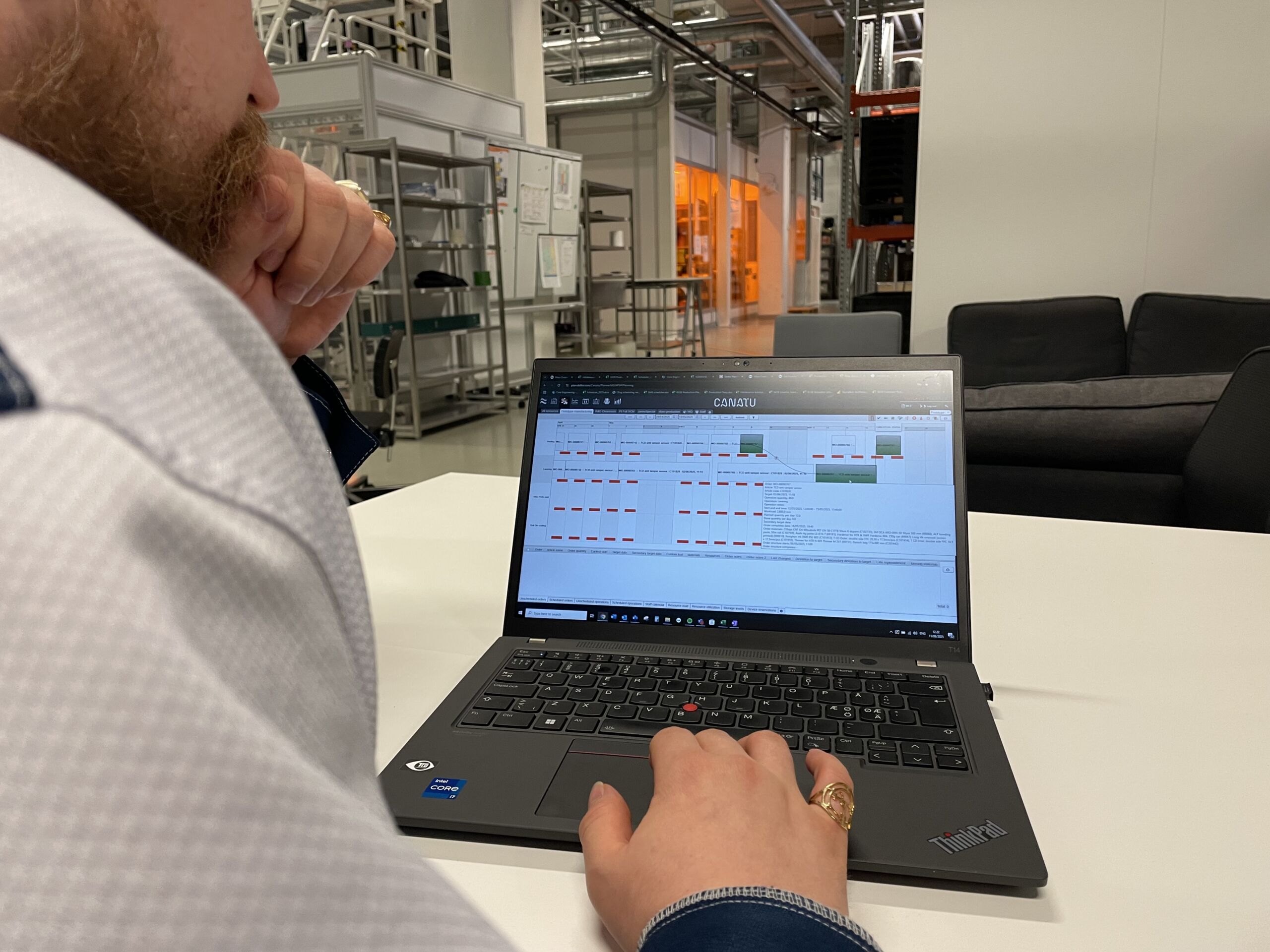
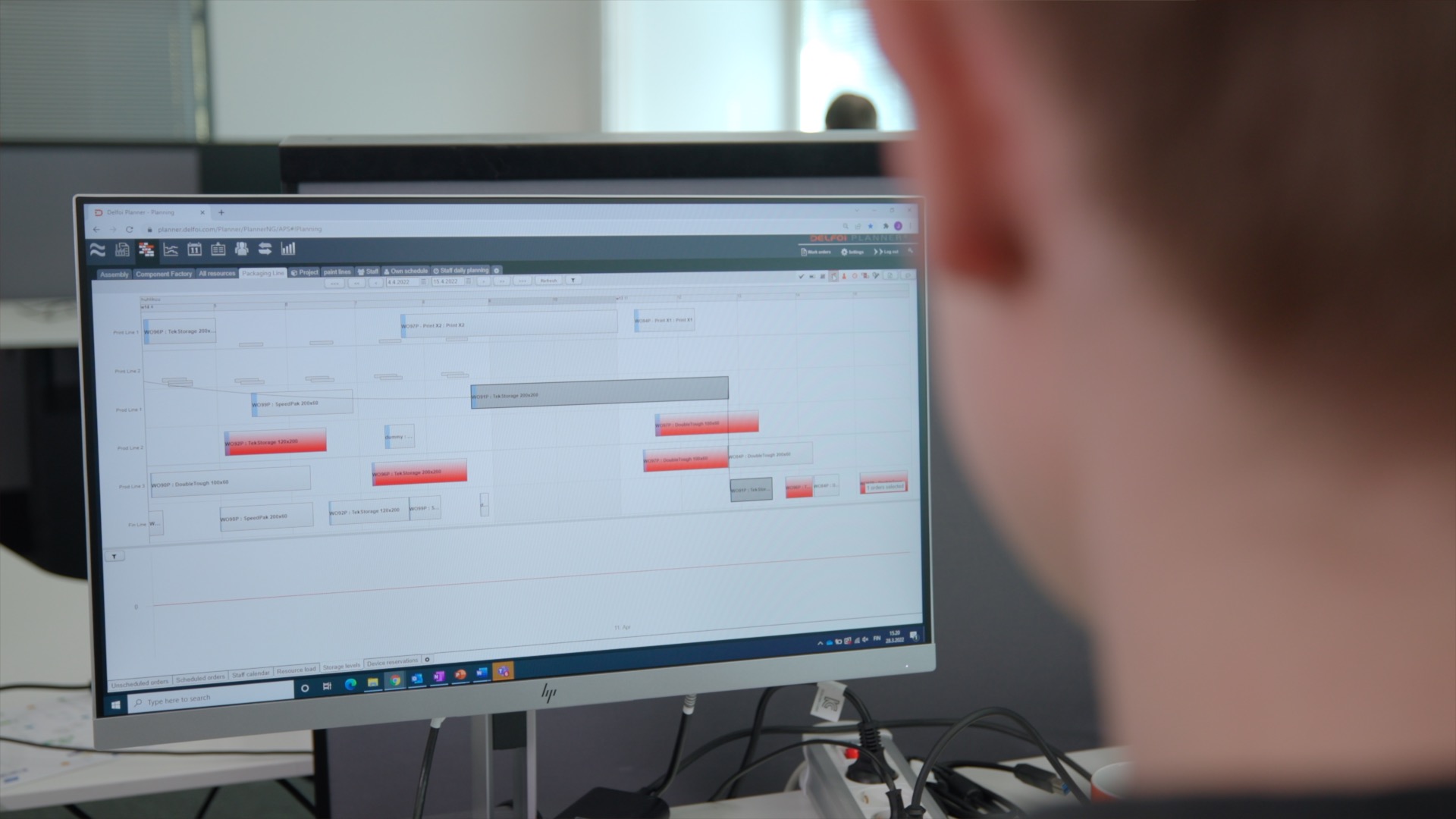
Reactive planning responds to disruptions after they happen, while real-time planning continuously updates the production schedule as conditions change. The core difference is timing: reactive planning is backward-looking and corrective, whereas real-time planning is forward-looking and adaptive. For manufacturers, that distinction has a direct impact on efficiency, cost, and the ability to meet customer commitments.
The sections below unpack how each approach works in practice, what staying reactive actually costs, and how to know when it is time to make the switch.
How does reactive planning actually work in manufacturing?
Reactive planning in manufacturing means the production schedule is updated in response to problems rather than in anticipation of them. A machine breaks down, a supplier delivers late, or a rush order arrives, and planners then manually adjust the schedule to accommodate the disruption. The plan is typically rebuilt on a weekly cadence or only when the situation becomes critical enough to require action.
In practice, this means planners spend the majority of their time firefighting. Instead of looking ahead and optimizing the schedule, they are rearranging orders, chasing information, and manually calculating the knock-on effects of each change. Every disruption triggers a cycle of phone calls, spreadsheet edits, and ad-hoc decisions that consume hours of productive capacity.
The deeper issue is that reactive planning treats the schedule as a static document rather than a living system. Once it is set, the expectation is that production will follow it, and when reality diverges, the response is manual and delayed. That gap between plan and reality is where inefficiency accumulates.
What makes real-time planning different from reactive planning?
Real-time planning continuously reflects the current state of the production floor, updating the schedule automatically as conditions change. Rather than waiting for a problem to escalate before replanning, a real-time system detects deviations the moment they occur and recalculates priorities, sequences, and timelines across all affected orders immediately.
The practical difference is visibility and speed. When an unexpected delay hits one order in a reactive environment, a planner must manually trace which downstream orders are affected and then decide how to resequence them. In a real-time environment, the system surfaces the ripple effect instantly, so the planner can make an informed decision without having to reconstruct the picture from scratch.
Real-time planning also changes the role of the planner. Instead of spending the day rearranging a broken schedule, planners can focus on higher-value decisions: evaluating trade-offs, communicating accurate delivery dates to customers, and improving the schedule rather than just maintaining it. The shift is from reactive firefighting to proactive control.
What are the hidden costs of staying reactive in production?
The hidden costs of reactive planning go well beyond the visible time spent on manual rescheduling. They include inflated lead times, lower machine utilization, excess work-in-progress inventory, and a reduced ability to make reliable delivery commitments to customers. Each of these erodes competitiveness and profitability over time, often in ways that are difficult to attribute directly to the planning approach.
Because reactive schedules are rebuilt infrequently, they quickly fall out of sync with reality. Planners compensate by building in safety buffers: extra time, extra stock, and extra capacity. These buffers are costly, but they feel necessary when the plan cannot be trusted to reflect what is actually happening on the floor.
There is also a human cost. Planners operating in a reactive environment are under constant pressure, making decisions with incomplete information and limited time. That stress leads to errors, burnout, and high turnover in planning roles, which further degrades the quality of the schedule and compounds the problem.
How does real-time planning handle unexpected disruptions?
Real-time planning handles unexpected disruptions by recalculating the schedule immediately and showing the full downstream impact across every affected order. When a disruption occurs, the system does not wait for the next planning cycle. It updates priorities, sequences, and timelines on the spot, giving planners an accurate picture of what needs to change and what can stay as planned.
This is fundamentally different from reactive replanning, where each disruption requires a planner to manually work through the consequences. In a real-time environment, the planner sees the ripple effect the moment it happens and can reprioritize without inadvertently breaking commitments downstream.
This capability is particularly valuable in complex manufacturing environments where a single disruption can affect dozens of orders across multiple work centers. The ability to reschedule in real time and immediately see the impact across the entire production plan means decisions are faster, better informed, and far less likely to create new problems while solving the original one.
When should a manufacturer switch from reactive to real-time planning?
A manufacturer should consider switching from reactive to real-time planning when disruptions are frequent enough that manual replanning consumes more planner time than forward-looking optimization. If planners are spending most of their day firefighting rather than improving the schedule, the reactive model has already become a bottleneck to operational performance.
Several signals indicate the reactive approach has reached its limits:
- Delivery reliability is declining despite planners working at full capacity
- Lead times are growing to accommodate uncertainty rather than reflecting actual production time
- Customer escalations are becoming a routine part of the planning process
- Planners cannot give confident delivery date estimates without significant manual investigation
- Schedule changes in one area regularly create unintended problems elsewhere
The decision to switch is not purely about technology. It also involves a shift in how planning is understood within the organization. Real-time production planning software requires that the schedule be treated as a dynamic, authoritative source of truth rather than a periodic document. Organizations that are ready to make that cultural shift alongside the technical one tend to see the strongest results.
For manufacturers operating in high-mix, high-variability environments, the case is especially clear. The more complex and unpredictable the production environment, the greater the cost of staying reactive and the greater the benefit of moving to a planning model that can keep pace with reality. To explore how this applies to your operations, get in touch with our planning specialists.