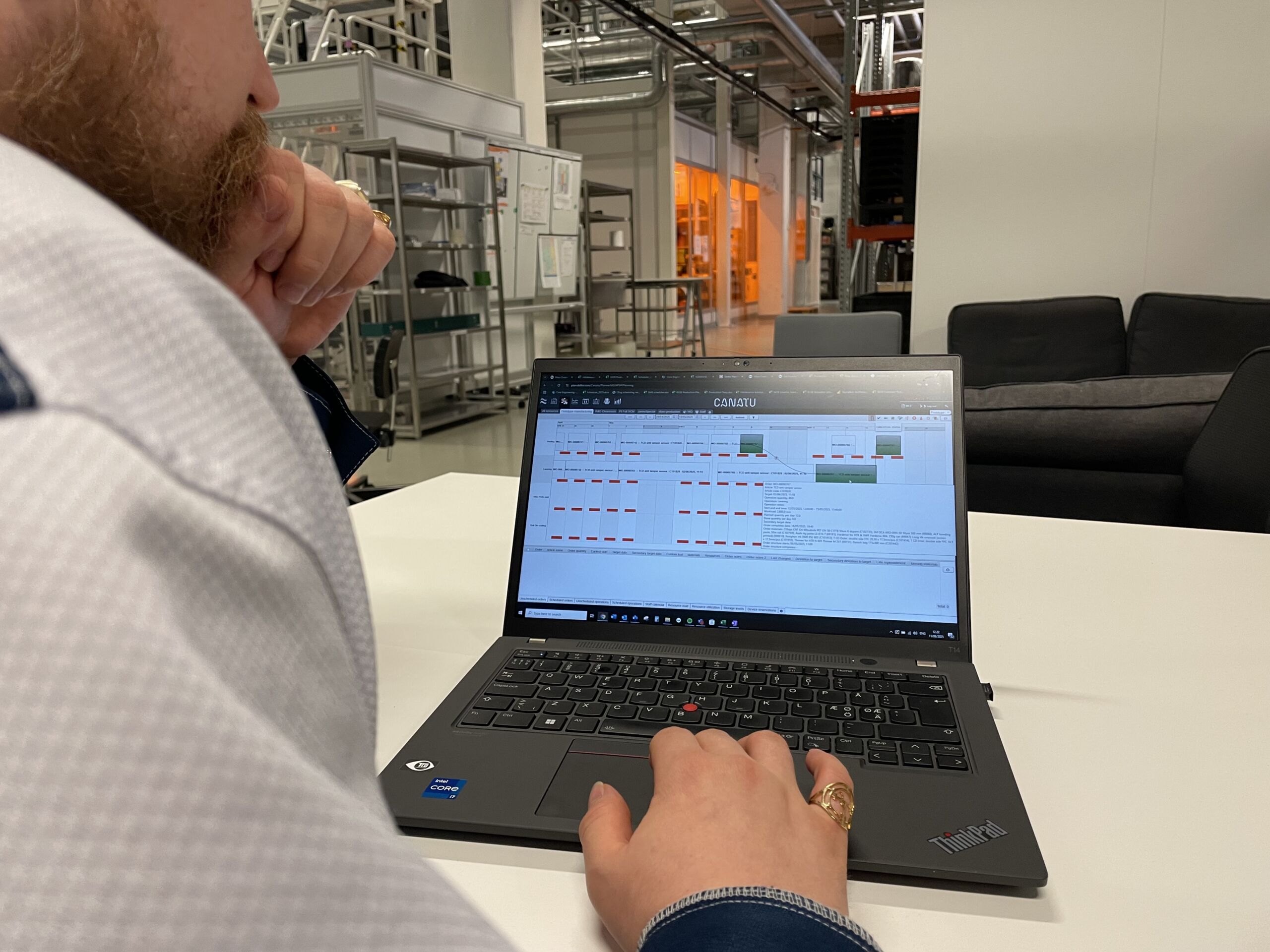
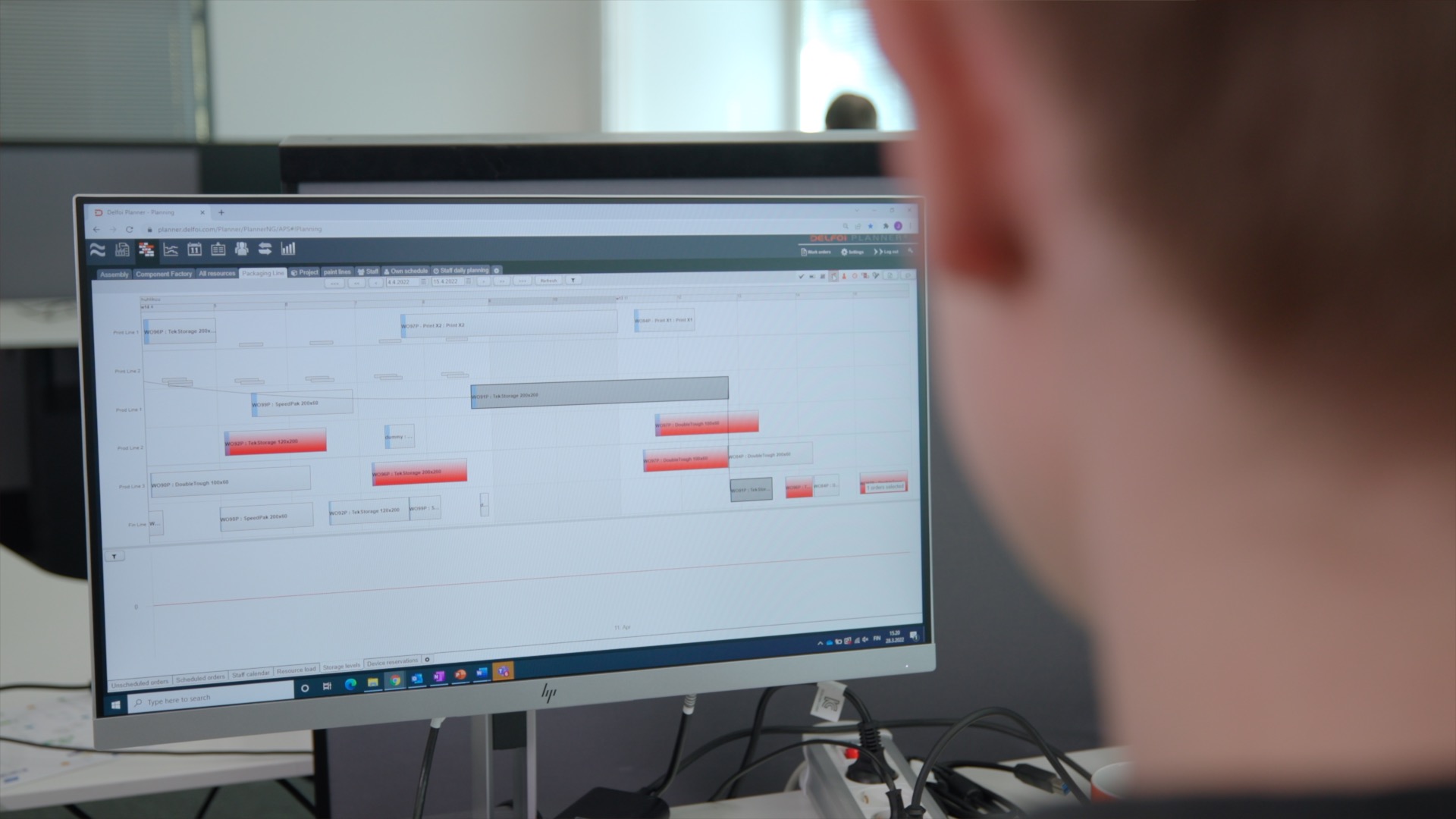
An APS proof of concept is a short, focused evaluation — typically four to six weeks — where an advanced planning and scheduling solution is tested against a manufacturer’s real data, real constraints, and real planning scenarios. The goal is not to build a finished system, but to verify that the software can handle your specific environment before committing to a full implementation.
For most manufacturers, the decision to invest in APS manufacturing software comes down to proof rather than features. A well-structured APS PoC creates that proof by answering the questions that matter most to planners, plant managers, and finance leadership alike. The sections below address the most common questions manufacturers ask when considering an APS proof of concept.
How does an APS proof of concept actually work in practice?
An APS proof of concept works by defining a limited set of real planning scenarios upfront, loading the system with a representative sample of your actual data, and then running those scenarios to evaluate whether the software behaves as expected. The emphasis is on decision-readiness, not completeness. The PoC ends with a clear picture of fit, gaps, and what implementation would require.
One of the most important mindset shifts in a successful APS PoC is resisting the urge to model everything. Teams that try to document every exception and edge case before the pilot begins often find themselves in an endless workshop cycle. The scope creeps, the timeline slips, and by the time the model feels “complete,” business priorities may have already shifted.
A practical APS proof of concept defines three things at the start: what you will test, what you will deliberately leave out, and what must be true at the end for the organisation to move forward with confidence. That clarity keeps the pilot focused and makes it far easier to evaluate the outcome objectively.
The scenarios chosen for the pilot should reflect the situations where spreadsheet-based production planning tends to break down: when priorities change frequently, when capacity is tight and shared across multiple work centres, or when sequencing rules and setup times make planning highly interdependent. These are precisely the conditions where APS adds the most value and where evaluation is most straightforward.
What data and inputs does an APS proof of concept require?
An APS proof of concept requires a representative sample of your master data and transactional data, including work orders or production orders, routing and operation structures, resource and work centre capacities, material availability, and any sequencing or setup rules that govern your scheduling logic. The data does not need to be perfect, but it needs to be real.
One of the most valuable outcomes of a PoC is what it reveals about data quality. It is common for a pilot to surface gaps in master data or planning parameters that were not visible before. Identifying those gaps during the PoC rather than mid-implementation means they can be corrected before a full production rollout, which significantly reduces implementation risk.
ERP integration is another practical input requirement. The APS solution needs to be able to pull data from your existing systems in a workable way, even if the integration is not fully automated during the pilot phase. If the data flow proves unreliable during the PoC, that is important information for planning the implementation.
What’s the difference between an APS proof of concept and a pilot?
An APS proof of concept is designed to verify fit and create a decision basis, while a pilot is typically a limited production deployment of a solution that has already been selected and configured. A PoC asks “should we proceed and on what terms?” A pilot asks “how do we roll this out effectively?” The two serve different purposes at different stages of the decision process.
In practice, the terminology is sometimes used interchangeably, but the distinction matters for how you structure the work and what you measure. A PoC is inherently exploratory and bounded. It is meant to surface unknowns and confirm or challenge assumptions about fit. A pilot, by contrast, assumes the selection decision has been made and focuses on operational readiness and change management.
Some APS implementation approaches blur this boundary by designing the PoC so that it also functions as the first phase of implementation. When the same solution, the same data model, and the same configuration carry forward from the PoC into full deployment, the transition is smoother and the work done during the proof of concept is not thrown away. This is the approach we take with Delfoi Planner advanced production planning software: the PoC serves as a design phase for implementation, clarifying scope, confirming priorities, and creating a practical roadmap for rollout.
How do you measure whether an APS proof of concept was successful?
A successful APS proof of concept is measured by planning capability and decision readiness, not by long-term operational KPIs. Because the PoC is short and not a live deployment, the relevant measures focus on whether the system handled your real scenarios, whether planners could use it effectively, and whether the outcome creates enough confidence to move forward.
The most useful indicators during a PoC tend to fall into four areas:
- Planning responsiveness: How quickly can schedules be created, adjusted, and compared against current practice? Can planners explore realistic options without rebuilding the plan manually?
- Usability and adoption: Can planners perform key tasks without constant specialist support? Can they explain the plan clearly to production supervisors and other stakeholders?
- Data and integration readiness: What data gaps became visible during the pilot, how quickly could they be corrected, and how reliable was the data flow throughout the PoC?
- Transparency and communication: Are constraints, bottlenecks, and the impact of changes visible enough that production, purchasing, and customer-facing teams can react earlier?
By the end of the pilot, you should be able to produce a clear summary: which requirements are already met, which gaps remain, and what data, integration, or process work would be needed to proceed to full deployment. That summary is the primary deliverable of a well-run APS PoC.
When should a manufacturer run an APS proof of concept?
A manufacturer should run an APS proof of concept when the limitations of current planning tools are creating real operational pain and the organisation is seriously evaluating a switch to dedicated advanced planning and scheduling software. The PoC is most valuable when there is genuine uncertainty about fit, data readiness, or implementation scope, and when decision-makers need evidence rather than vendor demonstrations.
There are specific conditions where a PoC is particularly well-timed. If your planning environment involves frequent priority changes, shared bottleneck resources, complex routings, or high interdependency between sequencing decisions, these are exactly the scenarios where APS adds measurable value and where a focused pilot can prove it quickly.
A PoC is also well-timed when the organisation has experienced failed or stalled planning projects in the past. The structured, scenario-based approach of a PoC is a direct counter to the “perfect model” trap that derails many planning initiatives. By committing only to a short, bounded evaluation, manufacturers can generate genuine insight without overcommitting resources or locking in a direction prematurely.
What a PoC is not is a substitute for organisational readiness. The pilot will be more productive if there is a clear owner, a defined set of scenarios, and planners who are willing to engage with the system honestly. The key outcome is not a polished model. It is confidence: a grounded understanding of what the solution can do in your environment, what it will take to implement, and whether the supplier relationship is one you want to build on. Contact us to discuss your APS evaluation.