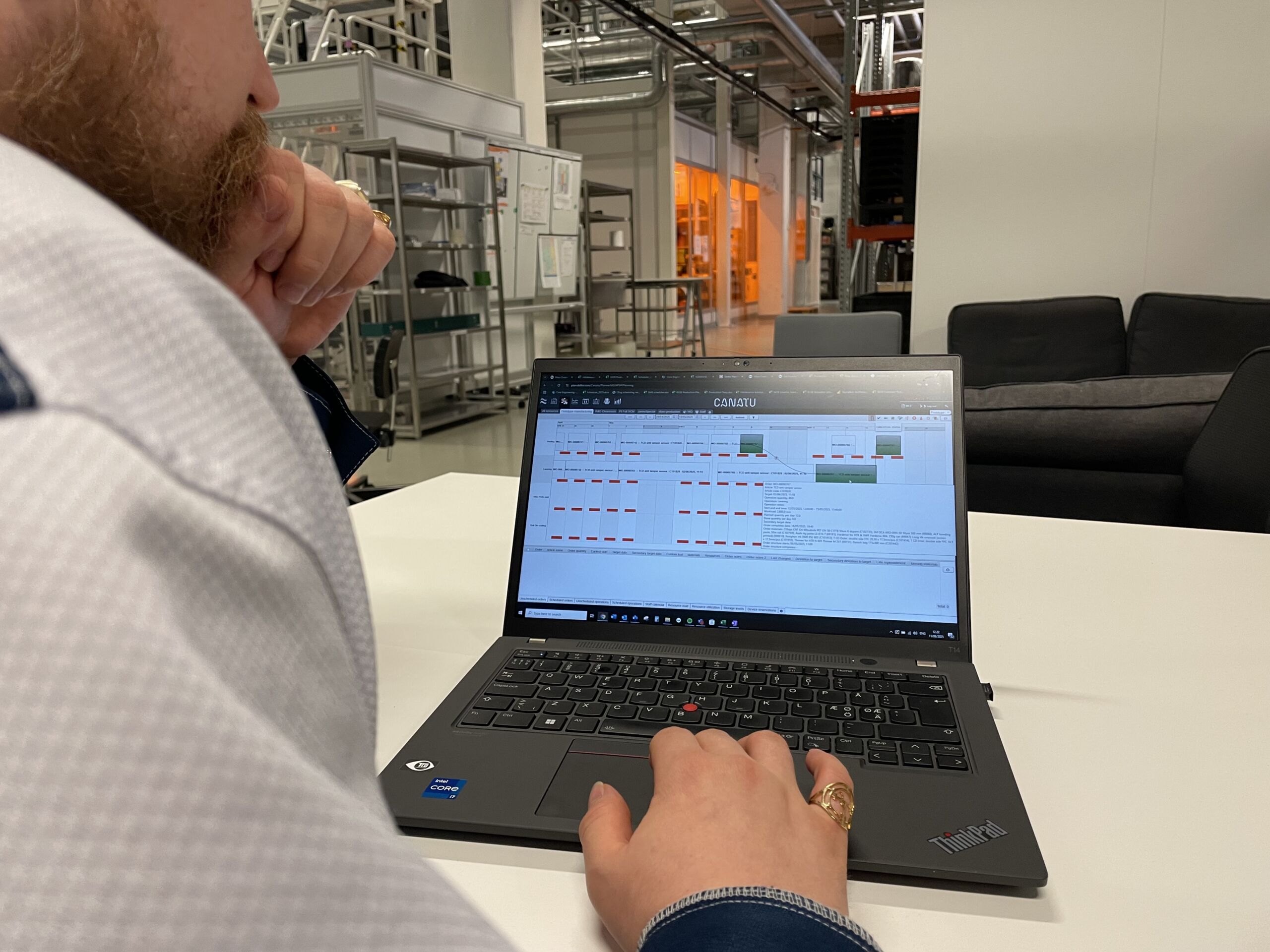
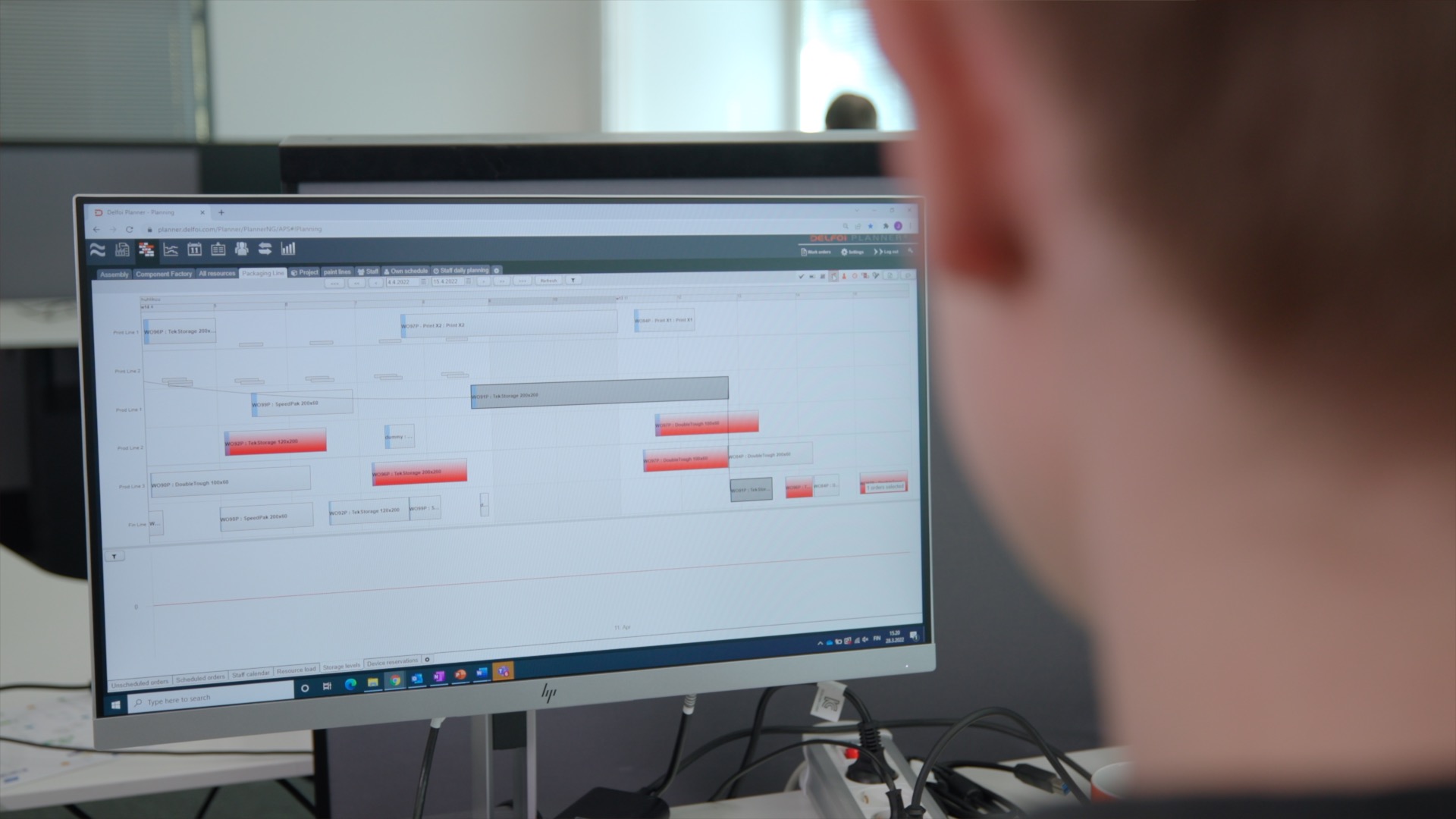
ERP systems give production dates you cannot hit because they plan with infinite capacity — they calculate schedules without checking whether machines, staff, or materials are actually available at the required time. The result is a schedule that looks logical on paper but falls apart the moment it meets the shop floor. The sections below break down exactly why this happens and what manufacturers can do about it.
What makes ERP production dates so consistently wrong?
ERP production dates are consistently wrong because the scheduling logic built into most ERP and MRP systems assumes unlimited capacity. The system works backward from a due date, assigns work to resources, and generates a completion date — without ever verifying whether those resources are free, loaded with other work, or even available that week. The schedule looks clean in the system but is impossible in practice.
This is not a configuration problem or a data quality problem in the usual sense. It is a fundamental design choice. ERP systems were built to manage inventory, finance, procurement, and master data — not to model the real-time constraints of a production environment. Scheduling was added as a feature, not designed as a core capability.
The knock-on effects are predictable. Planners learn quickly that the dates the ERP generates cannot be trusted, so they add buffer time manually. That buffer gets consumed by the next disruption. Expediting becomes routine. Customer promises become guesswork dressed up as planning.
How does infinite capacity planning cause scheduling failures?
Infinite capacity planning causes scheduling failures by treating every resource as always available. When an ERP schedules an order, it allocates machine time and operator hours without considering what else has already been scheduled on those same resources. Two orders can be assigned to the same work center at the same time, and the system will not raise a conflict.
On a quiet day with low order volume, this rarely surfaces as a problem. But in real manufacturing environments, work centers are often loaded at or near capacity. When multiple orders compete for the same resource, something has to give. The ERP does not decide what gives — the shop floor does, informally and reactively, which means the original schedule becomes fiction within hours of being released.
The deeper issue is that infinite capacity planning creates a false sense of control. Reports show orders on time. The system shows capacity available. But none of that reflects what is actually happening on the floor. Planners end up managing two realities simultaneously: what the ERP says and what is actually possible.
What’s the difference between ERP scheduling and finite capacity planning?
The key difference is that ERP scheduling ignores resource constraints while finite capacity planning enforces them. ERP scheduling calculates dates based on lead times and routing sequences. Finite capacity planning checks actual availability — machines, operators, tooling, materials — and only schedules work when the required resources are genuinely free.
How ERP scheduling works in practice
An ERP scheduler takes a due date, applies a standard lead time, and works backward to set a start date. It may apply routing steps and operation times, but it does not account for competing demand on the same resources. The resulting dates are arithmetically correct but operationally unrealistic.
How finite capacity planning works in practice
A finite capacity planning tool builds the schedule around real constraints. It knows which machines are running which jobs, when maintenance windows occur, what shift patterns apply, and where material availability limits production. When a conflict arises, the system resolves it by rescheduling rather than ignoring it. The output is a schedule that can actually be executed — and when circumstances change, it can be recalculated quickly to reflect the new reality.
This is where a dedicated production scheduling layer adds genuine value. Rather than replacing the ERP, it sits alongside it, reads the order and resource data, builds a constraint-aware schedule, and writes achievable dates back into the ERP. The ERP remains the system of record; the planning tool handles finite capacity scheduling it was never designed to do.
Why do ERP lead times drift further from reality over time?
ERP lead times drift from reality over time because they are static values applied to a dynamic environment. A lead time entered during system setup reflects conditions that existed at that moment — a particular product mix, a particular level of capacity utilization, a particular supplier performance level. As any of those factors change, the lead time becomes less accurate, but it rarely gets updated systematically.
The drift compounds in a predictable pattern. Planners notice that orders are running late, so they informally pad start dates. That padding becomes embedded in how people work, even if the system lead times never change. When business volume increases or product complexity grows, the gap between system lead times and actual throughput times widens further. Eventually, the ERP dates are treated as a rough starting point rather than a reliable plan.
There is also a feedback problem. Most ERP systems do not automatically learn from actual production performance. If an operation consistently takes longer than the standard time, that information does not flow back into the scheduling parameters unless someone manually updates them — and in most manufacturing organizations, that kind of master data maintenance is low on the priority list.
Should manufacturers replace their ERP or add a planning layer?
Manufacturers should almost always add a dedicated planning layer rather than replace their ERP. Replacing an ERP is a multi-year, high-risk project that disrupts finance, procurement, inventory, and customer management — all to solve a scheduling problem that a purpose-built planning tool can address directly, at a fraction of the cost and disruption.
The ERP is genuinely good at what it was designed for: managing master data, processing transactions, handling financials, and providing a single source of truth for orders and inventory. Those are not the problems that cause missed delivery dates. The problem is the scheduling logic, and that is exactly what advanced planning and scheduling software is built to replace.
A well-integrated planning layer reads order and resource data from the ERP, builds a finite capacity schedule, and writes confirmed dates back. Planners work in the planning tool, where they have visibility into real constraints and can respond to changes in real time. The ERP continues to function as the operational backbone. This approach is also lower risk because it does not require dismantling a system the entire business depends on.
How can production planners recover control from an unreliable ERP?
Production planners can recover control by shifting from ERP-generated dates to constraint-aware scheduling, establishing a single authoritative plan that reflects real capacity, and building a process for keeping that plan current as conditions change. The goal is to stop managing two versions of reality and start working from one plan that the shop floor can actually execute.
In practical terms, this means addressing three things:
- Replace infinite capacity scheduling with finite capacity planning. Whether through a standalone scheduling tool or a planning layer integrated with the ERP, the schedule needs to reflect real resource availability before it reaches the floor.
- Establish real-time visibility into what is actually happening. Planners cannot manage what they cannot see. Knowing where orders are in the process, where bottlenecks are forming, and where capacity is being consumed makes reactive decisions faster and more accurate.
- Build a replanning habit rather than an expediting habit. When something changes — a machine goes down, a material is delayed, a priority order arrives — the right response is to replan, not to push harder on the original schedule. A system that can replan quickly makes this practical.
We work with manufacturers who have been through exactly this transition. The shift from ERP-dependent scheduling to finite capacity planning consistently improves on-time delivery, reduces the time planners spend firefighting, and gives operations managers a realistic picture of what can be committed to customers. It is not a technology fix on its own — it requires process discipline and organizational alignment — but the technology has to be capable of reflecting reality before any of that discipline can take hold. Contact us to discuss your manufacturing scheduling challenges.