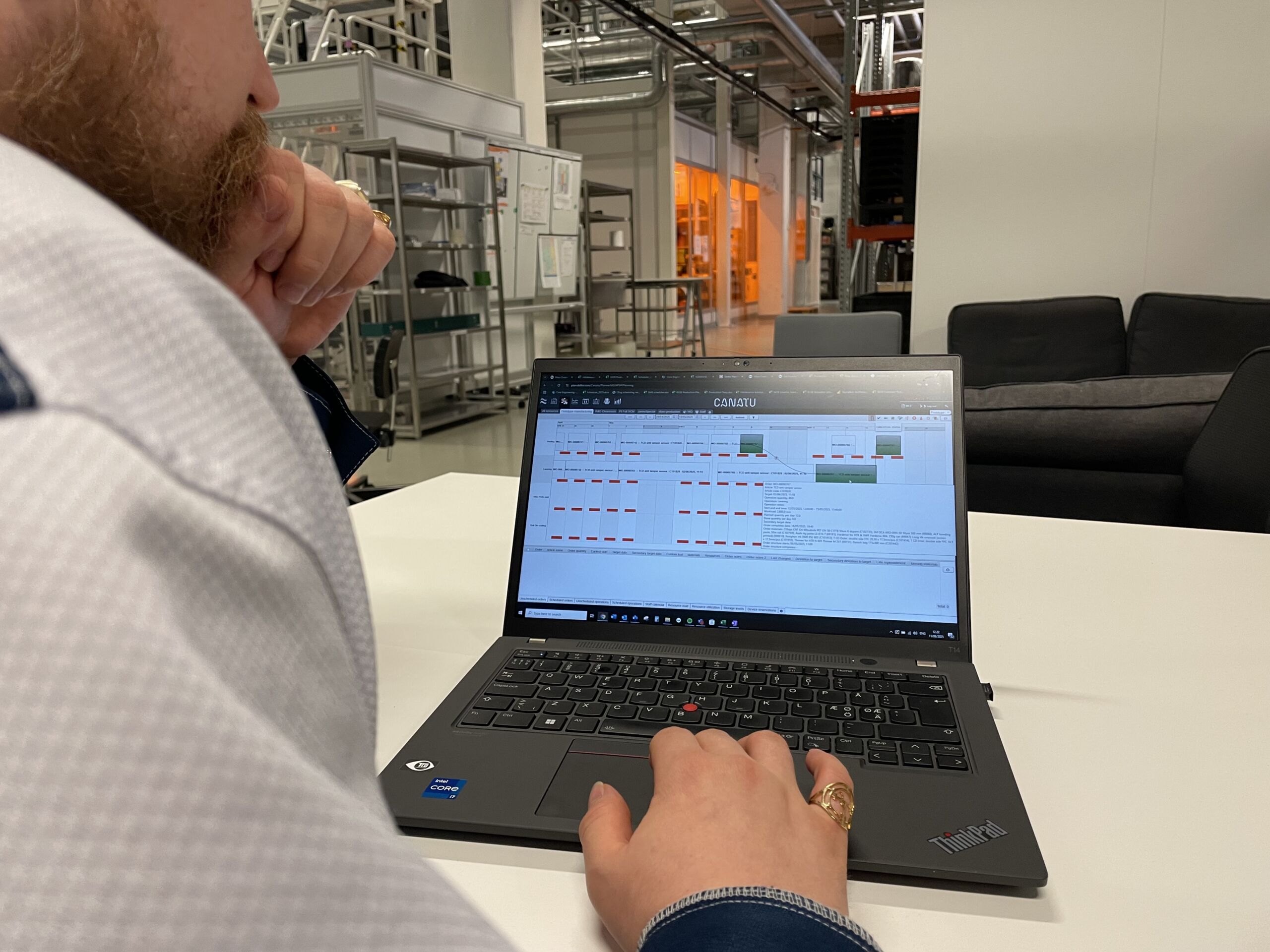
If you talk to production planners in companies running SAP, NetSuite or other ERP systems, you will often hear the same story. The ERP holds all the core data, but when it comes to day-to-day production scheduling, planners still export information to spreadsheets. On paper, the system knows every order, routing and resource. In practice, the working plan often lives in separate files and in people’s heads.
The reason is straightforward. ERP is excellent at managing transactions and master data. It supports consistency, compliance and traceability and control across the business. What it is not designed for is the kind of fast, constraint-aware decision-making that daily production planning requires.
System of record versus system of schedule
Modern ERP systems are built to serve as the system of record for the business. They answer questions such as what has been ordered, what has been produced, what is in stock and what has been invoiced. Production planning is about something different. It is about deciding what should happen next when constraints keep changing.
When capacity is tight, someone must decide which order gets priority. When a rush order arrives, someone must decide where to place it so that important commitments are still protected. When setups and changeovers consume available hours, someone must decide how far to optimise them without blocking urgent work. These are exactly the types of questions APS is built to support.
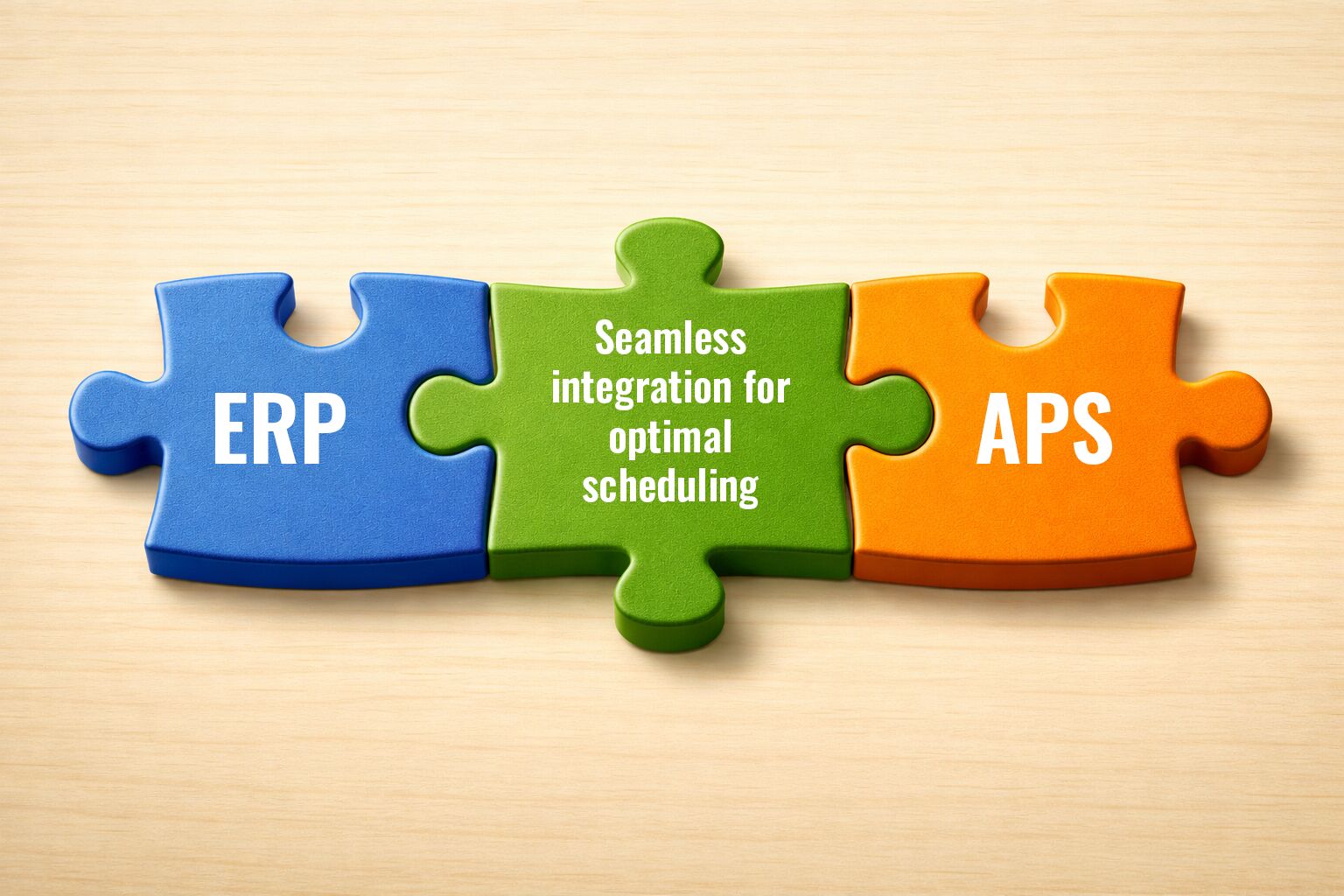
An APS system sits on top of ERP and turns core production data into a realistic, executable schedule. It reads work orders and routings from ERP, applies advanced planning logic and presents planners with an interactive view of the schedule.
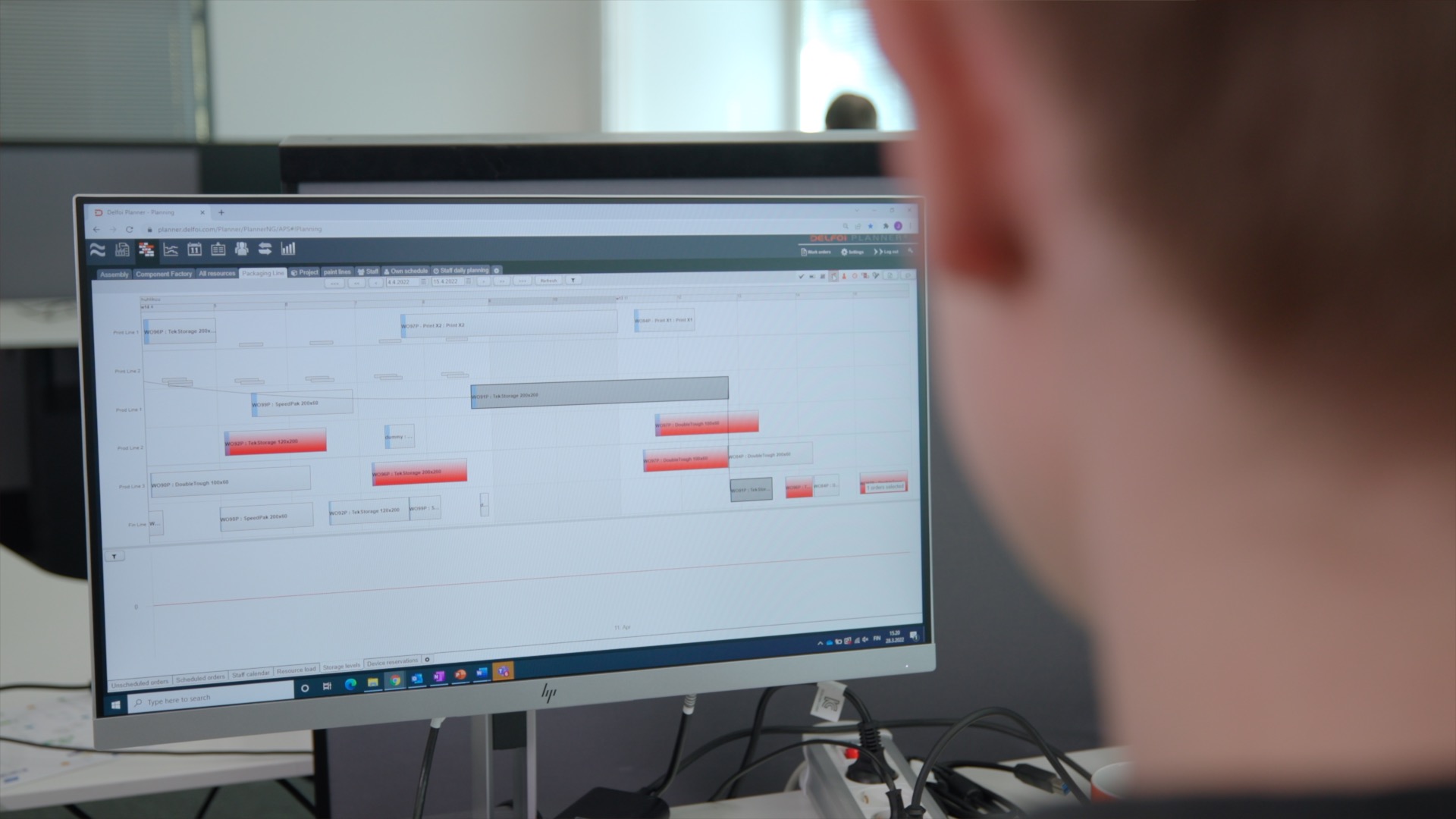
Instead of working through static lists, planners can interact with a visual schedule where operations and capacity are presented in a Gantt chart. With drag-and-drop adjustments and intelligent rescheduling, they can evaluate constraints and understand the impact of changes before committing to them.
What changes when APS fills the gap?
When APS becomes the layer between ERP and the shop floor, several things begin to change. Delivery dates proposed by sales are no longer based only on rough assumptions, but can be checked against actual capacity. Planners can protect key customer commitments even when priorities shift. Production supervisors gain a plan that is more stable and easier to follow in everyday operations.
This is not only about better KPIs. It is also about better alignment across the organisation. When sales, production and management can trust that the plan reflects operational reality, discussions become more fact-based. Less time is spent debating whose numbers are correct, and more time is spent making informed trade-offs.
A practical way to validate APS before wider rollout
For many manufacturers, the question is not whether APS sounds useful, but whether it will work in their own environment. That is a reasonable concern. Planning constraints, operating models and data quality vary widely from one business to another.
This is why a focused proof of concept, or PoC, is often the most practical way to move forward. Rather than trying to define everything upfront or commit immediately to a broad deployment, companies can validate APS in a controlled scope using their own data and planning rules.
The goal is to test how well APS handles real-life scheduling situations in that specific environment. It also helps verify that requirements are understood correctly and that the available data is sufficient to support reliable planning.
Just as importantly, a PoC often reveals data gaps, modelling issues or process ambiguities early. That is valuable. It allows these issues to be addressed before production deployment, reducing risk and creating a stronger foundation for the next phase.
A well-designed PoC helps answer practical questions such as:
- can APS handle our actual constraints and planning logic
- is our current ERP and master data good enough for detailed scheduling
- what benefits are realistic in our environment
- what needs to be clarified before broader rollout
Integrate first, expand step by step
The idea of adding another system on top of ERP can sound heavy. In practice, APS integration is often more manageable than expected, especially when standard connectors and proven integration approaches are available.
This is particularly important in multi-plant environments. After a PoC has confirmed the fit, implementation typically begins with one plant. Once the first go-live has proven the approach in daily operations, the model can be extended step by step to other sites.
ERP remains the backbone of the information landscape and the system of record for the business. APS adds the layer that turns ERP data into a live, constraint-aware production schedule.
Solutions such as Delfoi Planner are designed for exactly this role. For planners and supervisors, that extra layer can make the difference between constant firefighting and a schedule they can actually use.