Delivery reliability is one of the most critical performance indicators in make-to-order manufacturing, directly affecting customer satisfaction and competitive advantage. When manufacturers struggle to meet promised delivery dates, they face cascading effects, including customer complaints, rushed production, higher costs, and reputational damage.
Improving delivery reliability requires examining the root causes of delays, implementing effective measurement systems, and leveraging advanced production-planning techniques. This comprehensive approach helps manufacturers shift from reactive firefighting to proactive delivery-performance management.
What is delivery reliability in make-to-order manufacturing?
Delivery reliability in make-to-order manufacturing is the ability to consistently deliver products to customers on or before the promised delivery date. It measures how well a manufacturer meets customer expectations by fulfilling orders within the agreed timeframe, typically expressed as the percentage of orders delivered on time.
In make-to-order environments, delivery reliability is particularly challenging because production begins only after customer orders are received. Unlike make-to-stock operations, where products are manufactured for inventory, make-to-order manufacturers must coordinate complex processes—including design, procurement, production scheduling, and quality control—within tight customer timelines.
Delivery reliability encompasses several dimensions beyond simple on-time delivery. It includes delivery accuracy (the correct products and quantities), condition upon arrival, and transparent communication throughout the fulfillment process. High delivery reliability requires synchronized planning across engineering, procurement, production, and logistics.
What causes poor delivery reliability in make-to-order production?
Poor delivery reliability in make-to-order production stems from inadequate production planning, unrealistic promised dates, supply chain disruptions, and a lack of real-time visibility into production status. These interconnected issues create a domino effect in which small delays compound into significant delivery failures.
Unrealistic delivery commitments often occur when sales teams lack accurate information about production capacity and current workload. Without proper planning tools, they may promise delivery dates based on optimistic assumptions rather than realistic production schedules. This disconnect between sales promises and manufacturing capabilities leads to inevitable delivery failures.
Material-availability issues are another major cause of delivery delays. Make-to-order manufacturers frequently encounter unexpected supplier delays, quality rejections, or shortages of specialized components. Without effective supplier management and appropriate buffer planning, these disruptions directly affect delivery schedules.
Inefficient production scheduling also contributes significantly to delivery problems. Manual scheduling methods using spreadsheets cannot effectively handle the complexity of multiple orders, resource constraints, and changing priorities. This leads to suboptimal resource allocation, bottlenecks, and longer lead times.
How do you measure delivery reliability performance?
Delivery reliability performance is typically measured using the on-time delivery percentage, calculated as the number of orders delivered on or before the promised date divided by the total number of orders, and tracked monthly or quarterly. This primary metric should be complemented by delivery accuracy, lead-time variance, and customer satisfaction scores.
The most common measurement approach uses the following key performance indicators:
- On-Time Delivery (OTD) Rate: Percentage of orders delivered within the promised timeframe
- Delivery Performance Index: Weighted score considering both timing and accuracy
- Lead Time Variance: Standard deviation of actual delivery times from promised dates
- Perfect Order Rate: Orders delivered on time, in full, and without defects
Advanced manufacturers also track early-delivery rates, since delivering too early can create inventory costs and storage issues for customers. Ideal delivery performance balances on-time delivery with minimal early deliveries, typically aiming to deliver within a narrow window around the promised date.
Regular performance reviews should segment delivery reliability by product type, customer, and order complexity to identify specific improvement opportunities. This granular analysis helps prioritize resources and focus improvement efforts where they will have the greatest impact.
How can production planning improve delivery reliability?
Production planning improves delivery reliability by creating realistic schedules based on actual capacity constraints, material availability, and resource requirements. Advanced planning systems enable manufacturers to make accurate delivery commitments and proactively manage potential delays before they affect customer deliveries.
Effective production planning starts with accurate capacity modeling that accounts for machine availability, workforce skills, and maintenance schedules. This foundation enables planners to create realistic production schedules that reflect actual constraints rather than theoretical capacity. When sales teams have access to this information, they can make more accurate delivery promises to customers.
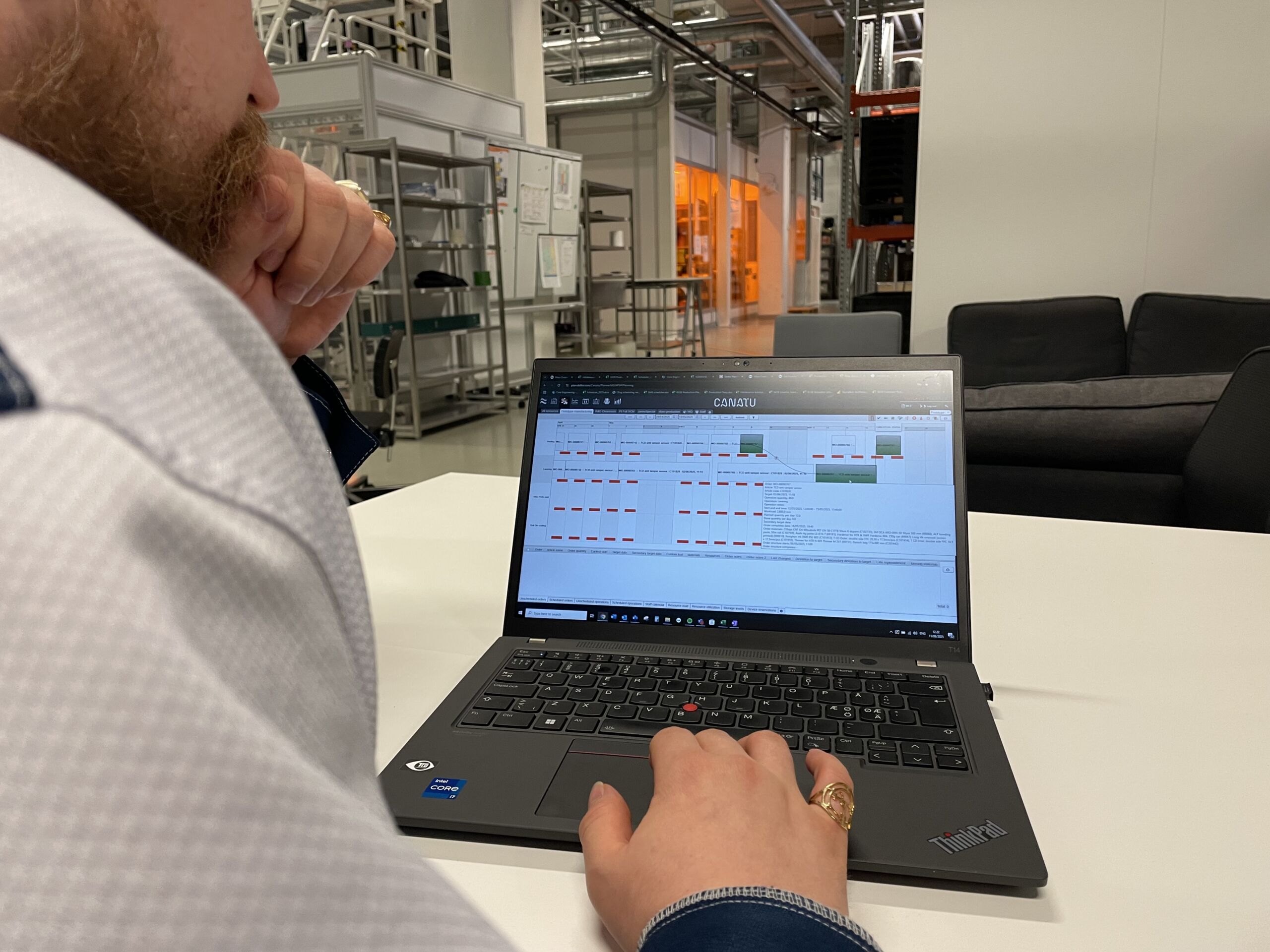
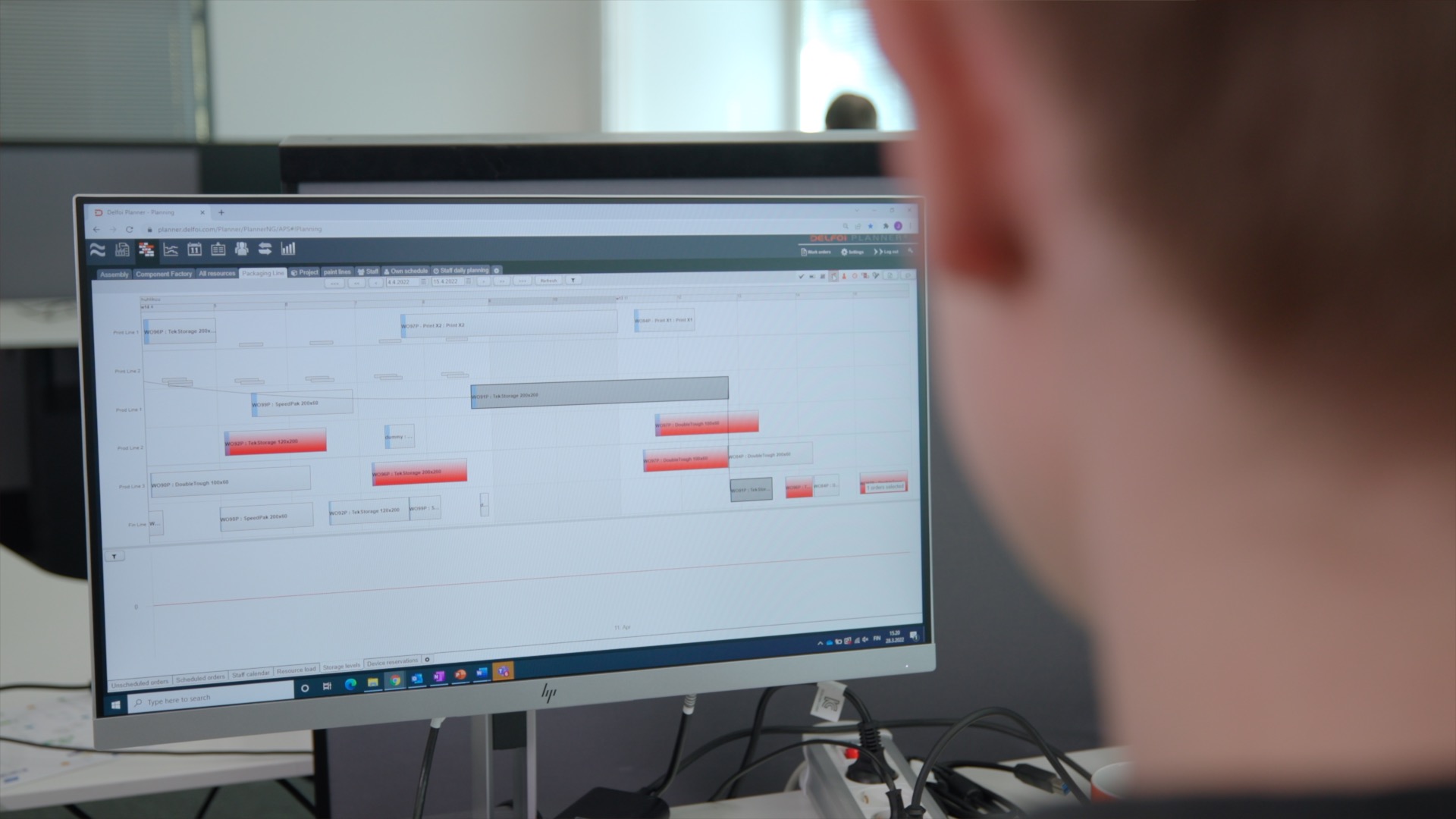
Modern planning solutions like Delfoi Planner production planning software help manufacturers replace manual, spreadsheet-based planning with automated, constraint-aware scheduling. These systems automatically account for resource availability, material lead times, and production sequences to create optimized schedules that maximize delivery performance while minimizing costs.
Delfoi Planner is a proven, visual planning solution with native connectivity to major ERP systems. For NetSuite users, the tested integration provides a straightforward path to advanced planning and scheduling without long development projects. The solution suits discrete manufacturing, make-to-order, make-to-stock, and project-based operations.
Connected to your NetSuite master data
Delfoi Planner for NetSuite integrates seamlessly with your NetSuite ERP. Bills of materials, routings, work orders, resource calendars, and inventory levels flow automatically into the planning environment, ensuring up-to-date data and eliminating the need for spreadsheets.
Integration between production planning and procurement ensures that material availability aligns with production schedules. This coordination prevents delays caused by missing components and enables planners to adjust schedules proactively when supplier delays occur. Real-time visibility into both production progress and material status allows for a rapid response to changing conditions.
What scheduling techniques work best for reliable deliveries?
Backward scheduling from customer delivery dates, combined with capacity-constrained planning and buffer management, provides one of the most reliable approaches to meeting delivery commitments. This technique starts with the required delivery date and works backward to determine the latest possible start date for each production phase.
Advanced Planning and Scheduling (APS) systems offer sophisticated algorithms that optimize production sequences while respecting capacity constraints and material availability. These systems can automatically reschedule orders when disruptions occur, maintaining delivery reliability even when conditions change unexpectedly.
Critical-path scheduling helps identify which production activities directly affect delivery dates, allowing planners to focus on the most important tasks. By understanding dependencies between operations, manufacturers can prioritize resources and monitor progress more effectively.
Buffer-management techniques protect delivery reliability by strategically placing time buffers before critical operations and customer delivery dates. Rather than distributing slack time throughout the schedule, concentrated buffers protect against variability while maintaining schedule efficiency.
How do you maintain delivery reliability during disruptions?
Maintaining delivery reliability during disruptions requires real-time visibility into production status, flexible rescheduling capabilities, and proactive communication with customers about potential delays. A rapid response to changing conditions prevents small disruptions from becoming major delivery failures.
Real-time production monitoring systems provide immediate alerts when actual progress deviates from planned schedules. This early-warning capability enables production managers to take corrective action before delays affect customer deliveries. Modern Manufacturing Execution Systems (MES) track work progress automatically and update schedules in real time.
Flexible rescheduling becomes critical when disruptions occur. Advanced planning systems can quickly evaluate alternative scenarios and reschedule affected orders to minimize the impact on deliveries. This capability allows manufacturers to respond to equipment failures, material shortages, or quality issues without compromising overall delivery performance.
Proactive customer communication can transform potential service failures into opportunities to demonstrate reliability and professionalism. When delays become unavoidable, immediate notification with revised delivery dates and an explanation helps maintain customer relationships and trust. For more information about implementing these delivery reliability solutions, contact our manufacturing experts to discuss your specific requirements. Transparency about production status throughout the order-fulfillment process builds confidence in the manufacturer’s capabilities.