Modern manufacturing faces a persistent challenge: the disconnect between production planning systems and actual shop floor execution. While Advanced Planning and Scheduling (APS) systems create optimized production schedules, these plans often fail to translate effectively to the manufacturing floor, resulting in inefficiencies and missed opportunities.
This visibility gap between planning and execution represents one of the most significant barriers to achieving truly agile manufacturing operations. Understanding how to bridge this gap is essential for manufacturers seeking to maximize productivity, reduce waste, and respond quickly to changing market demands.
What Is the Gap Between APS Planning and Shop Floor Execution?
The gap between APS planning and shop floor execution occurs when production schedules created by planning systems fail to align with actual manufacturing operations. This disconnect manifests as delays between plan updates and implementation on the shop floor, limited real-time feedback from production to planning, and insufficient visibility into actual resource availability and constraints.
Traditional APS systems often operate in isolation from shop floor realities. While these systems generate sophisticated schedules based on theoretical capacity and lead times, they frequently lack real-time data on machine breakdowns, material shortages, quality issues, or operator availability. This creates a scenario in which planners work with outdated information while shop floor supervisors make decisions without understanding the broader production strategy.
The communication barrier extends both ways. Shop floor personnel may not receive timely updates when schedules change, leading them to continue working on outdated priorities. Simultaneously, planning teams remain unaware of production delays or issues until significant time has passed, forcing reactive adjustments rather than proactive optimization.
Why Does Poor Visibility Between Planning and Execution Hurt Manufacturing Performance?
Poor visibility between planning and execution directly impacts manufacturing performance by creating inefficiencies, increasing costs, and reducing delivery reliability. Without real-time communication between systems, manufacturers cannot respond quickly to disruptions, optimize resource utilization, or maintain accurate delivery commitments to customers.
The performance impact manifests in several critical areas. Production schedules become unrealistic when they do not reflect actual shop floor conditions, leading to missed deadlines and customer dissatisfaction. Resource utilization suffers as machines and operators work on outdated priorities while critical orders wait in queues. Inventory levels increase as work in progress accumulates due to poor coordination between planning decisions and execution capabilities.
Quality issues compound when shop floor problems are not immediately communicated back to planning systems. Defective products continue through production processes while planners remain unaware of the need to adjust schedules or allocate additional resources for rework. This lack of visibility also prevents manufacturers from identifying recurring bottlenecks or inefficiencies that could be addressed through better planning strategies.
The financial impact extends beyond immediate production costs. Poor delivery performance damages customer relationships and weakens competitive positioning. Excess inventory ties up working capital, while emergency expediting increases operational expenses. Without integrated visibility, manufacturers struggle to achieve the agility needed to compete in dynamic markets.
How Do You Bridge the Communication Gap Between APS and Shop Floor?
Bridging the communication gap between APS and the shop floor requires implementing integrated systems that enable bidirectional data flow, establishing clear communication protocols, and creating feedback loops that keep planning and execution synchronized in real time.
The foundation of effective communication lies in system integration. Manufacturing Execution Systems (MES) serve as the critical link between planning systems and shop floor operations. These systems capture real-time production data, track order progress, and communicate status updates back to planning systems. When properly integrated, MES solutions ensure that schedule changes are immediately communicated to operators while shop floor realities are reflected in planning decisions.
Standardized communication protocols are essential for consistent information exchange. This includes defining what data needs to be shared, how frequently updates occur, and which personnel are responsible for monitoring and responding to system communications. Clear escalation procedures ensure that critical issues receive immediate attention, while routine updates flow automatically between systems.
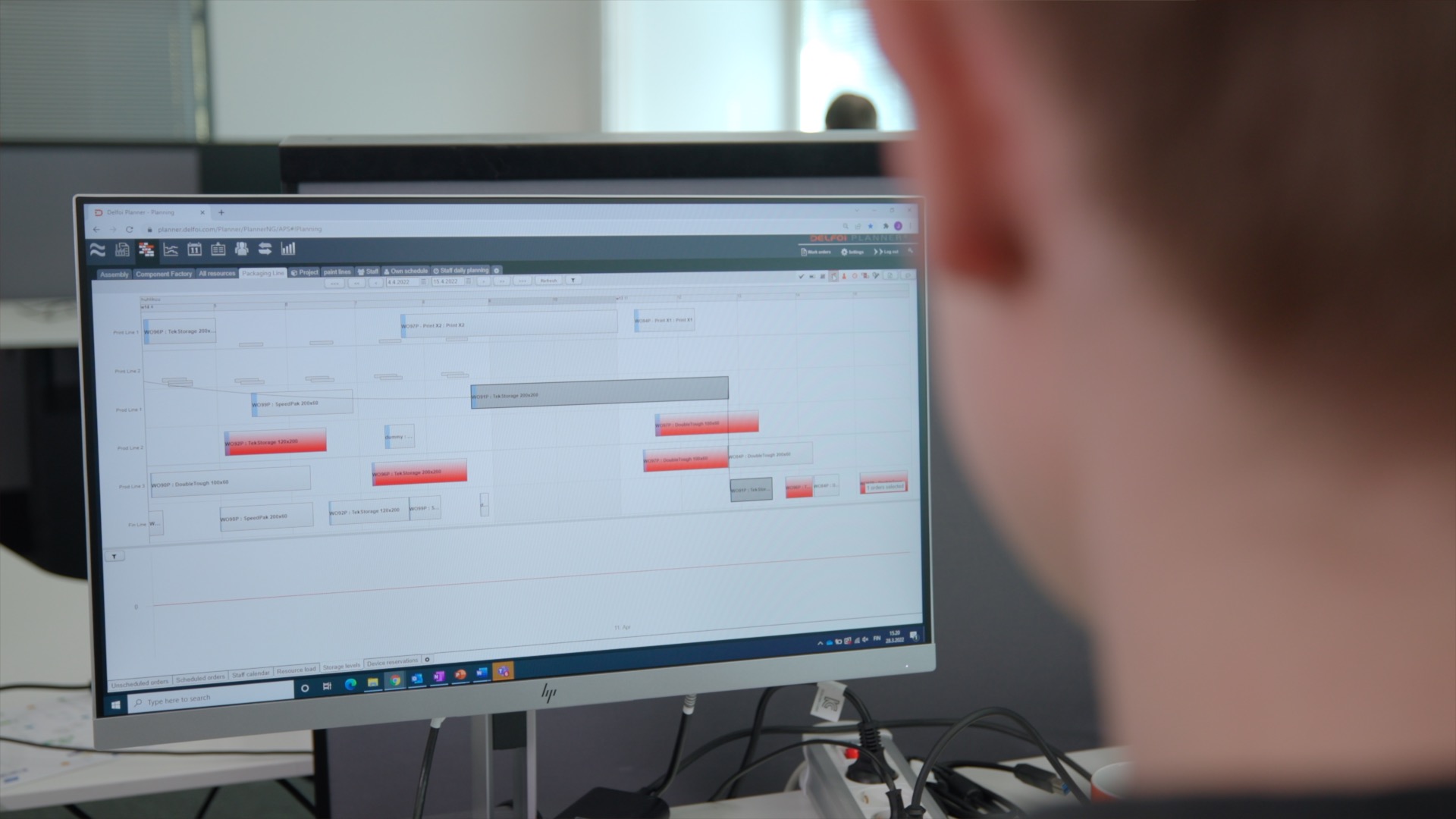
Visual management tools enhance communication effectiveness by providing intuitive interfaces that both planners and operators can easily understand. Digital displays on the shop floor show current priorities, schedule changes, and performance metrics. Planning dashboards provide real-time visibility into production status, enabling quick identification of issues that require attention.
Delfoi Planner: Proven Integration for NetSuite Users
Delfoi Planner is a proven, visual planning solution with native connectivity to major ERP systems. For NetSuite users, the tested integration provides a straightforward path to advanced planning and scheduling without long development projects. The solution suits discrete manufacturing, make-to-order, make-to-stock, and project-based operations.
Connected to your NetSuite master data
Delfoi Planner for NetSuite integrates seamlessly with your NetSuite ERP. Bills of materials, routings, work orders, resource calendars, and inventory levels flow automatically into the planning environment, ensuring up-to-date data and eliminating the need for spreadsheets.
What Technologies Enable Real-Time Visibility Between Planning and Production?
Real-time visibility between planning and production is enabled by integrated Manufacturing Execution Systems (MES), Industrial Internet of Things (IIoT) sensors, cloud-based APS platforms, and advanced analytics tools that collect, process, and distribute production data instantaneously across all levels of the organization.
Modern APS solutions, such as cloud-based platforms, provide the computational power and connectivity needed for real-time optimization. These systems process vast amounts of data from multiple sources, automatically adjusting schedules based on current conditions while maintaining visibility across the entire production network. The cloud architecture ensures that all stakeholders access the same up-to-date information regardless of location.
IIoT sensors and connected equipment provide the data foundation for real-time visibility. These technologies automatically capture machine status, production rates, quality metrics, and resource utilization without requiring manual data entry. Sensors detect equipment issues before they cause major disruptions, enabling proactive responses that minimize production impact.
Advanced analytics and machine learning algorithms enhance visibility by identifying patterns and predicting potential issues. These technologies analyze historical and real-time data to forecast bottlenecks, optimize resource allocation, and recommend schedule adjustments. Predictive capabilities enable manufacturers to address problems before they affect production performance.
Mobile technologies extend visibility to all levels of the organization. Operators use tablets and smartphones to receive work instructions, report status updates, and access real-time information. Supervisors and managers can monitor production performance and make decisions from anywhere in the facility or remotely.
How Do You Measure the Success of Improved Planning-Execution Visibility?
The success of improved planning-execution visibility is measured through key performance indicators, including schedule adherence rates, order fulfillment accuracy, inventory turnover, equipment utilization, and response time to production disruptions. These metrics provide quantifiable evidence of enhanced coordination between planning systems and shop floor operations.
Schedule adherence represents the most direct measure of planning-execution alignment. This metric tracks how closely actual production follows planned schedules, indicating the effectiveness of communication between systems. Improved visibility typically results in higher schedule adherence rates, as real-time adjustments keep production on track despite unexpected events.
On-time delivery performance reflects the ultimate customer impact of better visibility. When planning and execution systems work together effectively, manufacturers can make more accurate delivery commitments and meet customer expectations consistently. This metric directly correlates with customer satisfaction and competitive positioning.
Resource utilization metrics demonstrate operational efficiency improvements. Better visibility enables more effective allocation of machines, operators, and materials, resulting in higher productivity and lower costs. Equipment utilization rates increase when operators work on the right priorities, while machine idle time decreases through better coordination.
Response time to disruptions measures organizational agility. With improved visibility, manufacturers can identify and respond to problems more quickly, minimizing their impact on overall production performance. This includes metrics for time to detect issues, time to communicate problems, and time to implement corrective actions.
Inventory metrics reveal the financial benefits of better coordination. Work-in-progress levels decrease when production flows smoothly according to optimized schedules. Raw material and finished goods inventory can be optimized when planning systems have accurate visibility into actual production capabilities and timing. For more information about implementing these solutions in your manufacturing operation, please contact our team.