Production scheduling is a critical decision that affects everything from delivery times to resource utilization in manufacturing. Two fundamental approaches dominate the field: finite scheduling and infinite scheduling. While both methods aim to organize production activities, they differ significantly in how they handle capacity constraints and resource limitations.
Understanding these differences is essential for production managers who want to optimize their operations. The choice between finite and infinite scheduling can determine whether your production runs smoothly or faces constant bottlenecks and delays.
What is the difference between finite and infinite scheduling?
Finite scheduling considers actual capacity constraints and resource limitations when creating production schedules, while infinite scheduling assumes unlimited capacity and focuses primarily on due dates and priorities. Finite scheduling creates realistic, achievable schedules by accounting for machine availability, labor constraints, and material limitations.
In finite scheduling, the system will not schedule more work than available capacity allows. If a machine is already booked for eight hours, no additional jobs can be scheduled on that machine during that period. This approach prevents overloading resources and creates schedules that production teams can actually execute.
Infinite scheduling, on the other hand, schedules work based on required completion dates without considering whether sufficient capacity exists. It assumes that additional resources can always be found or that capacity can be expanded when needed. This method often results in schedules that look good on paper but may be impossible to execute in reality.
The key distinction lies in feasibility. Finite scheduling produces executable schedules, while infinite scheduling produces idealized schedules that may require significant adjustments during execution.
How does finite scheduling work in practice?
Finite scheduling works by continuously checking resource availability before assigning tasks, ensuring that no resource is overbooked beyond its actual capacity. The system maintains real-time visibility into machine hours, labor availability, and material constraints to create realistic production schedules.
The process begins with loading all available resources into the system, including machines, work centers, and personnel. Each resource has defined capacity limits based on working hours, maintenance schedules, and availability. When scheduling a new job, the system checks these constraints and assigns work only when sufficient capacity exists.
Modern finite scheduling systems, such as advanced planning and scheduling (APS) solutions, use sophisticated algorithms to optimize resource allocation. They consider multiple factors simultaneously: setup times, changeover costs, skill requirements, and material availability. The system can automatically reschedule jobs when disruptions occur, maintaining feasible schedules even when conditions change.
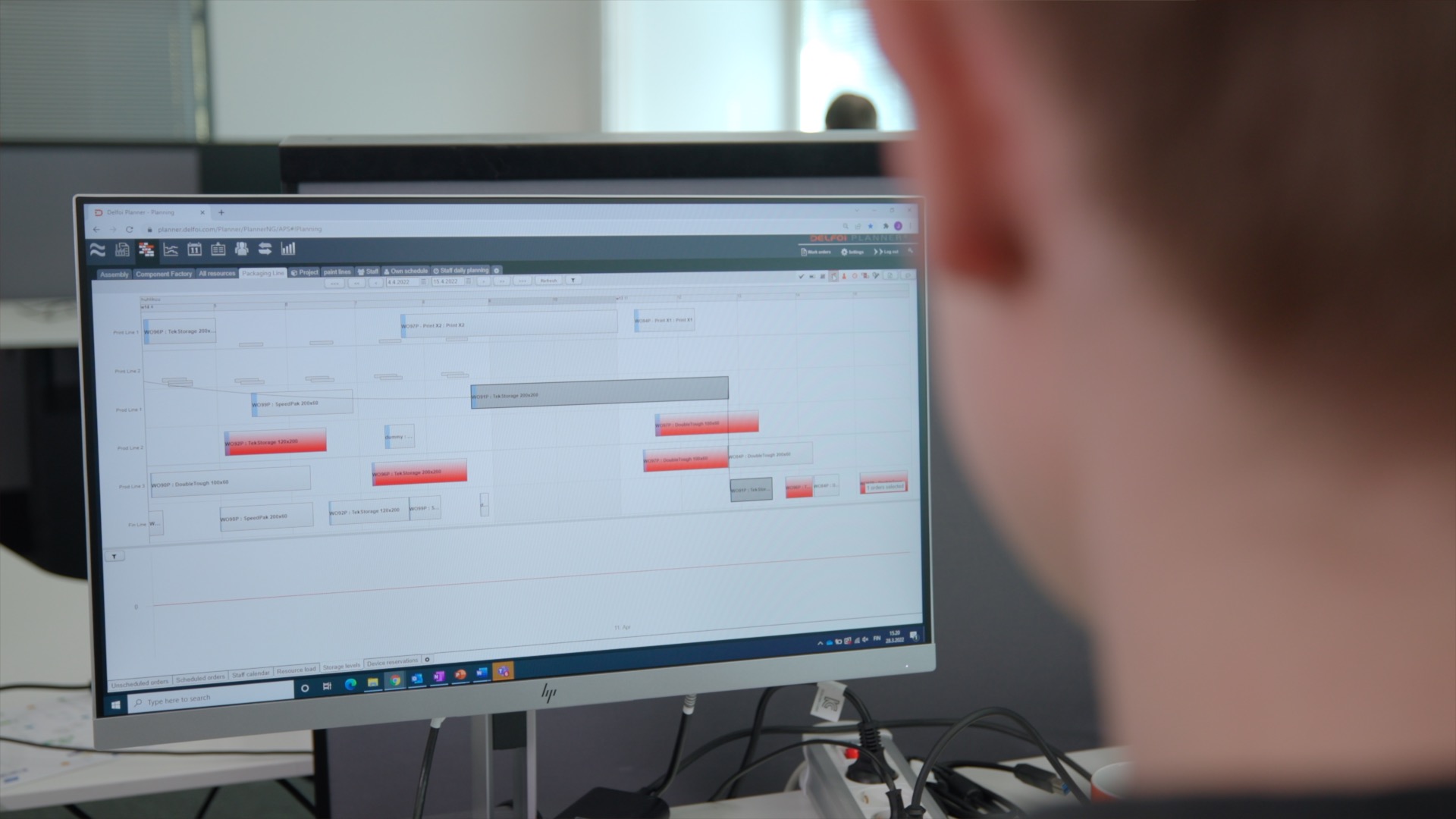
Visual tools such as Gantt charts make it easy for planners to see resource utilization and identify potential bottlenecks. Drag-and-drop functionality allows quick manual adjustments while the system maintains capacity constraints. This combination of automated optimization and manual control gives production planners the flexibility they need while ensuring schedules remain realistic.
When should you use infinite scheduling instead of finite scheduling?
Infinite scheduling is most appropriate for long-term planning, rough-cut capacity planning, and environments where resource flexibility is high. It works best when you need quick scheduling decisions and can adjust capacity through overtime, subcontracting, or temporary resources.
Use infinite scheduling when conducting initial feasibility studies or creating master production schedules that span months or years. At this planning level, exact capacity constraints are less critical than understanding overall workload patterns and identifying general resource requirements. This method helps answer questions like “How much capacity do we need next quarter?” rather than “Can we complete this job by Friday?”
Infinite scheduling also suits environments with highly flexible resources. Service industries, project-based work, and operations that can easily add temporary capacity benefit from this approach. When you can quickly scale resources up or down, the assumption of unlimited capacity becomes more realistic.
However, infinite scheduling should transition to finite scheduling as you move closer to execution. What starts as an infinite schedule for quarterly planning should become a finite schedule for weekly or daily operations. This progression ensures that long-term plans remain achievable when translated into detailed work instructions.
What are the main advantages and disadvantages of each approach?
Finite scheduling provides realistic schedules and better resource utilization but requires more detailed data and greater computational power. Infinite scheduling offers simplicity and speed but can create unrealistic expectations and resource conflicts.
Finite Scheduling Advantages
Finite scheduling delivers executable schedules that production teams can actually follow. By respecting capacity constraints, it eliminates the frustration of impossible deadlines and reduces the need for constant schedule adjustments. Resource utilization improves because the system optimizes allocation across all available capacity.
The approach also provides better visibility into true delivery capabilities. When a customer requests a rush order, finite scheduling can immediately show whether the request is feasible given current capacity. This transparency improves customer service and prevents overpromising.
Finite Scheduling Disadvantages
The main drawback is complexity. Finite scheduling requires accurate data about capacity, setup times, and resource availability. Maintaining this data demands ongoing effort and system integration. The computational requirements are also higher, potentially slowing scheduling processes for large, complex operations.
Infinite Scheduling Advantages
Infinite scheduling is fast and simple to implement. It requires minimal data about capacity constraints and can quickly generate schedules based on due dates and priorities. This makes it suitable for initial planning and environments where detailed capacity data is unavailable.
Infinite Scheduling Disadvantages
The major limitation is unrealistic schedules. Without capacity constraints, the system may schedule more work than resources can handle, leading to delays, overtime, and frustrated production teams. The lack of resource optimization can also result in inefficient capacity utilization.
How do you choose the right scheduling method for your production?
Choose finite scheduling when you need realistic, executable schedules and have stable, well-defined capacity constraints. Select infinite scheduling for high-level planning, flexible environments, or when detailed capacity data is unavailable.
Consider your planning horizon first. Short-term scheduling (days to weeks) almost always benefits from finite scheduling because capacity constraints are real and immediate. Long-term planning (months to years) can start with infinite scheduling and gradually transition to finite scheduling as execution approaches.
Evaluate your resource flexibility. Operations with fixed capacity, expensive equipment, or specialized skills should use finite scheduling to maximize resource utilization. Environments that can easily adjust capacity through temporary resources may find infinite scheduling sufficient for many planning purposes.
Data availability is another crucial factor. Finite scheduling requires accurate information about capacity, setup times, and resource availability. If this data is unreliable or difficult to maintain, infinite scheduling may be more practical until data quality improves.
Many successful operations use a hybrid approach, combining both methods at different planning levels. Strategic planning uses infinite scheduling to understand overall capacity needs, while operational planning uses finite scheduling to create executable daily schedules. This progression from infinite to finite scheduling aligns planning detail with execution requirements.
Advanced Planning Solutions for Modern Manufacturing
Delfoi Planner is a proven, visual planning solution with native connectivity to major ERP systems. For NetSuite users, the tested integration provides a straightforward path to advanced planning and scheduling without long development projects. The solution suits discrete manufacturing, make-to-order, make-to-stock, and project-based operations.
Connected to your NetSuite master data
Delfoi Planner for NetSuite integrates seamlessly with your NetSuite ERP. Bills of materials, routings, work orders, resource calendars, and inventory levels flow automatically into the planning environment, ensuring up-to-date data and eliminating the need for spreadsheets.
Modern production planning solutions like Delfoi Planner production planning software support both finite and infinite scheduling approaches, allowing organizations to choose the right method for each situation. The visual Gantt interface makes it easy to see the impact of capacity constraints and adjust schedules accordingly, whether using finite or infinite scheduling principles. For more information about implementing the right scheduling approach for your operation, contact our scheduling experts.