Inventory scheduling sits at the intersection of production planning and stock management: when done well, it keeps the right products available at the right time without tying up capital in excess stock. Effective inventory scheduling and product scheduling directly influence inventory levels by aligning production closely with actual demand, minimizing excess stock, reducing storage costs, and avoiding costly stockouts. Precise, responsive scheduling supports accurate forecasting, ensures optimal resource usage, and maintains smooth production flows. The financial consequences are tangible: lower inventory holding expenses, improved cash flow from reduced working capital requirements, and stronger customer satisfaction through reliable product availability.
This article explains what product scheduling is, how it shapes inventory management decisions, why forecasting is central to the process, what risks poor scheduling creates for financial performance, and how modern planning technology addresses these challenges in ways that matter to the bottom line.
What is product scheduling in inventory management?
Product scheduling refers to the strategic planning and timing of production activities to meet customer demand effectively while managing resources optimally. Within inventory management, scheduling involves determining the precise timing, quantity, and sequence of manufacturing tasks to ensure products are available exactly when needed. The primary objectives include minimizing inventory costs, maximizing equipment utilization, and improving order fulfillment rates.
Inventory scheduling is the discipline that connects these production decisions directly to stock availability and supply chain performance. Well-structured production schedules serve as the backbone of inventory management, translating demand forecasts and capacity constraints into concrete, time-bound manufacturing commitments that the entire supply chain can plan around.
Typical processes involved in product scheduling include:
- Analyzing sales forecasts and order data
- Allocating resources (machines, personnel, materials)
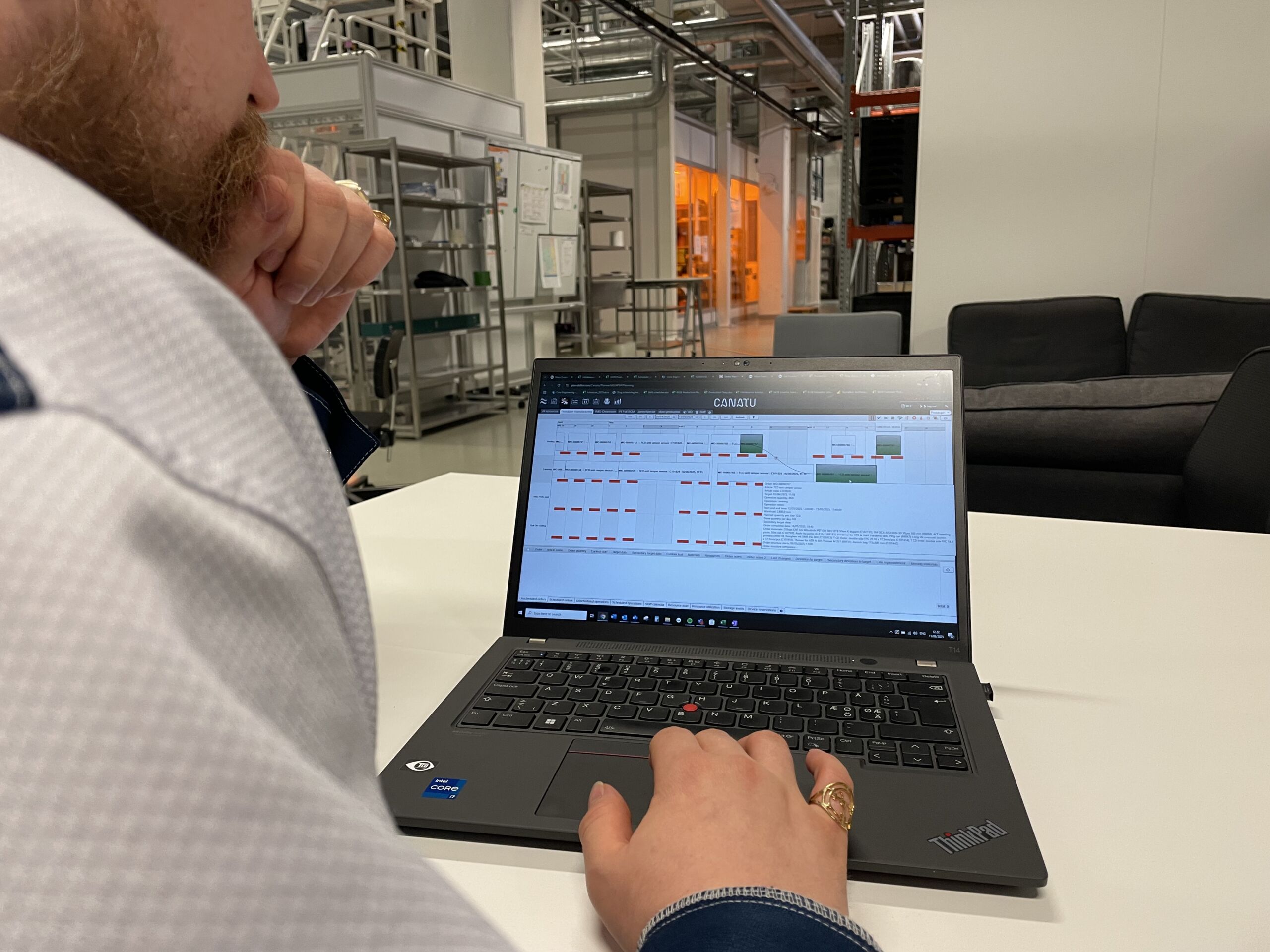
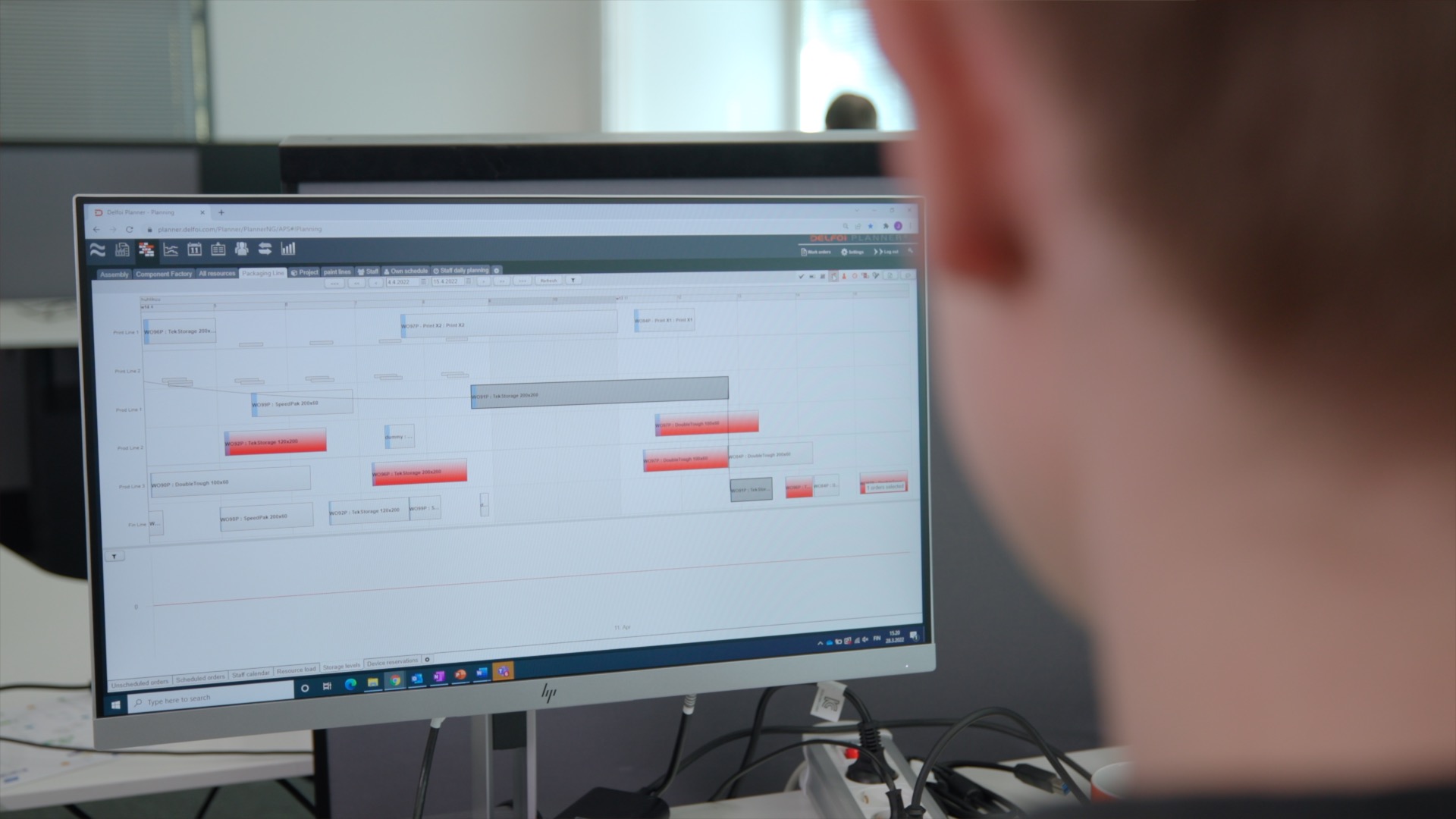
- Creating detailed production schedules (often visualized in Gantt charts)
- Monitoring real-time progress and adjusting plans accordingly
Our Delfoi Planner APS solution enables organizations to achieve precise scheduling through capacity-constrained planning, real-time visibility, and optimization of production tasks, facilitating efficient inventory control.
How does effective product scheduling improve inventory management and control?
Efficient scheduling directly enhances inventory management by aligning production with actual market demand. At its core, inventory scheduling ensures that what is produced, when it is produced, and in what quantity all reflect real demand signals rather than assumptions. Well-executed scheduling helps organizations achieve measurable financial improvements across several dimensions:
- Reduce inventory costs: By accurately matching production to demand, companies minimize unnecessary inventory, resulting in lower storage and holding expenses. In many manufacturing environments, tighter scheduling alignment can reduce inventory holding costs by 15-30%, freeing working capital for other investments. These are illustrative industry-level indicators rather than guaranteed outcomes, but they reflect the direction and scale of impact that better scheduling discipline typically delivers.
- Prevent stockouts: Precise scheduling ensures products are available when customers need them, enhancing customer satisfaction and loyalty. Even a modest improvement in schedule accuracy can meaningfully reduce stockout frequency, protecting revenue streams and repeat order rates that are difficult to recover once lost.
- Optimize resource usage: Scheduling production tasks efficiently maximizes machine and labor utilization, reducing downtime and associated costs. Efficient task sequencing routinely lifts overall equipment effectiveness (OEE) by eliminating unplanned idle time between production runs, which means more output from existing assets without additional capital investment.
- Improve demand-supply balance: Real-time scheduling adjustments enable quick responses to changing demand patterns, maintaining optimal inventory levels. Organizations that update schedules in response to real-time demand signals report faster reaction times to demand shifts, reducing both overstock events that tie up capital and shortage events that disrupt revenue.
Delfoi Planner MES provides real-time tracking and control of production tasks, enhancing the accuracy and agility of inventory management processes.
Why is forecasting important in product scheduling and inventory management?
Accurate forecasting plays a critical role in both scheduling and inventory management by predicting future demand levels and market trends. Reliable forecasts enable planners to align production schedules precisely with expected demand, significantly improving inventory efficiency and reducing waste. From a financial perspective, forecasting quality directly determines how much working capital is tied up in inventory at any given time and how confidently leadership can project production-related costs.
With effective forecasting, organizations can:
- Anticipate market fluctuations and customer demand accurately.
- Plan resources and capacities proactively, minimizing idle time and resource shortages.
- Reduce excess inventory or shortages by adjusting production proactively.
- Improve decision-making confidence with data-driven insights.
Tools such as Delfoi Planner SOP empower organizations to integrate demand scenarios directly into their planning processes, enabling proactive and informed inventory decisions. For CFOs and financial decision-makers, this translates into greater predictability in production-related expenditure and a stronger basis for capital allocation decisions.
What challenges can poor product scheduling create for inventory management?
Poorly executed product scheduling can lead to significant inventory management challenges, negatively impacting operational efficiency and profitability. Each of these challenges carries a direct financial cost that compounds over time. Common pitfalls include:
- Excess inventory: Inaccurate scheduling can result in overproduction, leading to high storage costs and potential wastage. Excess stock also ties up working capital that could otherwise be deployed more productively.
- Frequent stockouts: Poor scheduling might fail to anticipate market demand accurately, causing product shortages and customer dissatisfaction. Beyond the immediate lost sale, stockouts can trigger expedited shipping costs and damage customer relationships that took years to build.
- Increased operational costs: Inefficient use of production resources, overtime labor, and rushed shipping costs can escalate due to inaccurate scheduling. These costs are often treated as unavoidable in organizations that have not addressed the root cause in their planning process.
- Reduced responsiveness: Inflexible scheduling methods limit the ability to quickly adapt to market changes or unexpected disruptions, increasing the risk of costly production stoppages and missed delivery commitments.
Organizations can mitigate these challenges by adopting advanced planning solutions like Delfoi Planner APS, which provide real-time visibility, flexible adjustments, and comprehensive capacity management, ensuring schedules remain accurate and responsive.
How can technology enhance product scheduling and inventory management?
Advanced technological solutions significantly enhance scheduling accuracy and inventory management efficiency. Modern software and innovations provide organizations with powerful tools for precise, real-time planning and control.
Many production teams still manage schedules using spreadsheets or whiteboards, which work adequately in low-complexity environments but become a liability as product variety, order volumes, and supply chain interdependencies grow. When a single schedule change in a spreadsheet requires manual updates across multiple linked files and notifications to several teams, the planning cycle slows down and errors multiply. Modern scheduling software eliminates this friction by maintaining a single, connected plan that updates automatically when inputs change, giving planners more time to focus on exceptions and decisions rather than data entry. From a financial standpoint, this shift also reduces the hidden cost of planning errors, which often only become visible when they trigger expediting, overtime, or customer credits.
Key technological enhancements include:
- Real-time visibility: Solutions like Delfoi Planner MES offer immediate insight into production progress, enabling timely scheduling adjustments.
- Capacity-constrained scheduling: Advanced Planning and Scheduling (APS) software considers resource limitations, optimizing production plans accordingly. Better capacity utilization can delay or reduce the need for new machinery investments, improving the return on existing assets.
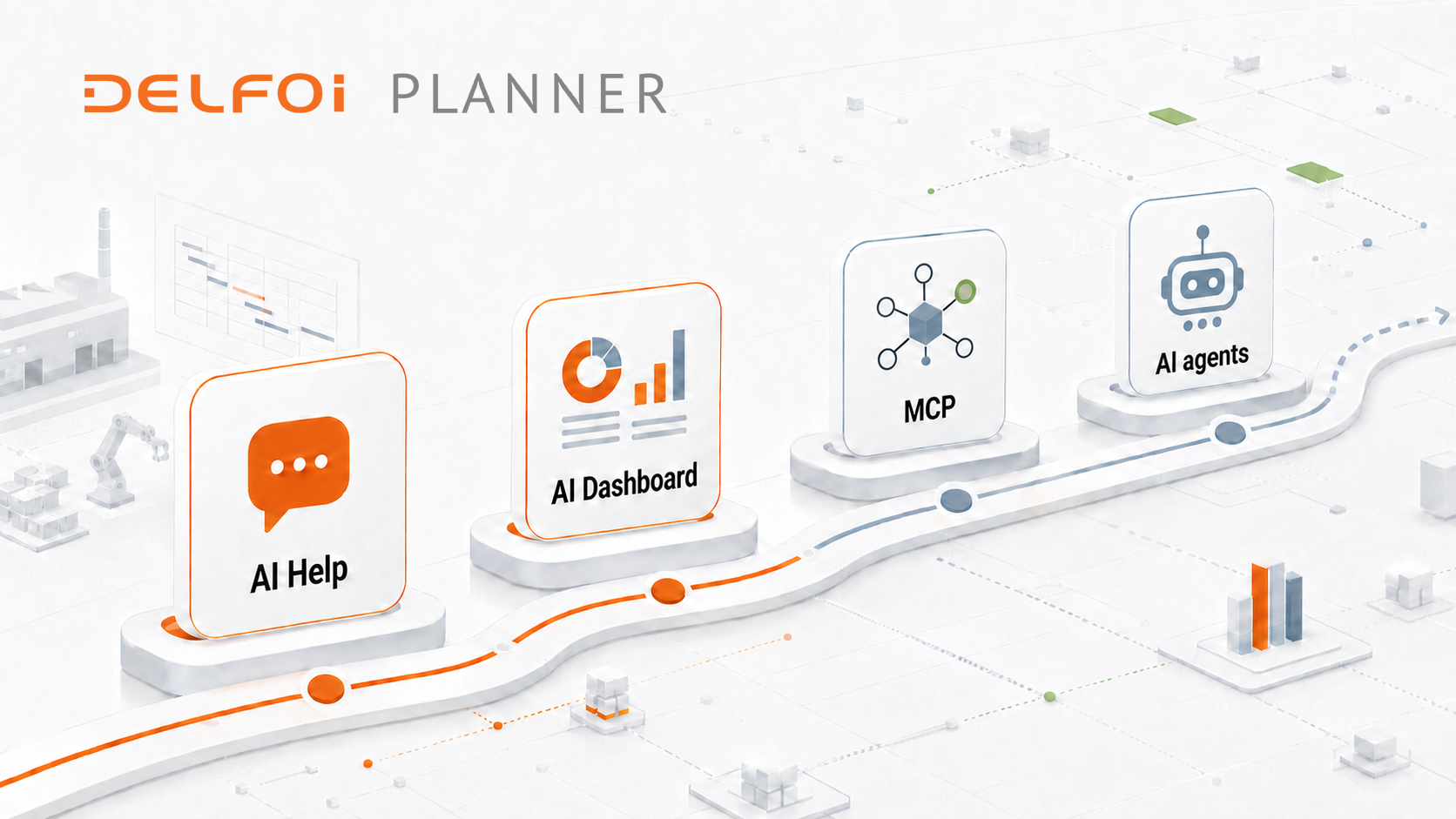
- Predictive analytics and AI: Intelligent algorithms analyze historic data and trends for accurate demand forecasting and proactive inventory management.
- Mobile accessibility: Cloud-based solutions provide real-time production and inventory data accessible from any device, enhancing responsiveness and collaboration.
Mastering product scheduling and inventory management: next steps
Improving the relationship between production scheduling and inventory management is an ongoing process rather than a one-time project. The organizations that do it well share a few common practices.
- They treat the production schedule as a living document, reviewed and updated on a regular cadence rather than set and forgotten.
- They invest in visibility, ensuring that everyone from production supervisors to procurement managers is working from the same real-time data.
- They close the loop between demand signals and production decisions, so that a change in customer orders triggers a corresponding adjustment in the schedule and the inventory plan.
For teams ready to move beyond spreadsheets and disconnected systems, advanced planning tools can accelerate this journey significantly, providing the capacity modeling, real-time tracking, and demand integration needed to make scheduling genuinely responsive. When evaluating such an investment, the financial case should be built around working capital reduction, lower operational costs, improved delivery reliability, and better utilization of existing production assets. The right technology does not replace good planning judgment; it gives planners the information and speed they need to exercise that judgment effectively.