Manufacturing schedules often appear solid on paper, yet they frequently crumble when they meet real-world production challenges. The traditional approach to production scheduling treats each resource and constraint as an isolated variable, creating brittle plans that fail when bottlenecks emerge or unexpected disruptions occur.
Constraint-based planning offers a fundamentally different approach to production scheduling—one that acknowledges and works with the inherent limitations of manufacturing systems. By identifying and managing constraints proactively, manufacturers can create more resilient schedules that adapt to disruptions rather than collapse under pressure.
What causes production schedules to break down?
Production schedules break down primarily due to unrealistic capacity assumptions, inadequate recognition of constraints, and rigid planning methods that cannot adapt to real-time changes. Most traditional scheduling approaches fail because they treat all resources as equally available and ignore the interdependencies between production steps.
The root causes of schedule breakdowns often stem from overoptimistic planning that doesn’t account for machine downtime, material shortages, or quality issues. When planners assume perfect conditions and infinite capacity, they create schedules that look efficient but prove impossible to execute. Equipment failures, unexpected maintenance needs, and quality problems can cascade through the entire production system, causing delays that compound throughout the schedule.
Another critical factor is the lack of real-time visibility into actual production status. Traditional scheduling often relies on outdated information, making it impossible to adjust plans as conditions change. Without accurate, current data about work progress, material availability, and resource status, even the best-laid schedules become obsolete within hours of implementation. This disconnect between planned and actual production creates a cycle in which schedules are constantly revised but never truly reliable.
How does constraint-based planning differ from traditional scheduling?
Constraint-based planning differs from traditional scheduling by focusing first on system limitations, then building schedules around those constraints rather than assuming unlimited capacity. This approach prioritizes bottleneck resources and ensures that the entire production system moves at the pace of its slowest component.
Traditional scheduling typically works backward from delivery dates, assigning work to resources based on theoretical capacity and standard lead times. This method often creates unrealistic expectations because it doesn’t consider that some resources may be operating at full capacity while others remain underutilized. The result is a schedule that looks balanced on paper but creates chaos on the shop floor.
Constraint-based planning, by contrast, starts with a thorough understanding of system limitations. It identifies which resources, materials, or processes represent bottlenecks and builds the entire schedule around protecting and optimizing these constraints. This approach recognizes that improving non-constraint resources won’t increase overall system throughput, so it focuses improvement efforts where they’ll have the greatest impact. Advanced planning systems can dynamically adjust schedules as constraints shift, maintaining feasible plans even as conditions change.
What are the key constraints in manufacturing operations?
The key constraints in manufacturing operations typically fall into five categories: capacity constraints, material constraints, quality constraints, skill constraints, and policy constraints. These limitations determine the maximum throughput and flexibility of any production system.
Capacity constraints represent the most obvious limitations, including machine availability, processing speeds, and setup times. These physical bottlenecks often determine the pace of entire production lines. A single machine operating at full capacity can limit the output of multiple upstream and downstream processes, making it critical to identify and manage these resources carefully.
Material constraints involve raw material availability, supplier reliability, and inventory management policies. Even with unlimited machine capacity, production stops when essential materials are unavailable. Quality constraints emerge when defect rates, rework requirements, or inspection processes limit throughput. These constraints can be particularly challenging because they’re often variable and unpredictable.
Skill constraints occur when specific expertise or certifications are required for certain operations. A shortage of qualified operators can create bottlenecks even when machines are available. Policy constraints include work rules, safety requirements, and business policies that limit how resources can be used, such as overtime restrictions or maintenance schedules.
How do you identify bottlenecks in production systems?
Bottlenecks in production systems are identified through capacity analysis, workflow observation, and performance measurement that reveals where work accumulates and flow slows. Key indicators include queue buildup, resource utilization rates, and cycle time variations across different production stages.
The most reliable method for identifying bottlenecks involves measuring actual throughput and utilization at each production step. Resources operating at or near 100% capacity while others remain underutilized typically represent system constraints. Work-in-process inventory tends to accumulate before bottleneck operations, creating visible queues that signal capacity limitations.
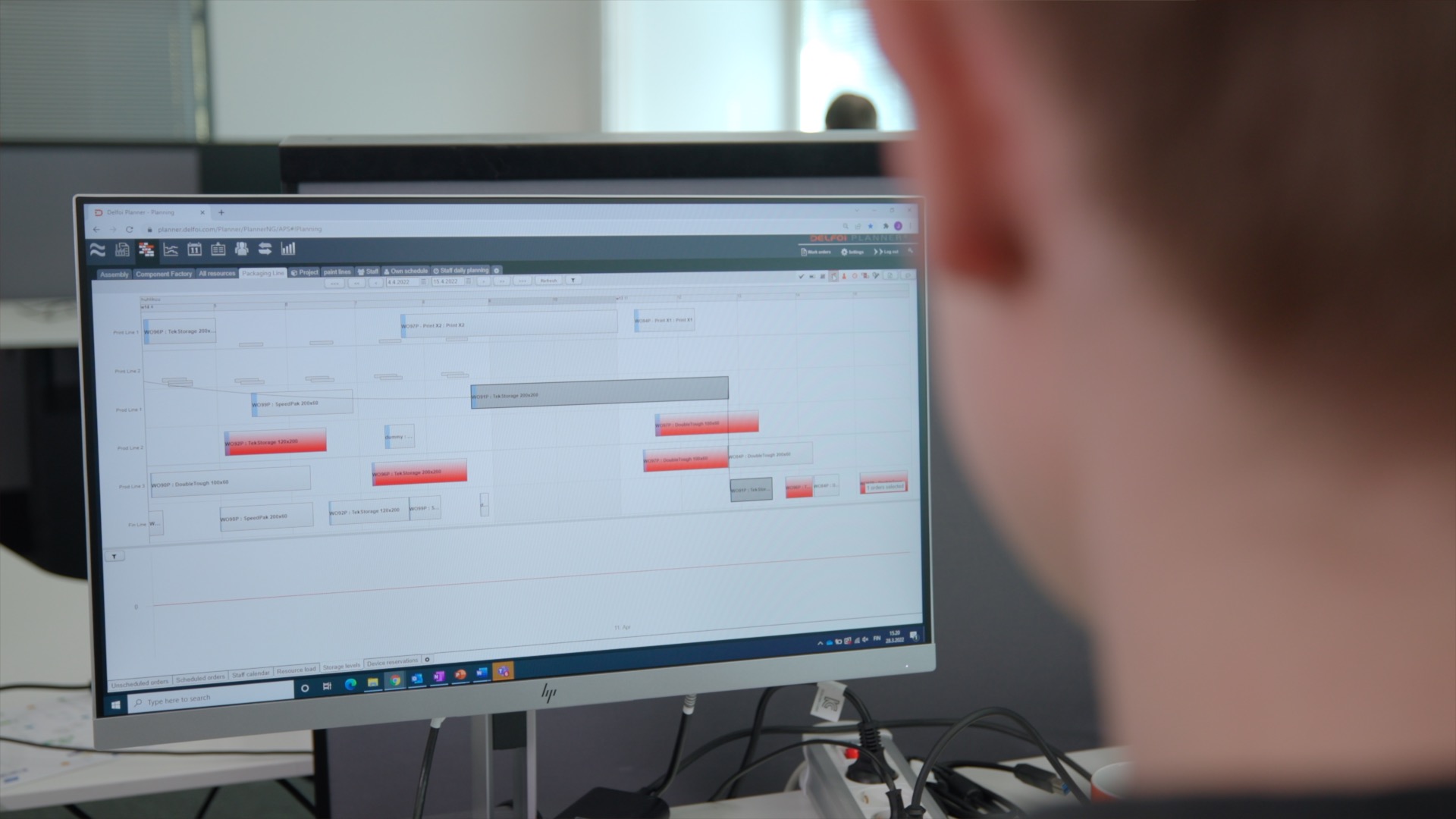
Modern production planning systems can automatically identify bottlenecks by analyzing historical performance data and current capacity loading. These tools track resource utilization patterns, cycle times, and queue lengths to pinpoint where constraints occur. Visual management tools like Gantt charts and capacity reports make bottlenecks apparent by showing which resources are overloaded while others have available capacity.
It’s important to recognize that bottlenecks can shift as production conditions change. A resource that’s a constraint today may have excess capacity tomorrow if demand patterns shift or other resources become limited. Effective bottleneck identification requires continuous monitoring and analysis rather than a one-time assessment.
How does constraint-based planning prevent schedule disruptions?
Constraint-based planning prevents schedule disruptions by building buffers around critical resources, maintaining realistic capacity assumptions, and enabling rapid replanning when conditions change. This approach creates inherently more stable schedules that can absorb minor disruptions without cascading failures.
The primary prevention mechanism involves protecting bottleneck resources through time and inventory buffers. By scheduling constraint resources at slightly less than full capacity and maintaining strategic inventory buffers, the system can accommodate minor disruptions without affecting downstream operations. This approach trades some theoretical efficiency for much greater schedule reliability.
Advanced constraint-based planning systems provide real-time visibility into production status and can automatically replan when disruptions occur. Rather than manually revising entire schedules, these systems can quickly identify the optimal response to changes, whether that involves rerouting work, adjusting priorities, or modifying resource assignments. This capability transforms schedule management from reactive crisis response to proactive optimization.
Delfoi Planner: Visual Planning Solution for NetSuite
Delfoi Planner is a proven, visual planning solution with native connectivity to major ERP systems. For NetSuite users, the tested integration provides a straightforward path to advanced planning and scheduling without long development projects. The solution suits discrete manufacturing, make-to-order, make-to-stock, and project-based operations.
Connected to your NetSuite master data
Delfoi Planner for NetSuite integrates seamlessly with your NetSuite ERP. Bills of materials, routings, work orders, resource calendars, and inventory levels flow automatically into the planning environment, ensuring up-to-date data and eliminating the need for spreadsheets.
We’ve seen how constraint-based planning creates more resilient production schedules through our work with manufacturing clients. Modern planning solutions like Delfoi Planner production planning software incorporate constraint recognition and real-time replanning capabilities, helping manufacturers move beyond traditional scheduling limitations to achieve more reliable delivery performance and improved operational efficiency. For more information on how these solutions can transform your manufacturing operations, contact our manufacturing experts.