For many manufacturing companies, the decision to invest in an advanced planning and scheduling (APS) solution is not mainly about features. It is about proof.
Planners and plant management want to validate that the APS software can handle real constraints and everyday change. Finance and executive leadership want to minimise implementation risk and avoid committing to a long programme before there is confidence that the fit is right.
A well-designed APS proof of concept (PoC) provides that confidence. In a short, focused pilot, typically completed in around four to six weeks, you can verify essential capabilities and requirements using your own data and operating rules, and create a clear decision basis for what comes next.
The purpose of a PoC is to verify fit with your real constraints and data, and to create a decision-ready plan for implementation.
Avoid the “perfect model” trap in production scheduling
A common trap in planning projects is the pursuit of a perfect model. Teams attempt to document every exception and special case up front. Workshops multiply. The timeline slips. By the time the model is “complete”, priorities may already have changed.
A PoC requires a different mindset: model only what is necessary to test the target requirements. The goal is not completeness. The goal is a decision.
To keep the pilot focused, define the scope up front: what you will test, what you will not, and what must be true at the end of the PoC for the organisation to move forward with confidence. When the target is clear, it becomes much easier to judge whether the pilot is working.
Where APS can be validated more clearly than spreadsheets
A PoC is not the time to automate everything. It is the time to test situations where spreadsheet-based planning tends to break down. That usually happens when priorities change often, capacity is tight and shared across products or work centres, and routings, setups, or sequencing rules make planning highly interdependent.
In these conditions, evaluation becomes practical and easy to agree on. Can planners see the impact of a rush order, a missing component, or a capacity change quickly and with confidence? Can they explore a few realistic options without rebuilding the plan manually, and can they explain why one option is better than another?
Just as importantly, does the plan become easier to communicate? When the schedule is clearer and changes are visible immediately, production, purchasing, and customer-facing teams can react earlier. That is the type of day-to-day planning capability an APS PoC should aim to prove.
Design an APS PoC around scenarios, not demonstrations
A PoC becomes credible when it is built around a small set of agreed scenarios that reflect real planning work. This shifts the discussion from “the system can do many things” to “the system can handle our critical situations”.
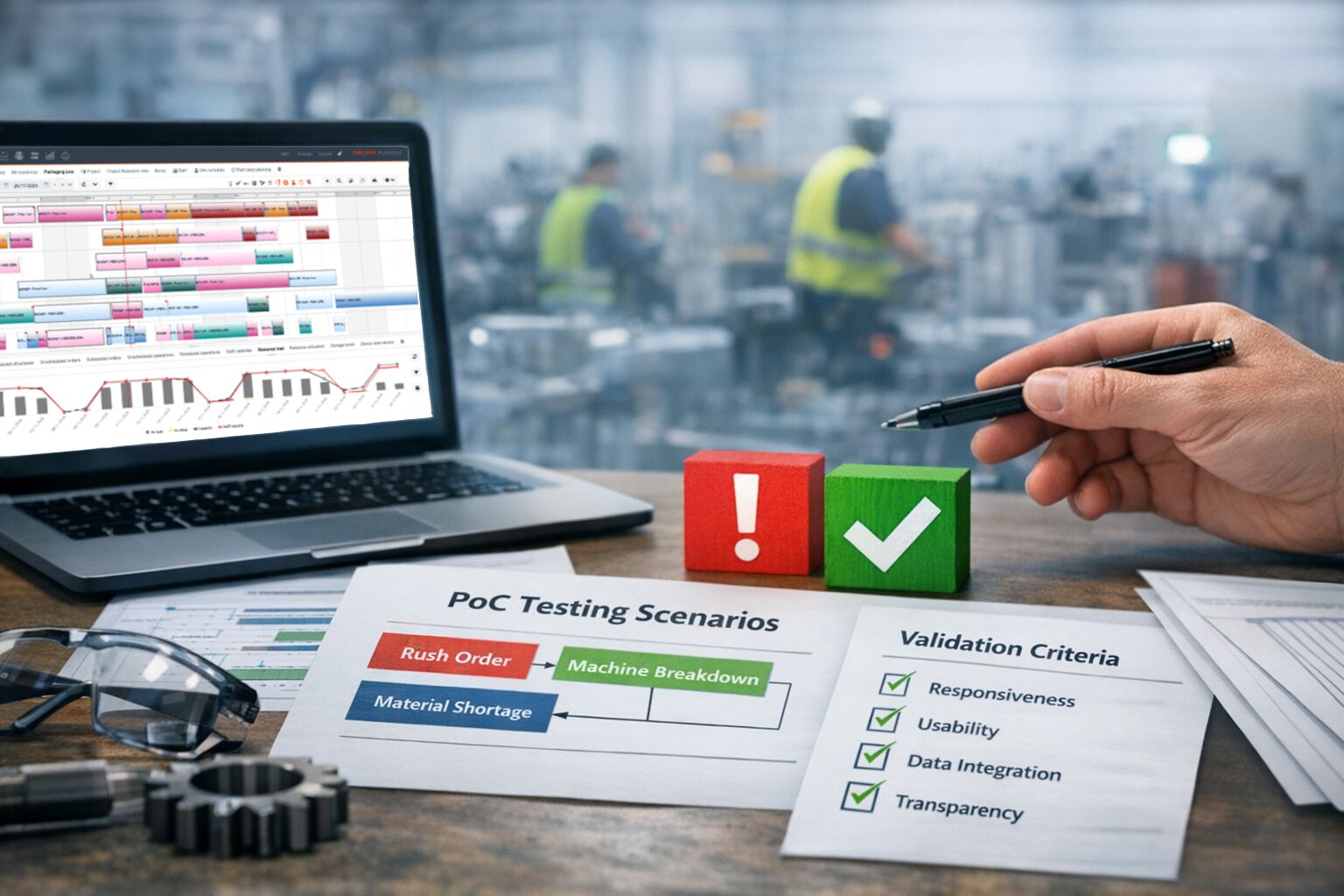
Instead of a generic system demonstration, define a handful of scenarios that mirror the events planners deal with in everyday operations. For example, you can test what happens when a rush order needs to be inserted without breaking critical commitments, when bottleneck capacity changes and delivery dates must be re-evaluated, when a material shortage forces resequencing, or when the schedule must be recovered after an unplanned disruption.
The most useful evaluation questions are practical. How fast can the team create a revised plan, and how clearly can they see the trade-offs? Do constraints behave as expected, and are the results explainable enough to be trusted by planners and supervisors? Finally, can planners operate the solution without constant specialist support?
What to measure in an APS proof of concept
Because a PoC is short and not a production deployment, measurement should focus on planning capability and readiness rather than long-term operational KPIs.
A few indicators typically provide a strong early signal:
- Planning responsiveness: how quickly schedules can be created, adjusted, and compared versus current practice.
- Usability and adoption: how easily planners can perform key tasks and explain the plan to stakeholders.
- Data and integration readiness: what data gaps become visible, how quickly they can be corrected, and how reliable the data flow is during the pilot.
- Transparency and communication: whether constraints, bottlenecks, and change impacts are visible enough to support cross-functional decisions.
- Supplier delivery capability: the quality of collaboration, speed of iterations, and clarity of recommendations.
By the end of the pilot, you should be able to summarise what requirements are already met, what gaps remain, and what data, integration, or process work would be required to proceed to deployment.
From PoC to implementation: APS as an iterative rollout
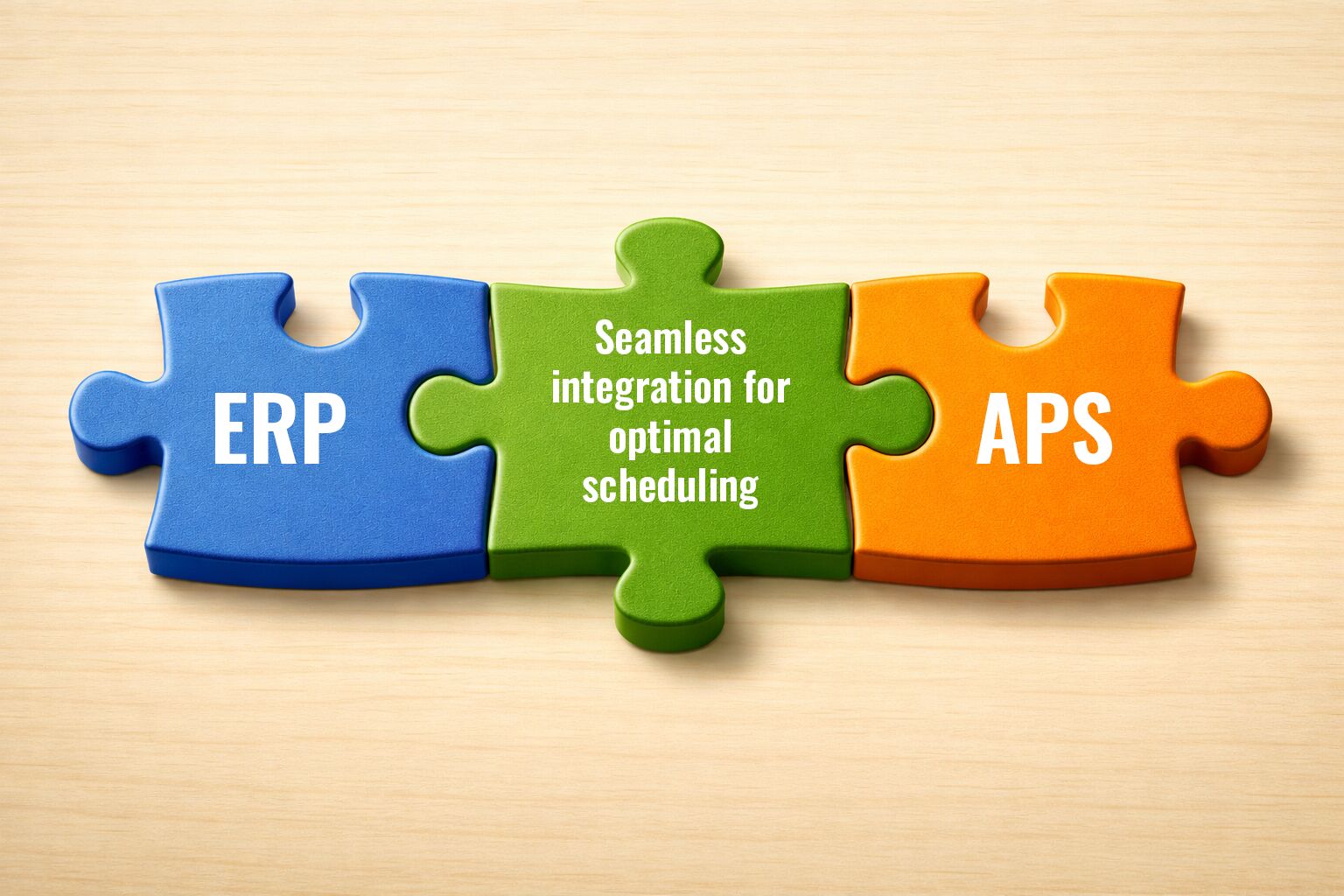
To run a successful PoC, the APS solution needs to support an iterative way of working. Integration with ERP data must be practical, the first model must be possible to build quickly, and the user interface must be intuitive enough that planners can start working without months of training.
In practice, APS projects start with a PoC before moving into full implementation and production use. This approach helps verify requirements with real scenarios and, just as importantly, confirm that the necessary data is available and usable. It is common for the PoC to reveal gaps in master data or planning parameters. Identifying those gaps early makes it possible to correct the data before a production rollout and reduces implementation risk.
With Delfoi Planner, we typically begin with a focused PoC and then proceed to production deployment with the same solution once the requirements and data readiness have been verified. In that sense, the PoC also functions as a design phase for implementation: it clarifies scope, confirms priorities, and creates a practical roadmap for the rollout.
The key outcome of the pilot is not a perfect model. It is confidence: a clear understanding of what the solution can do in your environment, what it will take to implement, and the quality of service provided by the solution supplier.