Manufacturing companies have invested millions in SAP systems to manage their operations, yet many still struggle with production planning challenges that their ERP system simply was not designed to solve. While SAP excels at managing transactions, master data, and business processes, the complexities of modern manufacturing demand planning capabilities that go far beyond what standard ERP modules can deliver.
The reality is that SAP production planning modules were built for a different era of manufacturing—one where production runs were longer, demand was more predictable, and the pace of change was manageable through traditional planning cycles. Today’s manufacturers face rapid demand fluctuations, complex multi-constraint environments, and the need for real-time decision-making that stretches SAP’s planning capabilities to their limits.
This article explores why even the most sophisticated SAP implementations require additional planning tools to meet contemporary manufacturing demands. You will discover the specific limitations that create operational gaps, understand why real-time planning requirements exceed SAP’s capabilities, and learn how to strategically enhance your planning environment without disrupting your existing SAP investment.
Understanding SAP’s core planning limitations
SAP’s planning modules operate on fundamental assumptions that do not always align with the realities of complex manufacturing environments. The system was designed around batch processing and periodic planning runs, which creates inherent delays between when changes occur and when the planning system can respond. This architectural approach works well for stable production environments but becomes problematic when manufacturers need to react quickly to disruptions, rush orders, or capacity constraints.
The rigidity of SAP’s standard planning logic presents another significant challenge. While the system offers extensive configuration options, it struggles with the nuanced decision-making that experienced planners perform daily. For instance, SAP might suggest scheduling a critical order on a machine that is technically available but actually reserved for preventive maintenance, or it might prioritise purely based on due dates without considering setup optimisation or material availability across multiple production stages.
In manufacturing environments with complex routing, alternative resources, or sequence-dependent setups, SAP’s planning algorithms often produce suboptimal results. The system lacks the sophisticated constraint-based scheduling capabilities needed to balance multiple competing priorities simultaneously. This limitation becomes particularly evident in industries such as pharmaceuticals, food processing, or discrete manufacturing, where production sequences, changeover times, and resource utilisation patterns significantly impact overall efficiency.
The gap between SAP’s transactional strength and modern planning requirements creates operational blind spots that can significantly impact production efficiency and customer service levels.
Why real-time planning demands exceed SAP capabilities
Modern manufacturing operates at a pace that traditional ERP planning cycles simply cannot match. When a machine breaks down, a supplier delivers late, or a customer changes their order, manufacturers need to understand the impact immediately and adjust their plans accordingly. SAP’s planning processes, however, typically run on scheduled intervals—whether hourly, daily, or weekly—creating gaps where critical information is not reflected in the production plan.
The challenge becomes even more pronounced when dealing with dynamic resource allocation. In environments where operators can work across multiple production lines, machines can be configured for different product families, or materials can be substituted based on availability, the planning system needs to continuously evaluate and optimise these decisions. SAP’s standard planning logic lacks the real-time optimisation engines required to handle these dynamic scenarios effectively.
Consider the complexity of managing a production schedule when dealing with rush orders. While SAP can identify that capacity exists, it cannot easily determine the optimal way to insert urgent orders without disrupting the entire production flow. The system lacks the visual scheduling capabilities and what-if analysis tools that planners need to evaluate different scenarios quickly and make informed decisions about trade-offs.
Furthermore, SAP’s planning outputs are often difficult to interpret and act upon at the shop-floor level. Production teams need clear, visual representations of their work schedules, priorities, and resource assignments. The standard SAP interface, while comprehensive, does not provide the intuitive, real-time visibility that modern production environments require for effective execution and continuous improvement.
Integration challenges with existing SAP systems
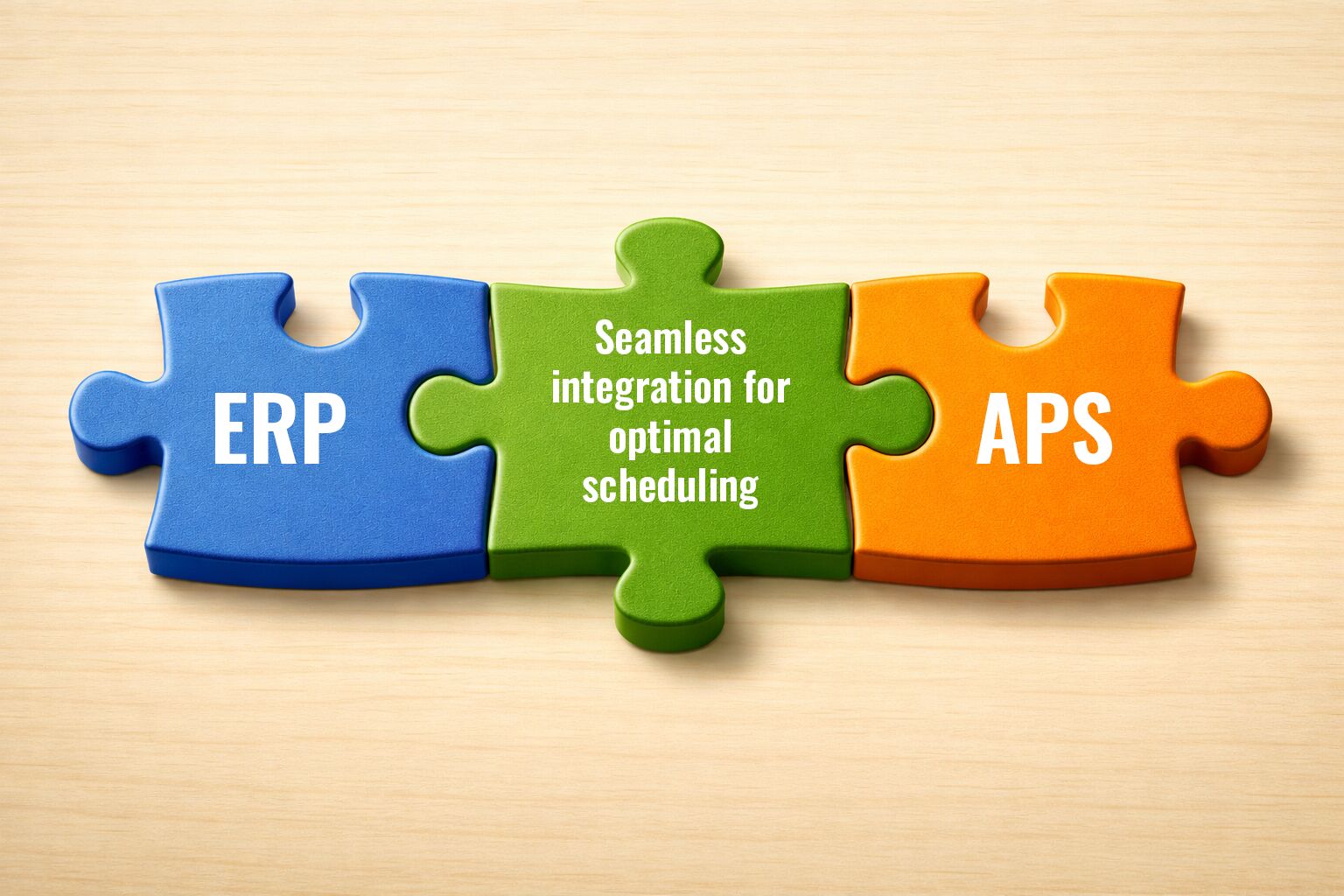
Implementing additional planning tools alongside SAP creates a complex web of integration requirements that must be carefully managed to maintain system coherence. The challenge is not simply connecting systems—it is ensuring that data synchronisation occurs seamlessly while preserving the integrity of SAP’s master data and transactional records. Any supplementary planning solution must respect SAP’s data structures, business logic, and workflow processes to avoid creating inconsistencies that could impact broader business operations.
One of the most significant technical hurdles involves maintaining real-time data consistency across systems. SAP contains the authoritative source for master data, including bills of materials, routings, work centres, and material availability. Any external planning tool needs continuous access to this information while also feeding scheduling decisions back into SAP for execution. This bidirectional data flow must be managed carefully to prevent conflicts, ensure audit trails remain intact, and maintain the single source of truth that SAP provides.
Workflow integration presents another layer of complexity. SAP’s approval processes, change management procedures, and user authorisations must be respected and extended to any additional planning tools. This means ensuring that production planners can work seamlessly between systems without compromising security, compliance, or operational governance. The integration must feel natural to users rather than forcing them to navigate between disconnected applications with different interfaces and data presentations.
Solutions such as Delfoi Planner for SAP address these integration challenges by providing tested interfaces that minimise custom development while maintaining full connectivity to SAP master data and transactional systems. This approach allows manufacturers to extend their planning capabilities without disrupting existing SAP investments or creating additional maintenance burdens for IT teams.
Strategic framework for enhanced planning solutions
Successfully implementing complementary planning tools requires a strategic approach that balances operational improvements with technical feasibility and organisational readiness. The evaluation process should begin with a clear assessment of your current planning challenges and their business impact. This involves identifying specific scenarios where SAP’s standard planning capabilities fall short and quantifying the operational costs of these limitations in terms of efficiency, customer service, and competitive positioning.
When evaluating potential solutions, prioritise those that enhance rather than replace your SAP investment. The most effective approach involves layered functionality—using SAP for what it does best (master data management, transactions, and business process workflow) while adding specialised planning capabilities that complement these strengths. This strategy preserves your existing investment while addressing specific operational gaps that impact manufacturing performance.
Implementation should follow a phased approach that allows for gradual adoption and continuous refinement. Start with pilot areas or product lines where the benefits are most apparent and the risks are manageable. This approach enables your team to develop expertise with the new tools while demonstrating value to stakeholders and building confidence in the enhanced planning environment.
Change management becomes particularly critical when introducing additional planning tools. Production planners, supervisors, and shop-floor personnel need training and support to leverage new capabilities effectively. The integration should enhance their existing workflows rather than forcing them to abandon familiar processes entirely. Success depends on ensuring that the enhanced planning environment feels like a natural evolution of their current SAP-based processes rather than a disruptive replacement.
Throughout the implementation process, maintain focus on operational transparency and system coherence. The goal is to create an integrated planning environment where SAP remains the backbone of your manufacturing operations while specialised tools provide the agility and visibility needed for contemporary production challenges. This balanced approach ensures that you can respond to immediate operational needs while preserving the long-term strategic value of your SAP investment.