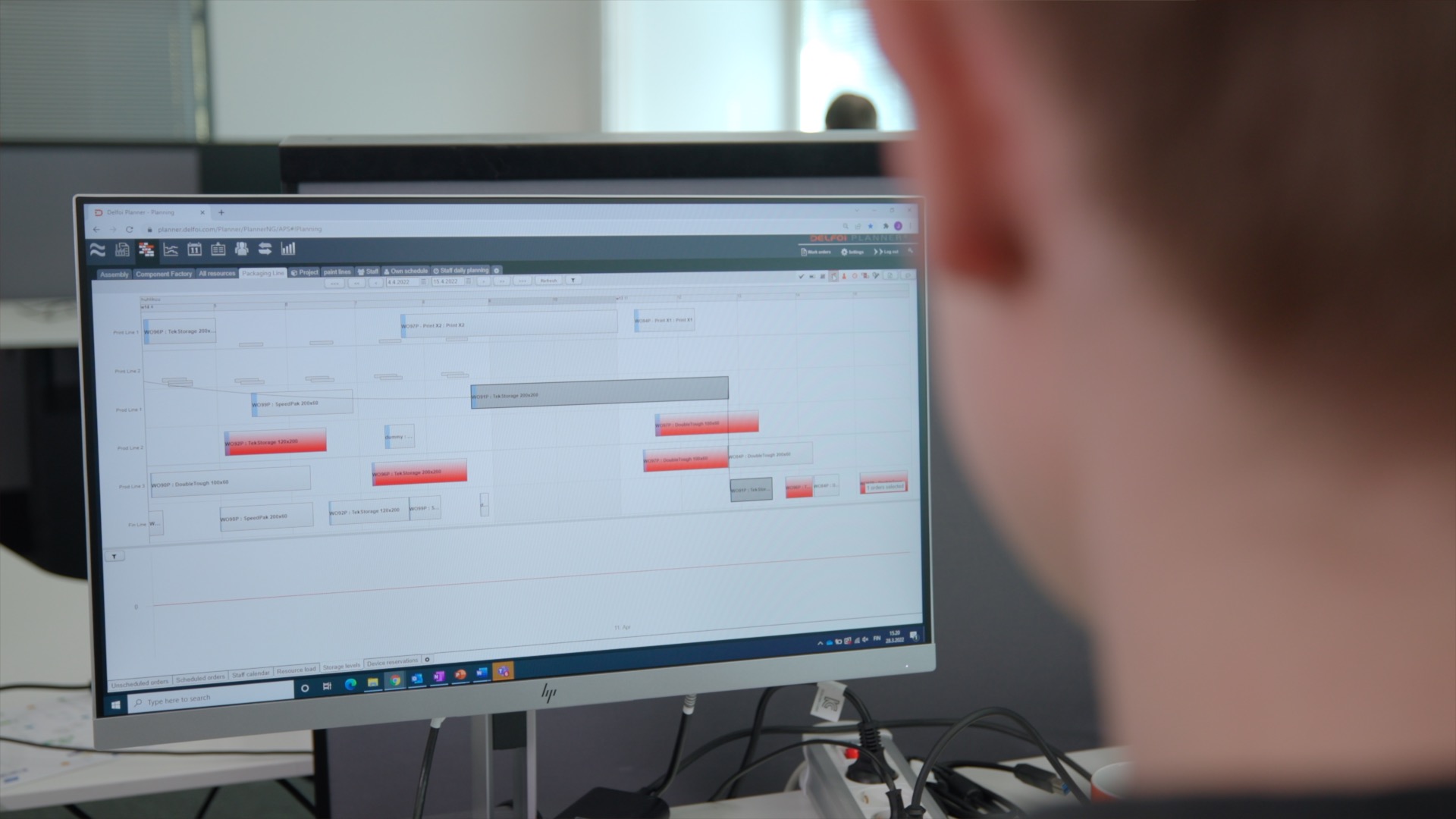
Manufacturing companies across industries struggle with production schedules that consistently fall short of expectations. Despite careful planning and resource allocation, schedules often become outdated within days—or even hours—of implementation, leading to missed deadlines, increased costs, and frustrated customers.
The root cause of these scheduling failures often lies in traditional planning approaches that fail to account for the complex web of constraints and interdependencies in modern manufacturing environments. Constraint-based planning offers a more sophisticated approach that addresses these fundamental limitations and provides a pathway to more reliable, efficient production schedules.
Why do production schedules consistently fail in manufacturing?
Production schedules fail primarily because traditional planning methods ignore resource constraints and assume unlimited capacity, creating unrealistic expectations that cannot be met in practice. These approaches treat scheduling as a simple sequencing exercise rather than as a complex optimization problem involving multiple competing constraints.
Most manufacturing organizations still rely on spreadsheet-based planning tools that cannot handle the dynamic nature of modern production environments. These static tools fail to account for machine-capacity limitations, skilled-labor availability, material shortages, or quality issues that inevitably arise during production.
Another critical factor is the lack of real-time visibility into production status. When schedules are created in isolation from actual shop-floor conditions, planners cannot respond quickly to disruptions or changes in demand. This disconnect between planning and execution creates a cascade of delays that compounds throughout the production cycle.
Additionally, traditional scheduling approaches often optimize for individual departments or processes rather than considering the entire production system. This siloed thinking leads to local optimizations that create bottlenecks elsewhere in the workflow, ultimately degrading overall system performance.
What is constraint-based planning and how does it work?
Constraint-based planning is an advanced scheduling methodology that explicitly considers all resource limitations, dependencies, and operational constraints when creating production schedules. Unlike traditional methods, it builds realistic schedules by acknowledging and working within the actual capabilities of the production system.
The approach works by first identifying all constraints in the production environment, including machine capacity, labor availability, material supply, and quality requirements. These constraints are then incorporated into mathematical models that optimize scheduling decisions while respecting these limitations.
Modern constraint-based planning systems use sophisticated algorithms to automatically generate schedules that balance competing objectives such as minimizing lead times, maximizing resource utilization, and meeting delivery commitments. The system continuously evaluates trade-offs among different scheduling options to find the optimal solution.
The planning process begins with loading current orders and demand forecasts into the system, which then applies constraint logic to determine the earliest feasible start and completion times for each operation. The system considers dependencies between operations, resource-availability windows, and setup requirements to create a comprehensive production plan.
How does constraint-based planning prevent common scheduling failures?
Constraint-based planning prevents scheduling failures by building realistic schedules that account for actual production limitations from the outset, eliminating the gap between planned and achievable performance. This approach addresses the root causes of schedule breakdowns rather than simply reacting to problems after they occur.
The methodology prevents overcommitment of resources by continuously monitoring capacity utilization across all production assets. When the system detects potential bottlenecks or resource conflicts, it automatically adjusts the schedule to maintain feasibility while optimizing overall performance.
Real-time integration with shop-floor systems enables immediate schedule updates when disruptions occur. If a machine breaks down or a material shipment is delayed, the constraint-based system can quickly recalculate affected operations and propagate the necessary changes throughout the schedule.
The approach also improves schedule stability by incorporating buffer time and contingency planning into the initial schedule. Rather than creating optimistic timelines that assume perfect conditions, constraint-based planning builds in realistic allowances for normal variability in production processes.
Advanced planning systems such as Delfoi Planner demonstrate these principles in practice, enabling manufacturers to replace error-prone spreadsheet planning with intelligent, constraint-aware scheduling that adapts to changing conditions while maintaining production efficiency.
What are the key benefits of implementing constraint-based planning?
The primary benefits of constraint-based planning include dramatically improved schedule reliability, reduced lead times, and enhanced customer satisfaction through better delivery performance. Organizations typically see 15–30% improvements in on-time delivery rates within months of implementation.
Resource utilization improves significantly as the system eliminates idle time caused by poor coordination between operations. By optimizing the sequence and timing of production activities, APS production scheduling and optimization maximizes throughput while minimizing waste and inefficiency.
The approach provides unprecedented visibility into production capacity and performance, enabling proactive decision-making rather than reactive problem-solving. Planners can identify potential issues weeks in advance and take corrective action before problems affect customer deliveries.
Cost reduction is another major benefit, as improved scheduling reduces overtime expenses, inventory carrying costs, and expediting fees. The system’s ability to optimize resource allocation and minimize disruptions translates directly into lower operating costs and improved profitability.
Perhaps most importantly, constraint-based planning creates a foundation for continuous improvement by providing accurate data on system performance and constraint utilization. This information enables organizations to make informed investment decisions about capacity expansion and process improvements that will have the greatest impact on overall performance. To learn more about implementing these solutions in your manufacturing environment, contact our experts for personalized guidance.