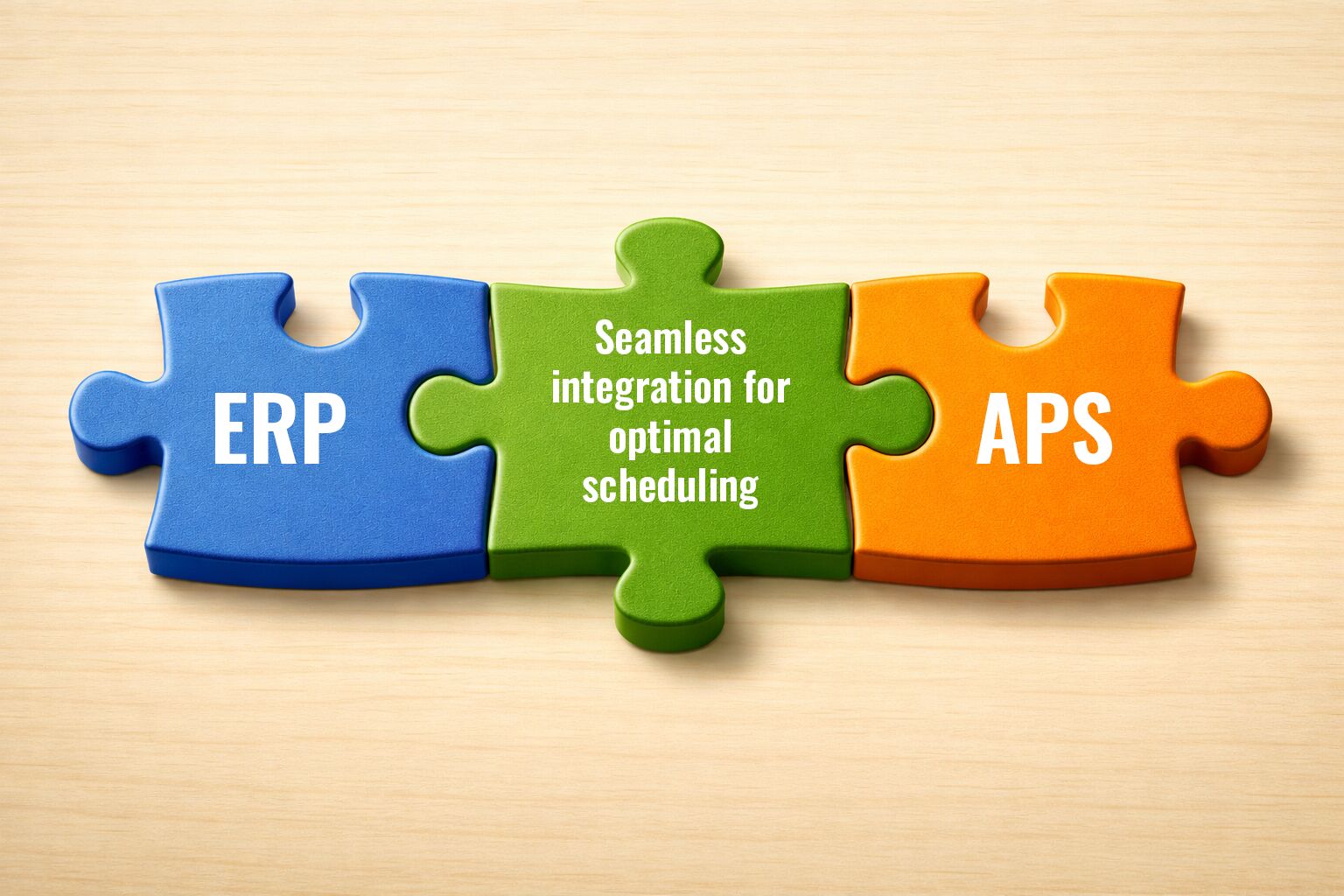
Manufacturing companies using Oracle NetSuite often discover that while the ERP system excels at managing business processes and data, its native manufacturing planning capabilities can leave production teams struggling with complex scheduling challenges. The gap between NetSuite’s robust ERP foundation and the sophisticated planning tools modern manufacturers need has led many organisations to seek integrated solutions that enhance rather than replace their existing investment.
Advanced Planning and Scheduling (APS) technology bridges this gap by seamlessly integrating with NetSuite’s core functionality, transforming how manufacturers approach production planning and control. Through intelligent optimisation algorithms and visual planning interfaces, manufacturers can achieve the operational transparency and agility their competitive landscape demands while preserving their NetSuite ecosystem.
Why NetSuite manufacturing planning falls short
NetSuite’s native manufacturing planning capabilities, while functional for basic operations, often struggle to meet the demands of complex production environments. Capacity constraints represent a fundamental limitation, as the system lacks sophisticated algorithms to automatically balance workloads across multiple resources while considering real-time availability and skill requirements.
This scheduling inflexibility becomes particularly apparent when manufacturers need to respond quickly to changing customer demands or unexpected disruptions. NetSuite’s planning tools typically require manual intervention for schedule adjustments, making it difficult to evaluate alternative scenarios or optimise production sequences dynamically. This rigidity can result in suboptimal resource utilisation and extended lead times.
Real-time visibility gaps further compound these challenges. Production planners often find themselves working with outdated information, as NetSuite’s standard reporting does not provide the granular, up-to-the-minute insights needed for effective shop floor management. The lack of visual planning tools means teams resort to spreadsheets or external systems, creating data silos that undermine the integrated approach NetSuite was designed to provide.
These limitations collectively impact production efficiency by creating bottlenecks in the planning process itself. When planners spend excessive time manipulating data rather than optimising production flows, the entire manufacturing operation suffers from delayed decision-making and reduced responsiveness to market changes.
How APS integration transforms NetSuite operations
Advanced Planning and Scheduling technology revolutionises NetSuite manufacturing planning by introducing sophisticated optimisation algorithms that work seamlessly with existing ERP data. Unlike NetSuite’s linear planning approach, APS systems evaluate multiple variables simultaneously, including material availability, resource capacity, setup times, and delivery priorities, to generate optimal production schedules.
Constraint-based scheduling represents the core advancement that APS brings to NetSuite operations. The system automatically identifies bottlenecks and resource conflicts, then applies intelligent algorithms to resolve these constraints while maintaining production feasibility. This capability transforms what traditionally required hours of manual planning into automated processes that deliver superior results.
Dynamic planning capabilities enable manufacturers to respond instantly to changing conditions. When customer priorities shift or equipment becomes unavailable, APS integration with NetSuite allows planners to regenerate optimised schedules that account for new constraints while preserving existing commitments where possible.
The transformation extends beyond scheduling to encompass predictive analytics and scenario planning. Manufacturers can evaluate “what-if” situations using real NetSuite data, enabling proactive decision-making that prevents problems rather than merely reacting to them. This forward-looking approach significantly improves delivery performance and customer satisfaction.
Essential features of seamless NetSuite integration
Successful manufacturing planning integration requires robust data synchronisation that maintains consistency between NetSuite’s master data and the enhanced planning environment. Bidirectional data flow ensures that bills of materials, work orders, inventory levels, and resource calendars remain current across both systems without manual intervention.
Workflow automation is crucial for maintaining operational efficiency during the integration process. The enhanced planning system must automatically trigger appropriate NetSuite transactions when schedules change, ensuring that purchasing, inventory management, and financial reporting remain aligned with production realities.
Preserving NetSuite’s existing business processes is a fundamental requirement for user acceptance and system reliability. The integration should enhance current workflows rather than disrupt established procedures, allowing teams to leverage familiar NetSuite interfaces while gaining access to advanced planning capabilities.
User authentication and security protocols must seamlessly extend from NetSuite to the integrated planning solution, maintaining data integrity and access controls without creating additional complexity for end users. Role-based permissions should flow naturally between systems, ensuring appropriate visibility levels across different organisational functions.
Implementing visual production control with NetSuite
Visual manufacturing dashboards transform NetSuite’s data-rich environment into intuitive planning interfaces that production teams can navigate effortlessly. Drag-and-drop Gantt charts enable planners to adjust schedules visually while maintaining connection to underlying NetSuite work orders and resource assignments.
Real-time production monitoring extends NetSuite’s tracking capabilities with graphical representations of shop floor activity. Production managers gain immediate visibility into work-in-progress status, resource utilisation, and potential bottlenecks through visual indicators that update automatically as conditions change.
Interactive planning tools complement NetSuite’s structured data management with flexible scenario modelling capabilities. Planners can simulate alternative production sequences, evaluate resource allocation options, and assess the impact of priority changes before committing to schedule modifications.
This visual approach reduces learning curves significantly compared with traditional ERP planning interfaces. New team members can understand production status and make informed decisions more quickly when information is presented through intuitive visual formats rather than complex data tables.
Measuring transformation success in manufacturing planning
Production efficiency metrics provide the primary indicators of successful NetSuite manufacturing planning transformation. Lead time reduction typically ranges from 20–50%, while capacity utilisation improvements of 25–50% demonstrate the impact of optimised scheduling algorithms working with NetSuite’s operational data.
Inventory optimisation measurements reveal how enhanced planning capabilities reduce work-in-progress levels while maintaining production flow. Improved demand visibility and scheduling accuracy enable manufacturers to operate with leaner inventory positions without compromising delivery performance.
Delivery performance indicators track the transformation’s impact on customer satisfaction through metrics such as on-time delivery rates and schedule adherence. The combination of NetSuite’s order management capabilities with advanced planning typically results in significant improvements in both delivery accuracy and customer communication.
Overall manufacturing competitiveness can be assessed through broader operational metrics, including planning time reduction, which often decreases by 60–70% when manual processes are replaced with automated optimisation. Response time to changes and the ability to handle increased order complexity without proportional resource increases indicate successful transformation outcomes.
The journey from NetSuite’s standard manufacturing planning to an enhanced, integrated approach requires careful consideration of technical requirements and organisational readiness. However, manufacturers that successfully implement Delfoi Planner for NetSuite typically achieve substantial improvements in operational efficiency, customer satisfaction, and competitive positioning. The key lies in selecting solutions that complement rather than compete with NetSuite’s strengths, creating a unified platform that delivers both ERP reliability and advanced planning sophistication.