Accurate and effective production planning directly influences customer satisfaction by ensuring timely deliveries, maintaining consistent product quality, and minimizing delays or shortages. Through accurate capacity planning, optimal inventory management, efficient resource allocation, and reliable scheduling, production planning helps businesses meet customer expectations consistently. Implementing robust planning practices and advanced tools enhances operational transparency and responsiveness, leading to fewer customer complaints and stronger, lasting relationships with customers.
What is Accurate Production Planning and Why Does It Matter?
Accurate production planning refers to the systematic process of aligning production activities to meet customer demand efficiently. It involves several core elements:
- Supply planning: Predicting future capacity to adjust production volumes accordingly.
- Inventory control: Maintaining optimal inventory levels to avoid shortages or excess stock.
- Resource allocation: Efficiently assigning machinery, personnel, and materials to production tasks.
- Finite scheduling: Planning production timelines precisely to ensure timely order fulfillment.
By orchestrating these components, businesses can streamline operations, reduce waste, and enhance overall efficiency.
Why Accurate Production Planning is Essential for Customer Satisfaction
When production planning is precise, businesses can consistently deliver high-quality products on schedule, significantly improving the customer experience. Key factors linking planning accuracy to satisfaction include:
- Timely delivery: Meeting promised deadlines builds customer trust and loyalty.
- Consistent product quality: Accurate planning reduces rushed jobs and errors, ensuring products meet quality standards.
- Reduced waiting times: Eliminating production bottlenecks decreases customer frustration and enhances satisfaction.
- Positive experiences: Reliable operations strengthen customer confidence and encourage repeat business.
How Production Planning Reduces Customer Complaints and Improves Retention
Precise planning directly minimizes common customer grievances, such as delays, shortages, and quality defects. For example:
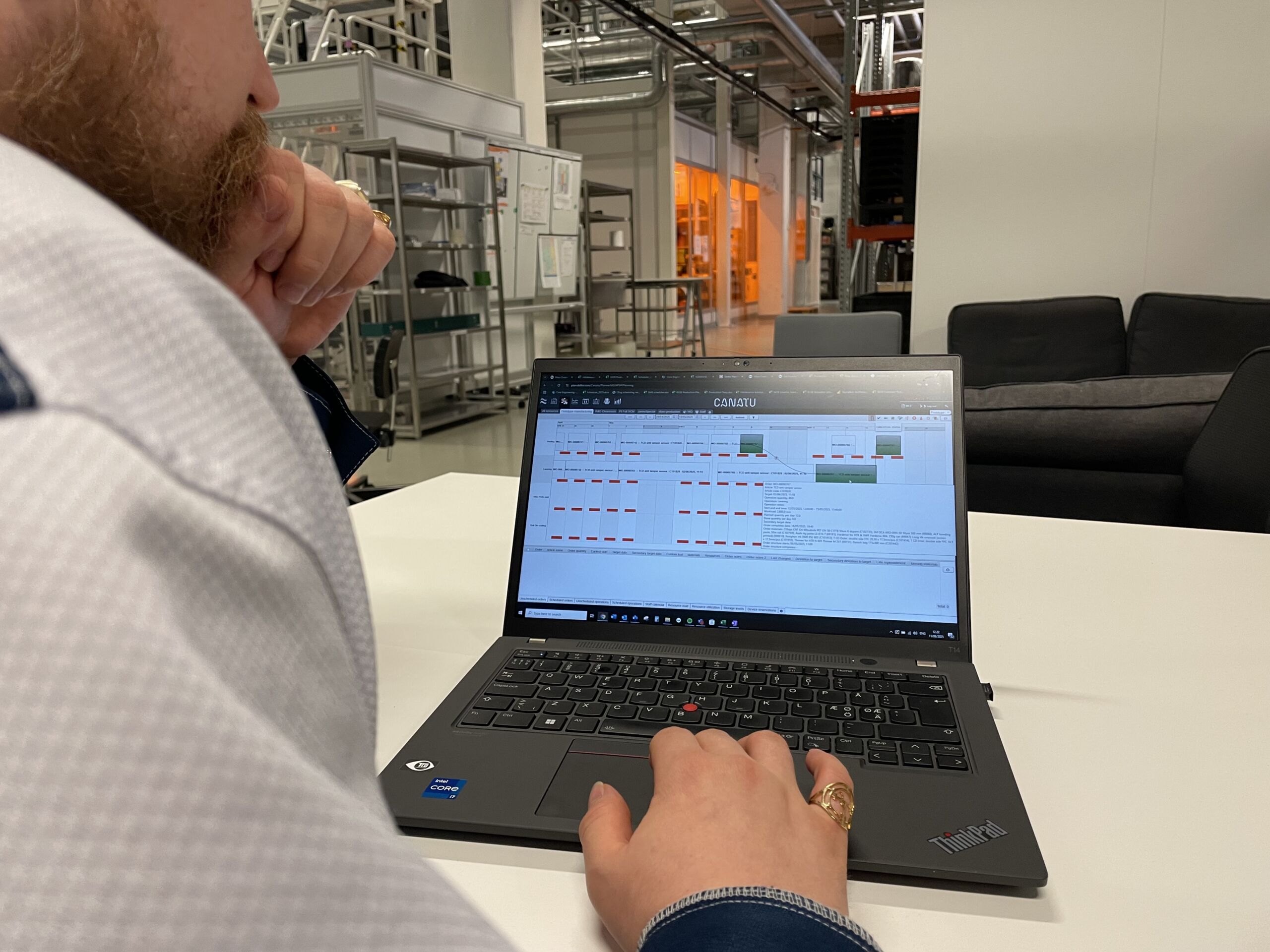
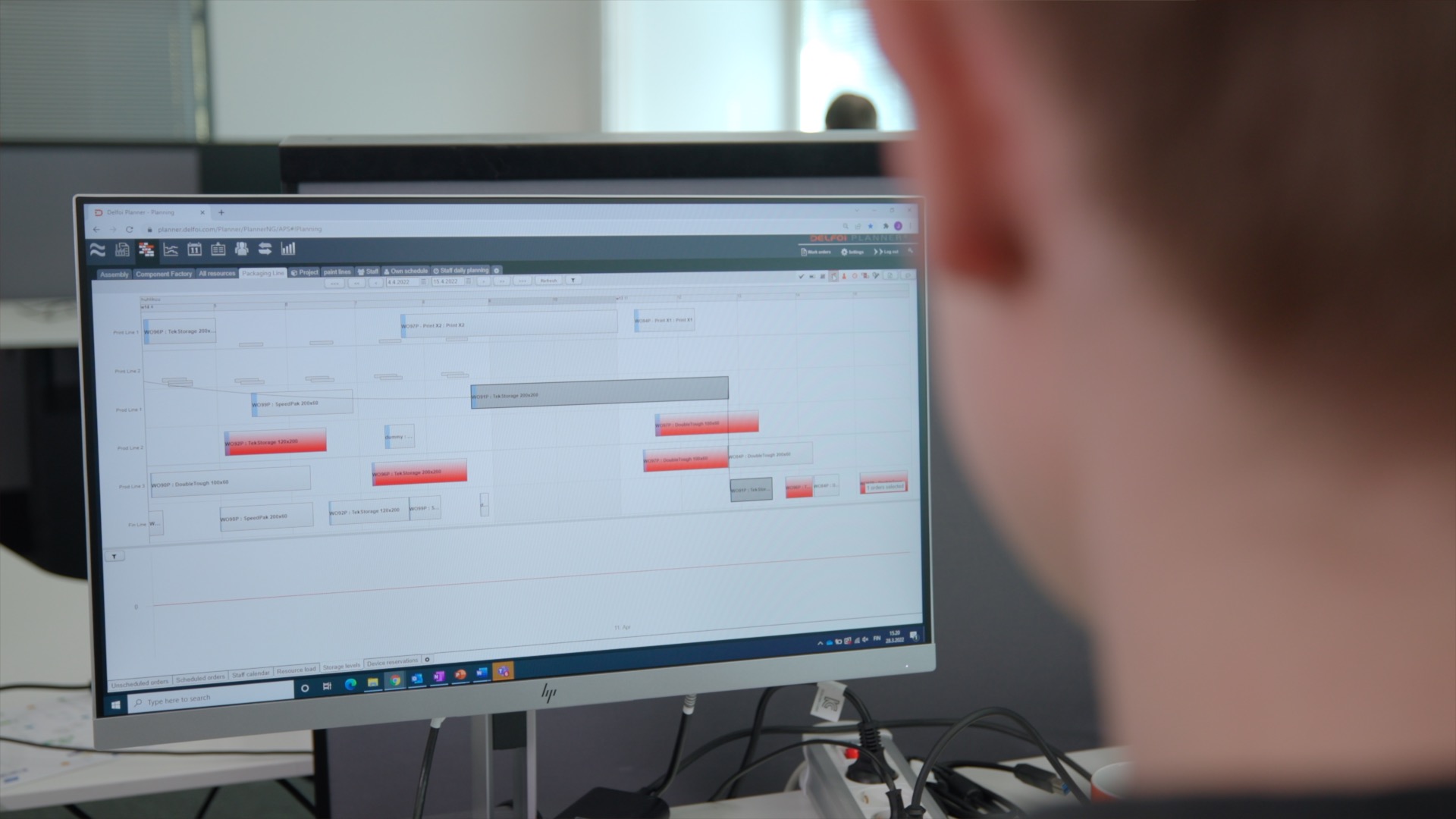
- Delayed orders: Advanced scheduling tools, like Delfoi Planner APS, provide real-time visibility, helping identify and resolve potential delays before they impact customers.
- Product shortages: Accurate demand forecasting ensures sufficient inventory levels, significantly reducing the risk of stockouts.
- Quality issues: Optimal resource allocation ensures adequate time and attention to production tasks, minimizing errors and defects that spark complaints.
By addressing these pain points proactively, businesses can greatly reduce the frequency and severity of customer complaints.
Production Planning and Customer Satisfaction: Manufacturing Scenarios
Abstract principles become far more meaningful when viewed through the lens of real operational challenges. The following scenarios illustrate how planning failures translate into customer dissatisfaction — and how accurate planning reverses that dynamic across different manufacturing environments.
Discrete manufacturing: industrial equipment
A manufacturer of industrial equipment operates across multiple production lines with varying lead times and component dependencies. Without adequate capacity visibility, the planning team consistently underestimates available machine time, resulting in overcommitted delivery dates. When customer production schedules slip by days or weeks, B2B buyers face their own downstream disruptions — eroding trust and triggering formal complaints. Once planned production is managed through a finite scheduling system that reflects true capacity constraints in real time, delivery commitments become reliably accurate, and complaint volumes drop measurably.
Process manufacturing: food and beverage
In food and beverage production, shelf-life constraints make inventory timing critical. A producer relying on manual demand planning routinely either overproduces — generating waste and margin loss — or underproduces, leaving retail customers with empty shelves during peak periods. Integrating customer measurements such as point-of-sale data and seasonal demand signals into production workflows allows planners to align output precisely with actual consumption patterns. The result is measurably fewer stockouts, stronger retailer relationships, and improved on-shelf availability scores that directly reflect customer satisfaction.
Engineer-to-order: custom industrial solutions
Engineer-to-order environments carry inherently long and variable lead times, making accurate planning especially consequential. When resource allocation is managed reactively — assigning engineers and materials only after bottlenecks emerge — project milestones slip and customers receive late or incomplete deliveries. By connecting demand planning with supply planning and scheduling at the project level, organizations gain the visibility needed to flag conflicts weeks in advance. Proactive rescheduling and transparent customer communication significantly improve perceived reliability, even when lead times themselves remain long.
What tools and technologies enhance accurate production planning?
Several modern tools significantly boost planning accuracy and efficiency, including:
- ERP systems: Enterprise Resource Planning software integrates multiple business processes, providing comprehensive data for informed production decisions.
- AI-driven forecasting: Artificial intelligence algorithms analyze historical and real-time data to produce highly accurate demand forecasts.
- Automation: Automated scheduling and resource allocation tools streamline workflows and reduce human error.
- Delfoi’s solutions: Delfoi Planner APS, MES, and SOP offer intuitive, real-time production scheduling, execution, and forecasting capabilities, enhancing transparency, responsiveness, and adaptability in production processes.
Machine performance and its impact on production schedules and customer satisfaction
Unplanned equipment failures are among the most disruptive events in any production environment. When a critical machine goes down unexpectedly, the ripple effect moves quickly through the schedule — jobs that were on track to meet delivery windows are suddenly delayed, and planners are forced into reactive expediting that compromises both efficiency and quality. For customers, the visible outcome is a missed delivery date or an inconsistent product, regardless of how well the rest of the planning process was executed.
Real-time machine performance data changes this dynamic fundamentally. When equipment health indicators are fed directly into production scheduling systems, planners can anticipate maintenance windows rather than react to breakdowns. Scheduled downtime can be built into the plan in advance, allowing jobs to be rerouted or sequenced around it without disrupting committed delivery dates. This is where the integration between machine monitoring and APS tools delivers tangible customer-facing value — production schedule resilience improves because the plan reflects operational reality rather than an idealized assumption of continuous uptime.
Predictive maintenance, when connected to planning workflows in this way, also supports consistent product quality. Equipment operating outside optimal parameters often produces output that falls below specification — a quality failure that generates returns, complaints, and reputational damage. By maintaining machines in known-good condition and scheduling proactively around service needs, manufacturers protect both delivery reliability and the product quality standards that underpin customer satisfaction scores over time.
How can businesses measure the impact of accurate production planning on customer satisfaction?
To quantify the effects of improved production planning, businesses should track several key performance indicators (KPIs), including:
- Customer satisfaction scores: Direct feedback measuring overall satisfaction provides clear insights into customer experiences.
- Net Promoter Score (NPS): Indicates customers’ likelihood to recommend your business, reflecting their trust and satisfaction.
- Return rates: Lower return rates signify higher product quality and customer contentment.
- Delivery accuracy rates: Measuring the percentage of orders delivered on time directly demonstrates planning effectiveness.
Regularly monitoring these metrics helps businesses continually refine production planning practices for even greater customer satisfaction.
Accurate production planning as a strategic competitive advantage
For manufacturing executives, the case for investing in planning accuracy extends well beyond operational efficiency. When production schedules are reliable and demand signals are integrated across the supply chain, the business gains capabilities that translate directly into competitive differentiation, revenue protection, and long-term resilience — outcomes that matter at the board level, not just on the shop floor.
Competitive differentiation through planning precision
In B2B manufacturing markets, lead time reliability is increasingly a purchasing criterion in its own right. Buyers evaluate suppliers not only on price and product specification but on the confidence that delivery commitments will be honored. Manufacturers who improve production scheduling accuracy can offer shorter, more predictable lead times than competitors still operating on reactive planning cycles. This becomes a concrete sales argument — one that is difficult for competitors to replicate quickly because it is rooted in operational maturity rather than marketing positioning.
Revenue protection and sustainable growth
Stockouts, defect-driven returns, and missed delivery windows each carry a direct revenue cost — lost orders, credit notes, and the overhead of managing complaints and rework. Accurate planning reduces the frequency of all three, protecting the revenue that existing customer relationships represent. Beyond cost avoidance, satisfied customers in manufacturing contexts tend to consolidate spend with suppliers they trust, increasing wallet share over time. Planned production that consistently meets commitments also generates the kind of reference value that reduces new customer acquisition costs, as positive reputation in industry networks carries significant weight.
Long-term operational resilience
Demand volatility is a permanent feature of manufacturing markets, not a temporary disruption to be managed through. Organizations that develop planning maturity — integrating demand planning, supply planning, and finite scheduling into a coherent, data-driven process — build the capacity to absorb volatility without degrading customer experience. When a demand spike or supply disruption occurs, a mature planning environment allows rapid scenario analysis and rescheduling, keeping customer commitments intact where a less capable operation would simply fail to deliver. This resilience is a strategic moat: it compounds over time as planning processes improve and institutional knowledge deepens.
For organizations ready to move from reactive to genuinely accurate planning, the path forward starts with understanding where current processes create gaps between what is promised to customers and what is actually delivered. For personalized advice on enhancing your planning capabilities, contact our experts today.