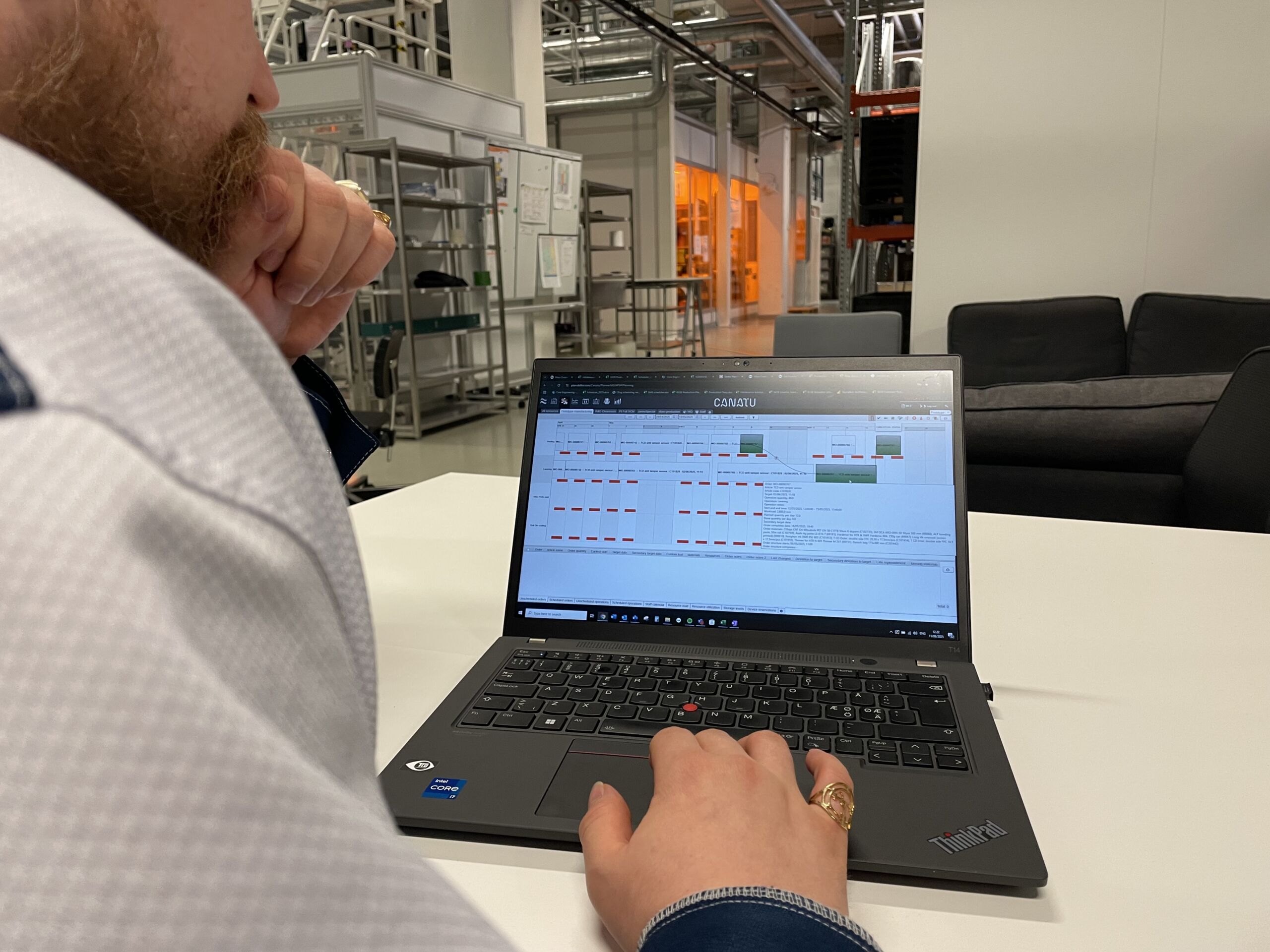
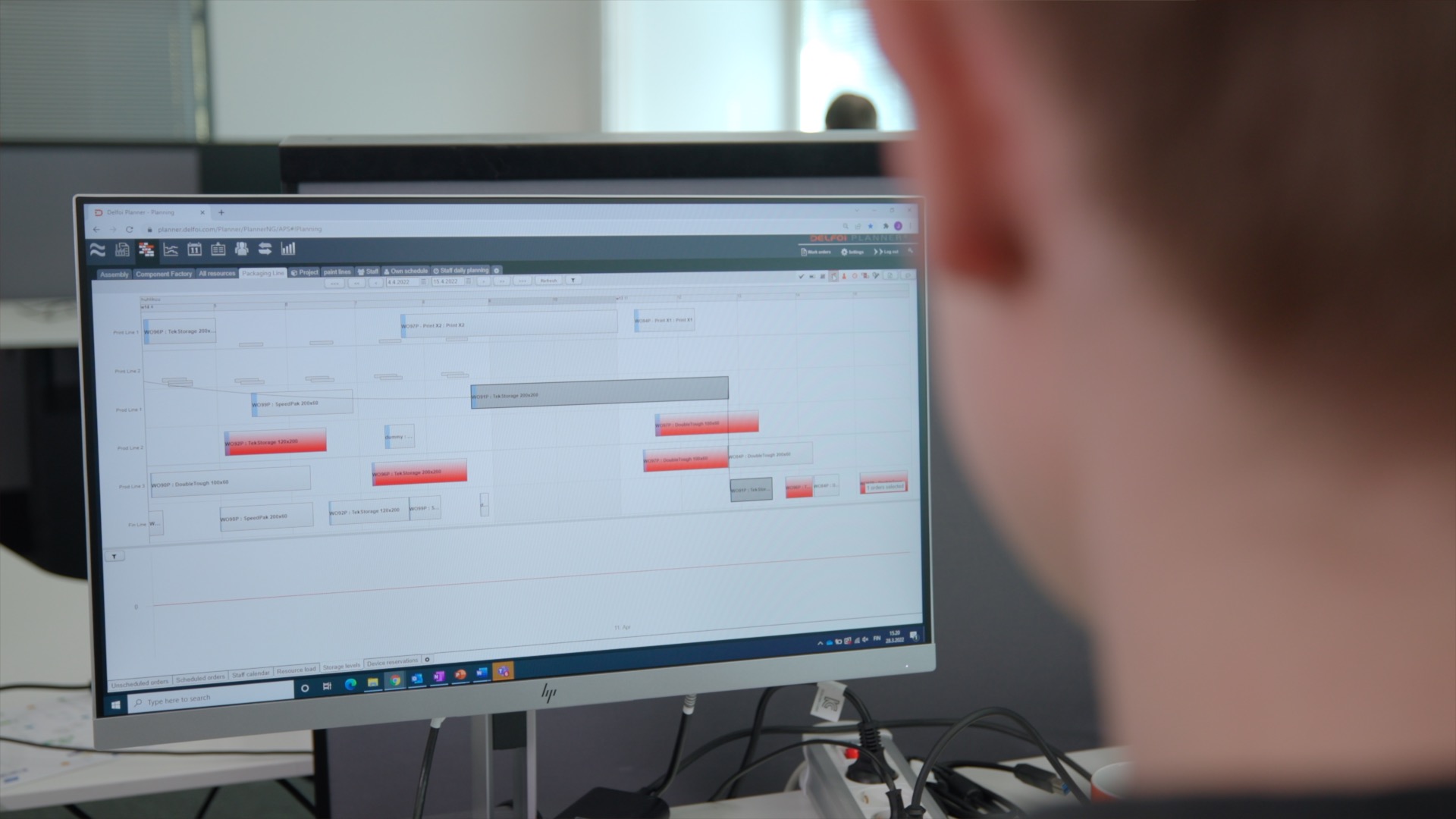
Manufacturers can give customers accurate lead times by basing delivery estimates on actual, finite production capacity rather than theoretical averages. This means knowing in real time what resources are available, what orders are already scheduled, and where bottlenecks are likely to appear. This challenge is especially acute for manufacturers of engineered-to-order products, from custom optical assemblies to precision fixtures, where every order has a unique routing and no two lead times are the same. The sections below unpack the most common questions manufacturers face when trying to make their lead time promises reliable and trustworthy.
Why do manufacturers struggle to predict lead times accurately?
Most manufacturers struggle with lead time accuracy because their estimates are built on theoretical capacity rather than real-world constraints. When a sales team quotes a delivery date without knowing what is already scheduled on the shop floor, the promise is essentially a guess. Changing order volumes, unplanned machine downtime, material delays, and shifting priorities all erode the reliability of that initial estimate.
The core problem is a disconnect between the people making delivery promises and the people executing production. Sales and customer service teams often work from standard lead time tables that were accurate at some point in the past but no longer reflect the current workload. When those tables are the only tool available, every quote carries hidden risk. For operations dealing with custom optics lead time problems or unpredictable fixture lead times, this disconnect is even more damaging, because no two orders follow the same path through production.
There is also a compounding effect: when one order slips, it pushes back the next, and the next. Without a system that recalculates the impact of each change across the full schedule, manufacturers end up in a cycle of reactive firefighting rather than proactive planning. The result is a gap between what was promised and what is actually delivered, which erodes customer trust over time.
What data do manufacturers need to calculate realistic lead times?
To calculate realistic lead times, manufacturers need four categories of data: current resource availability, existing order load, material readiness, and process routing times. Without all four, any lead time estimate is incomplete and likely to be wrong.
- Resource availability: Which machines, workstations, and people are available, and when? This includes planned maintenance windows and known absences.
- Existing order load: What is already scheduled, and how much capacity does it consume? A new order cannot be accurately slotted in without knowing what is already committed.
- Material readiness: Are the required materials in stock, on order, or subject to supplier lead times? A finished goods date is only as reliable as the slowest incoming component.
- Process routing times: How long does each production step actually take, including setup, run time, and queue time between operations?
Many manufacturers have this data spread across separate systems or spreadsheets, which makes it difficult to bring it together into a single, reliable picture. Consolidating these inputs into one planning environment is often the first step toward giving customers lead times they can actually rely on.
How does production scheduling software improve lead time accuracy?
Production scheduling software improves lead time accuracy by replacing theoretical capacity assumptions with finite scheduling based on actual resource availability. Instead of asking “how long does this type of order usually take?”, the software asks “given everything already scheduled, when can we realistically start and finish this specific order?” The result is a delivery date grounded in reality.
Finite scheduling is the key mechanism here. It assigns each operation to a specific time slot on a specific resource, taking into account existing commitments. This means that when a new order is entered, the system calculates a completion date by working through the actual queue, not an average. Promised dates hold because they are derived from the capacity you genuinely have, not an optimistic estimate of what you might have.
Manual scheduling vs. finite scheduling: a practical comparison
Without scheduling software, delivery dates are typically calculated from static lead time tables that do not reflect the current load on the shop floor. When a machine breaks down or a priority order is inserted, planners manually re-sequence jobs in spreadsheets, a process that can take hours and still produce an inaccurate picture. Customer service teams learn about delays only when they chase the shop floor directly, which means customers are often the last to know.
With finite scheduling software, delivery dates are generated directly from the live schedule, reflecting what is actually committed on each resource at that moment. When a disruption occurs, the system recalculates affected orders in minutes rather than hours, and planners can proactively notify customers before the original promised date passes. This shift from reactive to proactive is where the most tangible improvement in delivery reliability is felt.
Delfoi Planner production scheduling software also makes it faster to respond when things change. If a machine goes down or a priority order is inserted, the system can recalculate affected dates immediately, giving planners and customer-facing teams accurate information without manual recalculation. This speed matters enormously when customers are waiting for updates.
What’s the difference between quoted lead time and actual lead time?
Quoted lead time is the delivery window a manufacturer communicates to a customer at the point of order. Actual lead time is how long production and delivery genuinely take. The gap between the two is one of the most common sources of customer dissatisfaction in manufacturing.
Quoted lead times are often set at a policy level, based on historical averages or commercial targets, and are rarely recalculated for each individual order. Actual lead times, by contrast, are shaped by real conditions: current workload, material availability, production complexity, and any disruptions that occur during the order’s journey through the shop floor.
Closing this gap requires moving away from fixed lead time tables toward dynamic estimates that reflect the current state of production. When the quoted figure is generated from a live schedule rather than a static assumption, the two numbers converge, and customers receive promises that are far more likely to be kept.
When should manufacturers update customers about lead time changes?
Manufacturers should update customers as soon as a confirmed change to the delivery date is identified, not after the original date has already passed. Proactive communication, even when the news is a delay, consistently produces better customer outcomes than silence followed by a missed deadline.
The timing of communication matters as much as the communication itself. A customer who learns about a two-week delay with three weeks to spare can adjust their own plans. A customer who learns about the same delay on the day of the expected delivery cannot. Early notification preserves the relationship; late notification damages it.
Practically, this means manufacturers need internal visibility before they can provide external communication. If planners only discover a schedule slip on the day it happens, it is already too late to give customers useful notice. Building a process where schedule deviations are flagged early, and where customer-facing teams are informed promptly, is what makes proactive communication possible.
A simple process for proactive delivery communication
The following framework gives production planners and customer service teams a starting point for moving from reactive to proactive communication. Each step should be adapted to fit your own operation and order volumes.
- Define a deviation threshold. Agree on the minimum schedule slip that triggers a formal review, for example any delay exceeding two working days. This prevents over-communication on minor fluctuations while ensuring significant changes are never overlooked.
- Assign clear ownership. Decide who is responsible for monitoring schedule deviations and who is responsible for communicating with the customer. Ambiguity here is one of the most common reasons customers receive late or inconsistent updates.
- Establish a communication template. Prepare a standard format that includes the revised estimated delivery date, a brief explanation of the reason for the change, and any steps being taken to mitigate the impact. Consistency reduces the time needed to draft each notification.
- Set a response time standard. Determine how quickly after a deviation is identified the customer should be contacted. A clear internal target, such as within four business hours, removes uncertainty and keeps the team accountable.
- Log all changes and communications. Record every schedule change and the corresponding customer notification in the order history. This supports accountability, simplifies dispute resolution, and provides useful data for future planning.
- Review recurring delay patterns monthly. Use the log to identify which order types, machines, or suppliers are most frequently involved in delays. Addressing root causes reduces the frequency of future communications and improves overall delivery reliability.
How can real-time production visibility reduce lead time errors?
Real-time production visibility reduces lead time errors by giving planners and customer-facing teams an accurate, up-to-date picture of where every order stands. When the status of each job is visible as it progresses through production, deviations from the plan are caught early rather than discovered at the point of delivery.
Without real-time visibility, lead time management is largely reactive. Planners work from yesterday’s data, customer service teams rely on what the shop floor told them last week, and by the time a problem surfaces, it has already affected the promised delivery date. Real-time data closes this lag.
Visibility at the order level
When each order’s progress is tracked in real time, it becomes possible to see immediately which jobs are on track and which are falling behind. This allows planners to intervene early, whether by reallocating resources, adjusting priorities, or communicating revised dates to customers before the original promise is broken.
Visibility at the capacity level
Real-time capacity visibility shows not just where individual orders stand, but how loaded each resource is across the full schedule. This is what makes accurate quoting possible for new orders. A sales team with live capacity data can give a customer a realistic delivery date on the spot, rather than committing to a figure that the shop floor cannot support.
Reliable lead time performance comes down to three connected elements: accurate data inputs, finite scheduling that reflects real capacity, and real-time visibility that keeps everyone working from the same picture. For manufacturers operating in custom or engineered-to-order environments, where bespoke product lead time variability is high and every order follows its own routing, these three elements are not optional improvements. They are the foundation of a planning process that delivers on its promises.
If your operation relies on custom or engineered-to-order production, the gap between quoted and actual lead times is rarely a people problem. It is a data and scheduling problem. We work with manufacturers to map where that gap originates and to build a planning process that closes it. Contact our team to start with a no-obligation review of your current scheduling approach and a discussion of where the largest lead time risks lie in your operation.