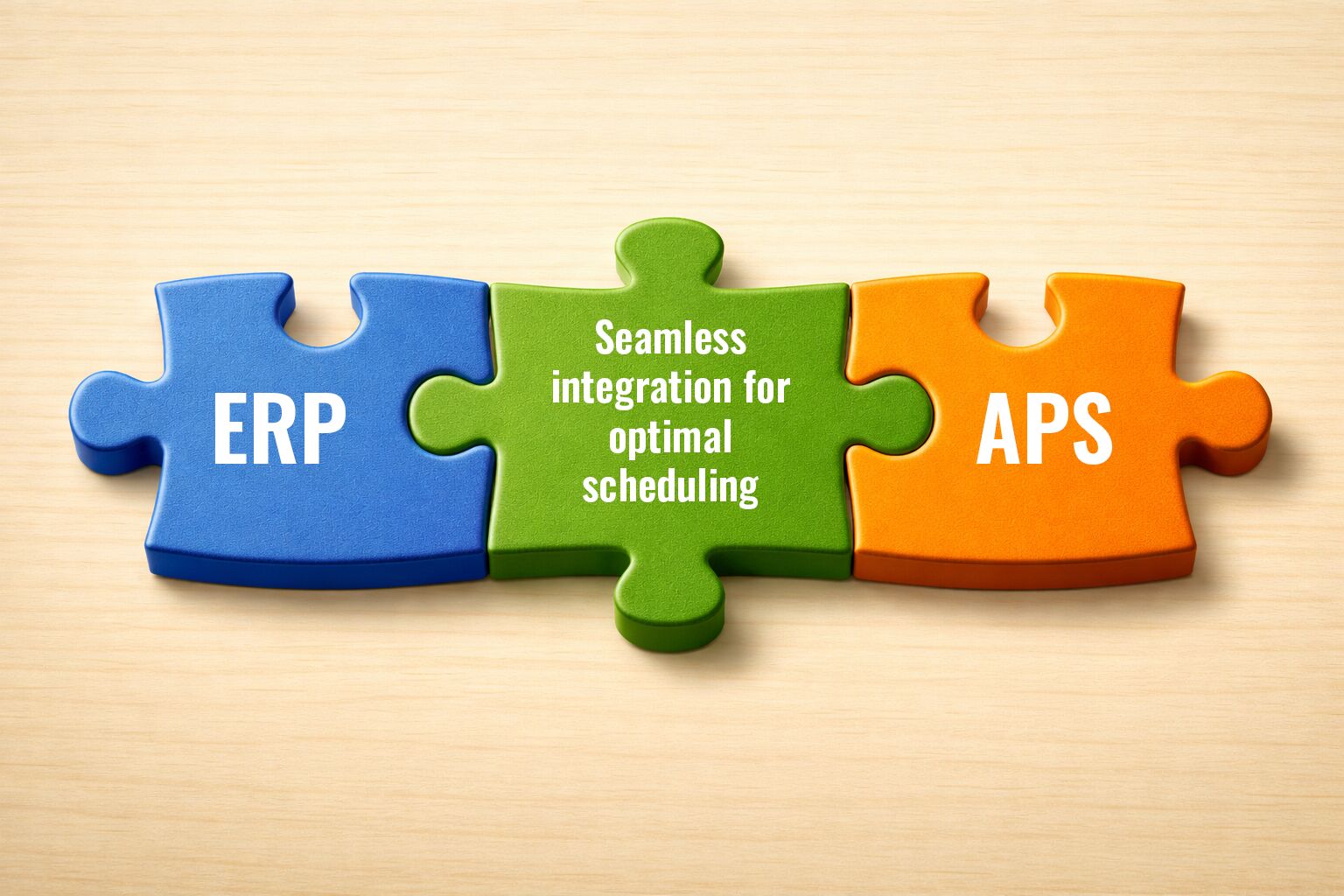
Manufacturing companies using Oracle NetSuite often find themselves at a crossroads. While NetSuite excels as an ERP backbone for managing finances, inventory, and customer relationships, many manufacturers struggle with the system’s limitations in sophisticated production planning and scheduling. The gap between NetSuite’s core ERP strengths and the complex demands of modern manufacturing creates operational bottlenecks that spreadsheets simply cannot solve.
If you’re running production operations through NetSuite, you’ve likely experienced the frustration of juggling multiple systems, manual scheduling processes, and limited visibility into real-time production status. The good news? NetSuite production optimization is entirely achievable when you complement your ERP foundation with the right production planning tools and strategies.
Why NetSuite needs advanced production optimization
NetSuite’s manufacturing capabilities provide excellent transaction processing, inventory management, and financial integration. However, when it comes to the intricate dance of production scheduling, capacity optimization, and real-time shop floor control, manufacturers need more sophisticated tools that work seamlessly with their NetSuite ecosystem.
The challenge isn’t that NetSuite is inadequate—it’s that modern manufacturing demands go beyond traditional ERP functionality. Production planning NetSuite users require advanced planning and scheduling (APS) capabilities, visual production control, and intelligent optimization that can handle complex constraints, multiple resources, and dynamic scheduling changes.
This is where specialized production planning solutions that integrate with NetSuite become essential. Rather than replacing your ERP investment, these tools extend NetSuite’s capabilities with the advanced manufacturing intelligence your operations demand.
1: Integrate advanced planning and scheduling (APS)
The foundation of effective NetSuite production optimization lies in implementing sophisticated APS solutions that complement your ERP system. Advanced planning and scheduling goes far beyond basic work order management, offering constraint-based planning, capacity optimization, and intelligent scheduling algorithms that work with your NetSuite master data.
When evaluating NetSuite APS scheduling solutions, look for systems that automatically synchronize with your NetSuite bills of materials, routings, work orders, and resource calendars. This integration eliminates manual data entry while ensuring your production plans always reflect the most current information from your ERP system.
The most effective APS implementations offer finite capacity scheduling that considers real-world constraints such as machine availability, labor skills, and material dependencies. This level of sophistication transforms basic NetSuite work orders into optimized production schedules that can adapt to changing priorities and resource availability in real time.
2: Implement visual production control dashboards
Visual interfaces revolutionize how production teams interact with NetSuite data. Instead of navigating through multiple NetSuite screens and reports, manufacturing ERP optimization becomes intuitive when production information is presented through drag-and-drop planning boards and interactive Gantt charts.
Effective visual production control dashboards provide instant visibility into bottlenecks, resource utilization, and schedule conflicts. Planners can move orders, balance workloads, and optimize entire production sequences with simple drag-and-drop actions, all while maintaining seamless integration with NetSuite’s underlying data structure.
The key is choosing dashboard solutions that don’t just display NetSuite information, but allow direct manipulation of production schedules, with changes automatically flowing back into your ERP system. This bidirectional integration ensures that visual planning decisions are immediately reflected in NetSuite work orders, inventory allocations, and delivery commitments.
3: Optimize resource allocation and capacity planning
Effective resource allocation requires a clear understanding of both current capacity and future demand patterns. NetSuite manufacturing modules provide the foundational data, but optimizing resource utilization demands more sophisticated analysis and planning tools.
Strategic capacity planning involves balancing workload distribution across resources while identifying potential bottlenecks before they impact delivery schedules. The most effective approaches combine NetSuite’s resource calendar data with intelligent algorithms that can simulate different allocation scenarios and recommend optimal resource assignments.
Consider implementing tools that provide capacity forecasting capabilities, allowing you to model future demand against available resources. This forward-looking approach enables proactive capacity adjustments and helps avoid the reactive firefighting that often characterizes under-optimized production environments.
4: Enhance real-time production monitoring
Real-time visibility transforms production management from reactive to proactive. While NetSuite captures transaction data effectively, NetSuite production efficiency requires live monitoring systems that provide instant updates on manufacturing progress, performance metrics, and potential deviations from planned schedules.
Effective production monitoring systems integrate with NetSuite to provide real-time work-in-progress tracking, automatic progress updates, and immediate alerts when production metrics fall outside acceptable parameters. This level of visibility enables rapid response to production issues and helps maintain delivery commitments.
The most valuable monitoring implementations combine shop floor data collection with NetSuite integration, automatically updating work order progress, labor transactions, and inventory movements. This automation reduces manual data entry while ensuring that NetSuite always reflects current production status.
5: Streamline change management processes
Manufacturing environments are inherently dynamic, with constant changes in customer requirements, material availability, and resource capacity. Advanced planning scheduling NetSuite implementations must include robust change management capabilities that enable rapid response to these inevitable disruptions.
Agile change management workflows allow production teams to quickly assess the impact of proposed changes, simulate alternative scenarios, and implement schedule adjustments with minimal disruption. The key is having systems that can automatically propagate changes through interconnected production plans while maintaining NetSuite data integrity.
Effective change management also includes automated notification systems that alert relevant stakeholders when schedule modifications affect their responsibilities. This communication capability ensures that changes in production plans are immediately communicated to sales, purchasing, and customer service teams through NetSuite’s workflow capabilities.
6: What production metrics should you track daily?
Identifying the right key performance indicators is crucial for maintaining optimal production control NetSuite operations. The most valuable metrics combine efficiency measurements with delivery performance indicators, providing a balanced view of production effectiveness.
Essential daily metrics include on-time delivery rates, resource utilization percentages, and schedule adherence measurements. These indicators should be automatically calculated from NetSuite transaction data and presented through intuitive dashboards that highlight trends and exceptions.
Consider tracking lead time performance, work-in-progress levels, and capacity utilization alongside traditional efficiency metrics. This comprehensive approach provides insights into both current performance and potential areas for improvement, enabling continuous optimization of your NetSuite-based production operations.
7: Automate production scheduling workflows
Intelligent automation reduces the manual overhead associated with routine scheduling tasks while improving schedule quality and consistency. Automated scheduling workflows can handle repetitive planning activities, optimize production sequences, and maintain schedule feasibility without constant manual intervention.
The most effective automation implementations work seamlessly with NetSuite’s workflow capabilities, automatically triggering schedule updates when new orders are created, materials become available, or resource capacity changes. This integration ensures that production plans remain current and feasible without requiring constant manual attention.
Advanced automation can include intelligent rescheduling algorithms that automatically adjust production plans when disruptions occur, optimized sequencing rules that minimize setup times and maximize throughput, and automatic capacity balancing that distributes workload evenly across available resources.
Transform your NetSuite into a production powerhouse
The path to NetSuite production optimization isn’t about replacing your ERP investment—it’s about extending NetSuite’s capabilities with specialized production planning solutions that complement its strengths. Solutions like Delfoi Planner for NetSuite demonstrate how advanced planning and scheduling can integrate seamlessly with your existing ERP infrastructure, providing the visual interfaces, intelligent optimization, and real-time control capabilities that modern manufacturing demands.
The most successful implementations combine NetSuite’s robust ERP foundation with specialized production planning tools that offer drag-and-drop scheduling, constraint-based optimization, and comprehensive shop floor control. This approach delivers proven benefits, including shortened lead times, improved delivery accuracy, and increased capacity utilization—all while maintaining the data integrity and process control that NetSuite provides.
As you consider your next steps in production optimization, remember that the goal isn’t just better scheduling—it’s creating a unified production management environment that transforms how your organization plans, executes, and controls manufacturing operations. What aspect of your current NetSuite production processes would benefit most from advanced planning and scheduling capabilities?