NetSuite manufacturing operations often become complex webs of disconnected processes, manual workarounds, and inefficient workflows that drain productivity. While NetSuite provides a solid ERP foundation, many manufacturers struggle to achieve the streamlined operations they need to remain competitive in today’s fast-paced market.
The challenge isn’t with NetSuite itself, but rather with how manufacturing companies can optimise their existing system to work more efficiently. When properly streamlined, your NetSuite manufacturing operations can deliver dramatically improved transparency, faster decision-making, and enhanced operational control across your entire production environment.
Why NetSuite manufacturing needs advanced planning
Traditional NetSuite implementations often rely heavily on spreadsheet applications for production scheduling, creating disconnected islands of information that hinder real-time visibility. This fragmented approach leads to reactive decision-making, extended lead times, and missed delivery commitments that impact customer satisfaction.
Modern manufacturing demands require integrated systems that can handle complex scheduling scenarios, resource constraints, and dynamic change management. Without proper planning capabilities, even the most robust ERP system struggles to deliver the operational excellence manufacturers need.
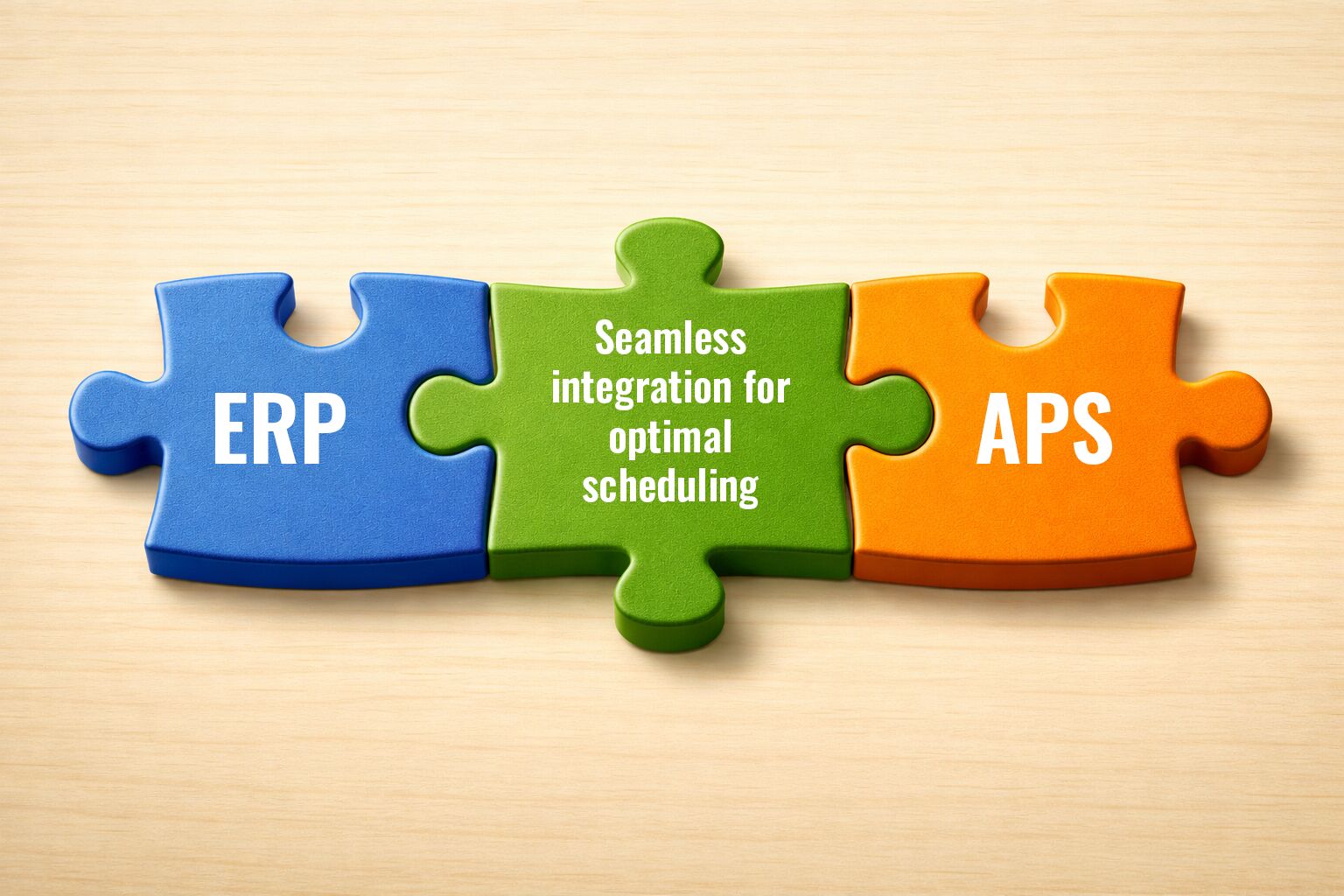
The solution lies in combining NetSuite’s ERP core functionality with advanced planning and scheduling capabilities that provide visual, intuitive control over your manufacturing workflow. This integration approach preserves your existing NetSuite investment while adding the sophisticated planning tools essential for competitive manufacturing operations.
1: Integrate advanced production scheduling systems
Production scheduling represents the heart of efficient manufacturing operations, yet many NetSuite users still rely on manual processes that create bottlenecks and planning inefficiencies. Advanced Planning and Scheduling (APS) systems integrate seamlessly with NetSuite to provide finite capacity scheduling that considers real-world constraints and resource limitations.
These integrated solutions replace spreadsheet-based planning with visual drag-and-drop interfaces that enable planners to quickly adjust schedules, manage priorities, and respond to changing demand. This graphical approach reduces learning curves while providing immediate visibility into production capacity and potential conflicts.
Implementation typically involves connecting your existing NetSuite data with advanced scheduling algorithms that optimise production sequences based on your specific constraints. Solutions like Delfoi Planner for NetSuite maintain data consistency while adding powerful planning capabilities that can shorten lead times by up to 50% through more efficient resource utilisation.
2: Optimize resource allocation and capacity planning
Effective resource allocation requires comprehensive visibility into both current capacity and future demand patterns. NetSuite optimisation involves implementing Sales and Operations Planning (S&OP) capabilities that bridge the gap between sales forecasts and production capacity.
Capacity forecasting tools integrated with NetSuite provide planners with accurate projections of resource requirements across different time horizons. This forward-looking approach enables proactive capacity management rather than reactive crisis response when bottlenecks emerge.
The optimisation process includes establishing clear capacity models that reflect your actual production capabilities, including machine capacity, labour availability, and material constraints. When properly configured, these systems can increase overall capacity by 25–50% through better resource coordination and reduced idle time.
3: Implement real-time production monitoring
Real-time visibility transforms manufacturing operations from reactive to proactive management. Manufacturing Execution System (MES) capabilities integrated with NetSuite provide shop floor control that connects planning decisions with actual production execution.
This integration enables immediate feedback loops between the production floor and planning systems, allowing rapid response to unexpected events, quality issues, or resource constraints. Operators can update job status, report completions, and flag issues directly within the integrated system.
The monitoring system should provide online, real-time visibility that enables easier change management and more accurate planning horizons. This transparency helps identify inefficiencies quickly and supports continuous improvement initiatives across your manufacturing operations.
4: What production data should you track daily?
Effective NetSuite manufacturing requires consistent tracking of key performance indicators that drive operational decisions. Daily monitoring should focus on metrics that directly impact customer delivery and operational efficiency.
Essential daily metrics include:
- Schedule adherence rates – measuring actual production against planned schedules
- Resource utilisation percentages across critical work centres
- Work-in-progress levels and inventory turnover rates
- Quality metrics and first-pass yield measurements
- Delivery performance against customer commitments
These metrics should flow automatically from your integrated systems into dashboards that provide immediate visibility into operational performance. The data collection process must be seamless to avoid additional administrative burden while still providing the insights needed for effective decision-making.
5: Automate change management workflows
Manufacturing environments constantly face changes in customer requirements, material availability, and production priorities. Automated change management workflows integrated with NetSuite enable rapid response while maintaining system integrity and audit trails.
Effective automation includes approval workflows for schedule changes, automatic rescheduling when priorities shift, and systematic communication of changes to affected departments. This structured approach prevents the chaos that often accompanies urgent customer requests or supply chain disruptions.
The workflow system should provide easier change management through predefined approval processes that consider the impact of changes on existing commitments. This systematic approach maintains customer service levels while protecting operational efficiency during periods of high change frequency.
6: Enable collaborative planning across departments
Streamlined NetSuite manufacturing requires breaking down silos between planning, production, sales, and procurement. Collaborative planning tools provide shared visibility into constraints, priorities, and performance metrics that affect multiple departments.
Cross-functional planning sessions become more effective when all participants have access to the same real-time data and can immediately see the impact of proposed changes. This shared visibility reduces conflicts and supports more informed decision-making across the organisation.
This collaborative approach includes establishing regular planning rhythms that bring together key stakeholders to review performance, adjust priorities, and align on future plans. These sessions become more productive when supported by integrated planning systems that provide accurate, up-to-date information to all participants.
Transform your NetSuite manufacturing operations
Streamlining NetSuite manufacturing operations requires a systematic approach that enhances your existing ERP investment rather than replacing it. The key lies in integrating advanced planning capabilities that complement NetSuite’s core functionality with specialised manufacturing tools designed for modern production environments.
Success depends on selecting solutions that provide seamless integration, intuitive user interfaces, and proven results in similar manufacturing environments. The most effective implementations combine APS planning, MES execution, and S&OP forecasting in unified systems that reduce planning time by a factor of two to three while improving delivery accuracy.
Your journey toward streamlined operations begins with assessing your current pain points and identifying which of these six steps will deliver the greatest immediate impact. Which aspect of your NetSuite manufacturing workflow is creating the biggest challenge for your team’s productivity and customer service goals?