Manufacturing companies often find themselves caught in a frustrating paradox: they have the demand and market opportunity to grow, but their production planning process becomes the very bottleneck that prevents expansion. What starts as a manageable system for smaller operations can quickly become a growth-limiting constraint as order volumes increase and complexity multiplies.
Recognizing when your production planning is holding back your business is crucial to maintaining a competitive advantage. The warning signs are often subtle at first, but they quickly compound into significant operational challenges that directly impact your bottom line and market position.
1. Consistently Missed Delivery Dates and Schedule Chaos
The first major sign that your production planning is limiting growth is when missed delivery dates become the norm rather than the exception. When your planning system cannot accurately predict completion times or adapt to changes, you’ll notice frequent last-minute schedule changes that create chaos throughout your operation.
This scheduling instability forces your team to operate in constant crisis mode, spending more time replanning than executing. Production teams find themselves repeatedly shifting priorities, which not only reduces efficiency but also creates confusion and frustration across all departments. The ripple effects extend to customer relationships, as unreliable delivery promises damage your market reputation and limit your ability to secure new business.
Quality issues often increase as rushed planning leads to inadequate preparation and poor resource allocation. When schedules change constantly, workers have insufficient time to set up properly, review specifications, or ensure all materials are available, resulting in defects and rework that further compound delays.
2. Inventory Paradox: Too Much of What You Don’t Need, Not Enough of What You Do
The second warning sign manifests as a frustrating inventory paradox where growing inventory levels coexist with simultaneous stockouts. This contradiction indicates that your planning system lacks the sophistication to optimize inventory across multiple variables and cannot accurately predict material requirements.
Excess inventory ties up working capital that could be invested in growth initiatives, while stockouts result in lost sales, expediting costs, and emergency purchases at premium prices. The financial impact compounds as you’re forced to carry safety stock for items you rarely need while frequently running short of critical materials.
This inventory imbalance creates a reactive procurement cycle where purchasing decisions are driven by immediate shortages rather than strategic planning. The constant firefighting prevents your team from developing supplier relationships, negotiating better terms, or implementing cost-saving initiatives that support profitable growth.
3. Manual Planning Processes That Cannot Scale
The third sign that production planning is constraining growth is an over-reliance on spreadsheets and manual processes that require constant updates and create version-control nightmares. What worked for smaller operations becomes increasingly unwieldy as order volumes and product complexity increase.
Manual planning methods lack real-time visibility, making it impossible to respond quickly to changes or optimize across multiple variables simultaneously. Resource conflicts become more frequent as planners struggle to balance capacity across multiple priorities without clear visibility into actual availability. Communication breakdowns occur when different team members work from different versions of planning documents.
The exponential increase in planning complexity as businesses grow creates multiple interdependencies that manual methods cannot manage efficiently. Each new product variant, customer requirement, or resource constraint multiplies the planning burden, eventually overwhelming even experienced planners and creating bottlenecks that limit your ability to take on new business.
4. Widening Gap Between Order Receipt and Production Start
The fourth warning sign is an increasing lead time between order receipt and production start, even when you have available capacity. This growing gap indicates that your planning process lacks the sophistication to optimize scheduling efficiently and cannot quickly translate customer orders into executable production plans.
This delay occurs because inefficient planning systems require extensive manual analysis to determine material availability, capacity constraints, and optimal sequencing. Planners spend excessive time gathering information and creating schedules, while production resources sit idle waiting for clear direction. The inability to quickly convert orders into production plans directly limits your throughput and responsiveness to market opportunities.
The widening lead times also impact your competitive position, as customers increasingly expect shorter delivery times and greater flexibility. Companies with more efficient planning systems can quote shorter lead times and respond more quickly to changes, gradually capturing market share from competitors struggling with planning inefficiencies.
5. Reactive Culture That Prevents Strategic Growth
The fifth and most critical sign is the development of a reactive operational culture where teams spend disproportionate time managing crises rather than focusing on improvement and growth initiatives. When production planning is ineffective, organizations become trapped in a cycle of constant firefighting that prevents strategic thinking and process development.
This reactive culture manifests when managers spend their time resolving immediate problems rather than developing long-term capabilities. Teams become skilled at crisis management but lose the ability to plan proactively or optimize operations systematically. The constant urgency prevents investment in training, process improvement, or technology upgrades that could break the cycle.
Most critically, reactive operations prevent the strategic capacity planning necessary for sustainable expansion. Without effective production planning, companies cannot confidently evaluate new opportunities, plan facility expansions, or make strategic investments. This limitation effectively caps the organization’s growth potential, as leaders cannot predict or plan for increased demand.
Breaking Free from Planning-Limited Growth
Manufacturers can transition from limiting to enabling production planning by implementing integrated planning solutions that replace manual processes with automated optimization and real-time visibility. The key is selecting systems that can grow with the business while providing immediate improvements in planning efficiency and accuracy.
The transition process should begin with a thorough assessment of current planning challenges and future requirements. This evaluation helps identify the specific capabilities needed, such as capacity-constrained scheduling, material-availability checks, or demand forecasting. A phased implementation approach allows manufacturers to realize benefits quickly while minimizing operational disruption.
Connected to Your NetSuite Master Data
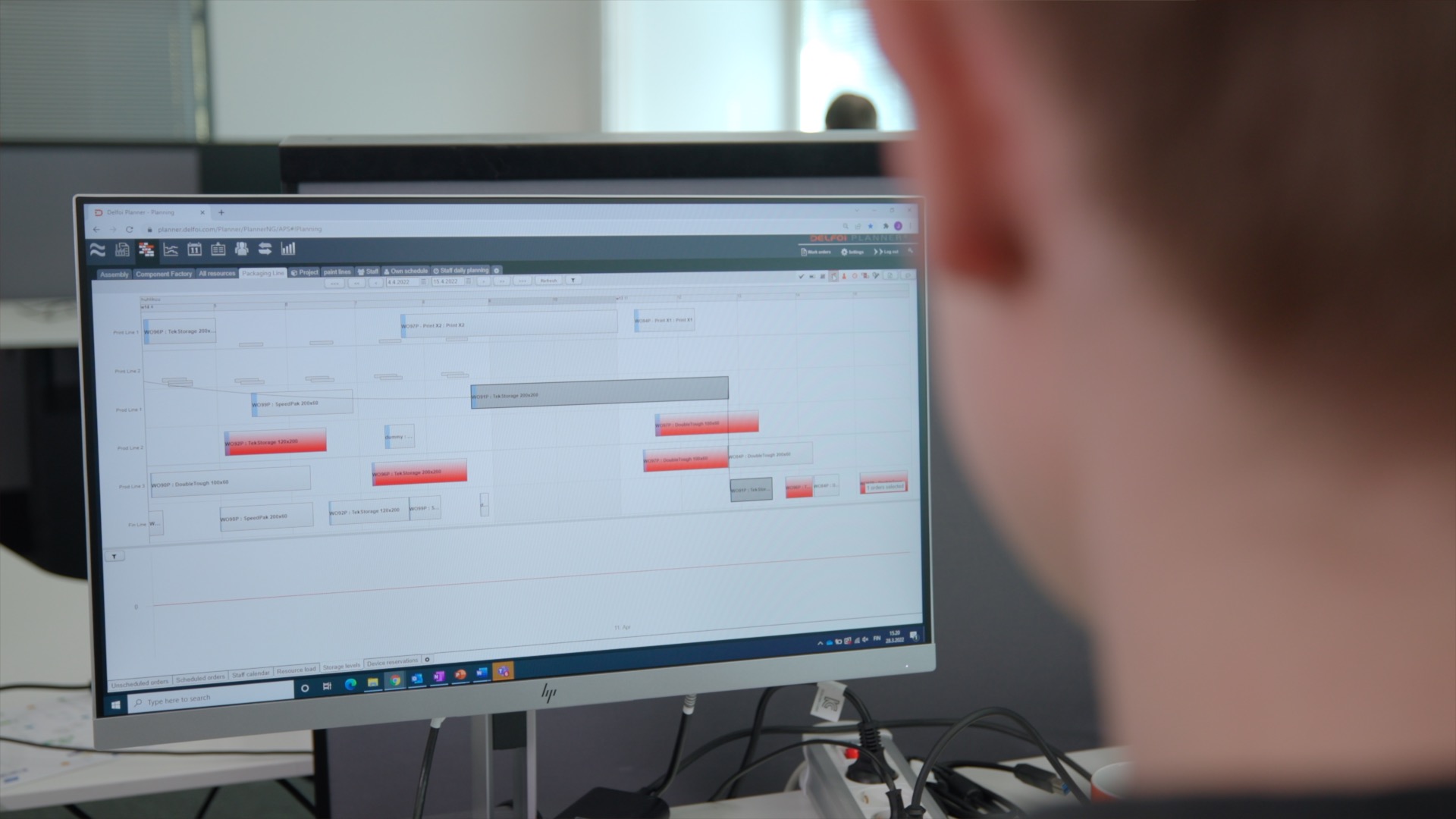
Delfoi Planner is a proven, visual planning solution with native connectivity to major ERP systems. For NetSuite users, the tested integration provides a straightforward path to advanced planning and scheduling without long development projects. The solution suits discrete manufacturing, make-to-order, make-to-stock, and project-based operations.
Delfoi Planner for NetSuite integrates seamlessly with your NetSuite ERP. Bills of materials, routings, work orders, resource calendars, and inventory levels flow automatically into the planning environment, ensuring up-to-date data and eliminating the need for spreadsheets.
We’ve seen manufacturers achieve remarkable results by moving from spreadsheet-based planning to comprehensive solutions like Delfoi Planner production planning software, which combines advanced planning and scheduling with manufacturing execution capabilities. Its web-based, visual approach enables teams to optimize schedules quickly, respond to changes in real time, and maintain clear visibility across all operations. This transformation typically results in reduced lead times, improved delivery performance, and the operational flexibility needed to support sustainable growth. To learn more about implementing these solutions, contact our planning experts today.