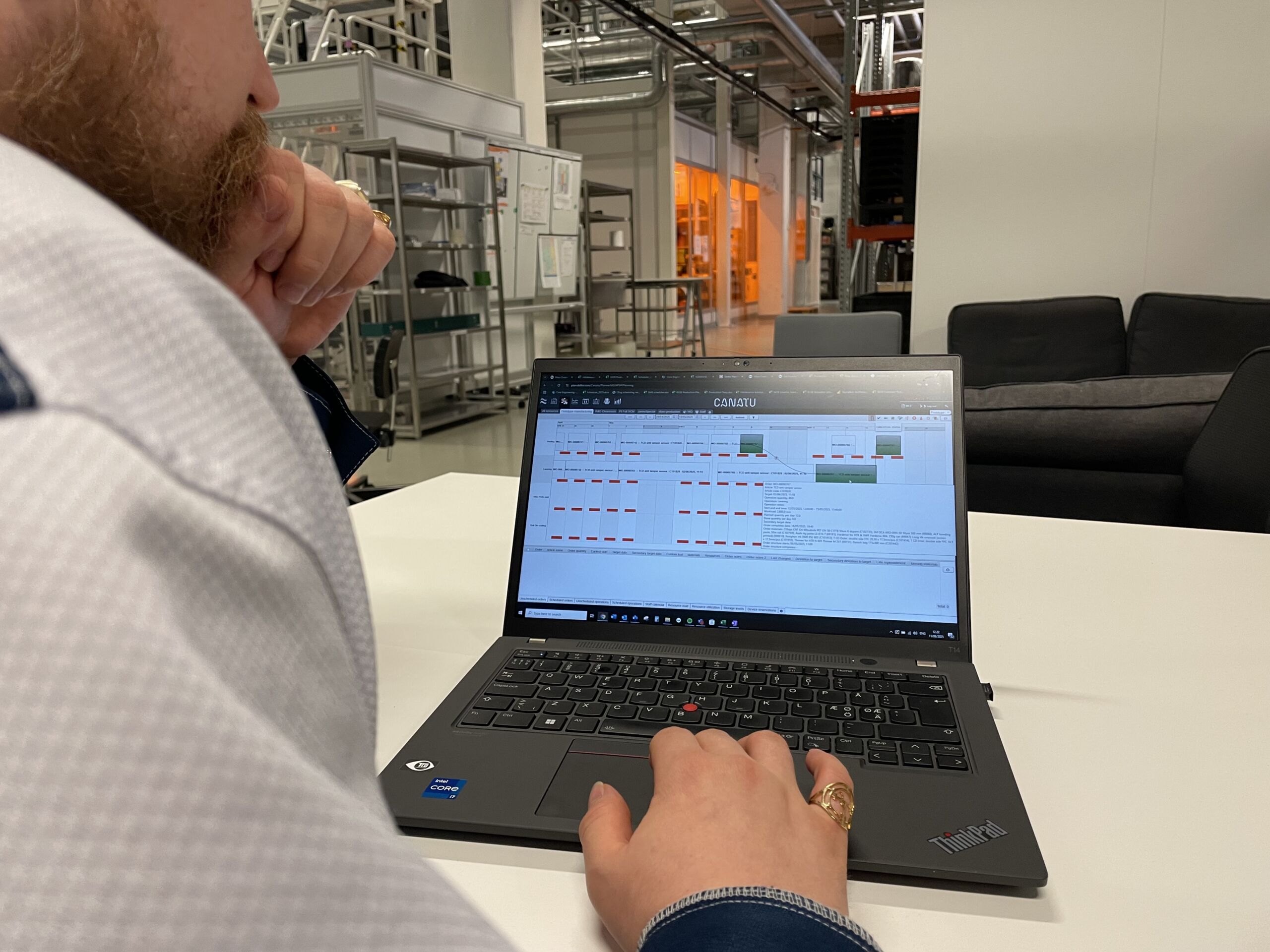
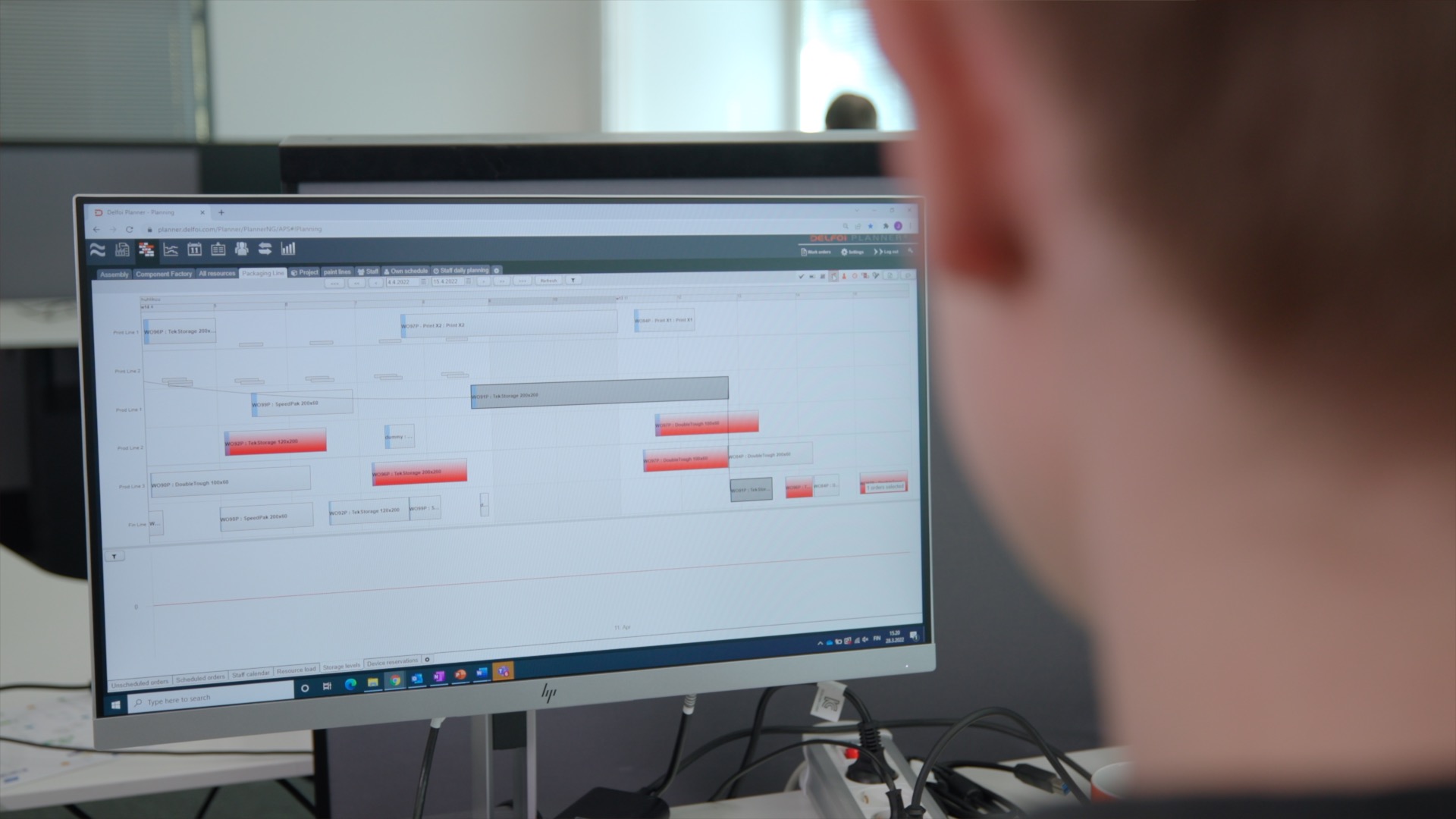
Yes, production scheduling can significantly improve delivery date accuracy at the quoting stage. When scheduling is based on actual resource availability rather than theoretical capacity, the dates you quote to customers reflect what your operation can genuinely deliver. This matters most for manufacturers who handle complex or variable order mixes, where lead time estimation without real scheduling data is little more than an educated guess. The sections below unpack the key questions around scheduling, quoting, and delivery performance.
How does production scheduling affect delivery date promises?
Production scheduling directly determines how realistic your delivery date promises are. When you generate a quote, the delivery date you offer is only as reliable as the scheduling logic behind it. If that logic is based on average lead times or rough capacity assumptions, the promise will drift the moment actual shop floor conditions diverge from those assumptions.
Finite scheduling changes this by anchoring delivery dates to real constraints: which machines are available, which operators are on shift, what materials are in stock, and what orders are already queued. The result is a promise date that reflects what your operation can actually do, not what it could do in ideal conditions.
This distinction matters enormously for customer relationships. A delivery date that holds builds trust. One that keeps shifting erodes it, regardless of how good the product itself is.
Why are delivery date estimates often wrong at the quoting stage?
Delivery date estimates fail at the quoting stage primarily because they are built on theoretical capacity rather than actual capacity. Most manufacturers use standard lead times or historical averages when quoting, which ignore the current order load, machine availability, and any bottlenecks already present in the schedule.
Several compounding factors make this worse:
- Static lead time tables do not account for how busy the shop floor is right now
- Lack of real-time visibility means the person creating the quote has no clear picture of the current workload
- Optimistic assumptions about setup times, changeovers, and resource availability inflate confidence in dates that cannot be met
- Siloed information between sales and production means the quoting team and the scheduling team are working from different pictures of capacity
The outcome is a cycle where promised dates are set too early, production scrambles to catch up, and late deliveries become a recurring problem rather than an exception.
What is capable-to-promise (CTP) and how does it improve quoting?
Capable-to-promise (CTP) is an order promising method that checks actual production capacity, material availability, and current scheduling commitments before confirming a delivery date. Unlike simpler approaches that only check inventory, CTP runs a scheduling simulation to determine when a new order can realistically be completed, given everything else already in the queue.
In practical terms, CTP gives your sales team the ability to quote a date that the production schedule can actually support. When a new order comes in, the system evaluates available capacity across relevant resources, identifies the earliest feasible completion point, and returns a date that accounts for real constraints rather than ideal ones.
This is where the gap between theoretical and finite scheduling becomes most visible. Theoretical capacity assumes resources are always available at full utilization. Finite scheduling, which underpins CTP, recognizes that resources have limits, conflicts, and competing demands. Delivery promises built on finite scheduling hold up because they were never based on capacity that does not exist.
How can manufacturers reduce late deliveries through better scheduling?
Manufacturers reduce late deliveries by replacing static, assumption-based scheduling with dynamic scheduling that reflects current shop floor reality. The core shift is moving from planning against average conditions to planning against actual conditions, updated continuously as orders, resources, and priorities change.
Practically, this means:
- Scheduling orders against confirmed resource availability, not assumed availability
- Identifying bottlenecks before they cause delays, not after
- Rescheduling proactively when disruptions occur, rather than reacting once a delivery is already at risk
- Giving production planners real-time visibility into workload so they can flag capacity conflicts early
Better scheduling also improves communication across the organization. When sales, production, and management are all looking at the same scheduling picture, the conversation about what can be promised and when becomes grounded in shared facts rather than departmental assumptions.
What data does production scheduling software need to generate accurate delivery dates?
To generate accurate delivery dates, production scheduling software for manufacturers needs a clear and current picture of both demand and capacity. The more complete and up-to-date this data is, the more reliable the output.
The essential data inputs include:
- Current order book: all confirmed orders with their routing, quantities, and due dates
- Resource availability: machine capacity, shift patterns, planned maintenance, and operator availability
- Routing and process times: accurate setup times, run times, and sequencing rules for each product or product family
- Material availability: stock levels and expected supply dates for key components
- Work-in-progress status: where active orders currently stand in the production process
The quality of delivery date estimates is directly proportional to the quality of this data. Outdated routing times, inaccurate shift calendars, or missing WIP information will all introduce errors that eventually surface as missed deadlines. This is why data maintenance is not a secondary concern when implementing scheduling software. It is central to the value the software can deliver.
When should a manufacturer invest in advanced production scheduling?
A manufacturer should invest in advanced production scheduling when delivery date accuracy has become a competitive or operational problem that simpler tools can no longer solve. The clearest signal is when promised dates change frequently after quoting, because that indicates the quoting process is disconnected from actual production capacity.
Other strong indicators include:
- Growing order complexity or product variety that makes manual scheduling unreliable
- Frequent firefighting on the shop floor as planners react to conflicts discovered too late
- Difficulty quoting realistic lead times when the order book is full
- Customer complaints about delivery reliability despite production teams working hard
- Expansion into new markets or customer segments where on-time delivery is a baseline expectation
The investment case is straightforward: if late deliveries are costing you customer relationships, penalty payments, or expediting costs, the value of reliable scheduling is easy to quantify. We work with manufacturers who have found that the shift to finite, capacity-aware scheduling does not just improve delivery performance. It also changes how confidently the entire organization can commit to customers, which has its own commercial value.
Advanced scheduling is not only relevant for large manufacturers. Any operation where capacity constraints are real and variable, and where delivery reliability matters to customers, stands to benefit from scheduling that reflects those constraints accurately. Contact us to discuss your scheduling needs and find out how finite scheduling can improve your delivery performance.