Delfoi Planner integrates with NetSuite ERP through a certified SuiteApp that connects production planning capabilities with NetSuite’s core business functions. This integration enhances NetSuite’s standard manufacturing features with advanced planning and scheduling (APS) capabilities, visual production control, and optimisation tools. The solution works as a complementary system rather than a replacement, extending NetSuite’s functionality for manufacturers who need sophisticated production planning beyond basic ERP capabilities.
What is Delfoi Planner and how does it complement NetSuite ERP?
Delfoi Planner is an advanced production planning solution that integrates directly with Oracle NetSuite to enhance manufacturing capabilities beyond standard ERP functionality. Rather than replacing NetSuite, it works as a specialised APS (Advanced Planning and Scheduling) system that adds visual scheduling, intelligent optimisation, and sophisticated production control to your existing NetSuite environment.
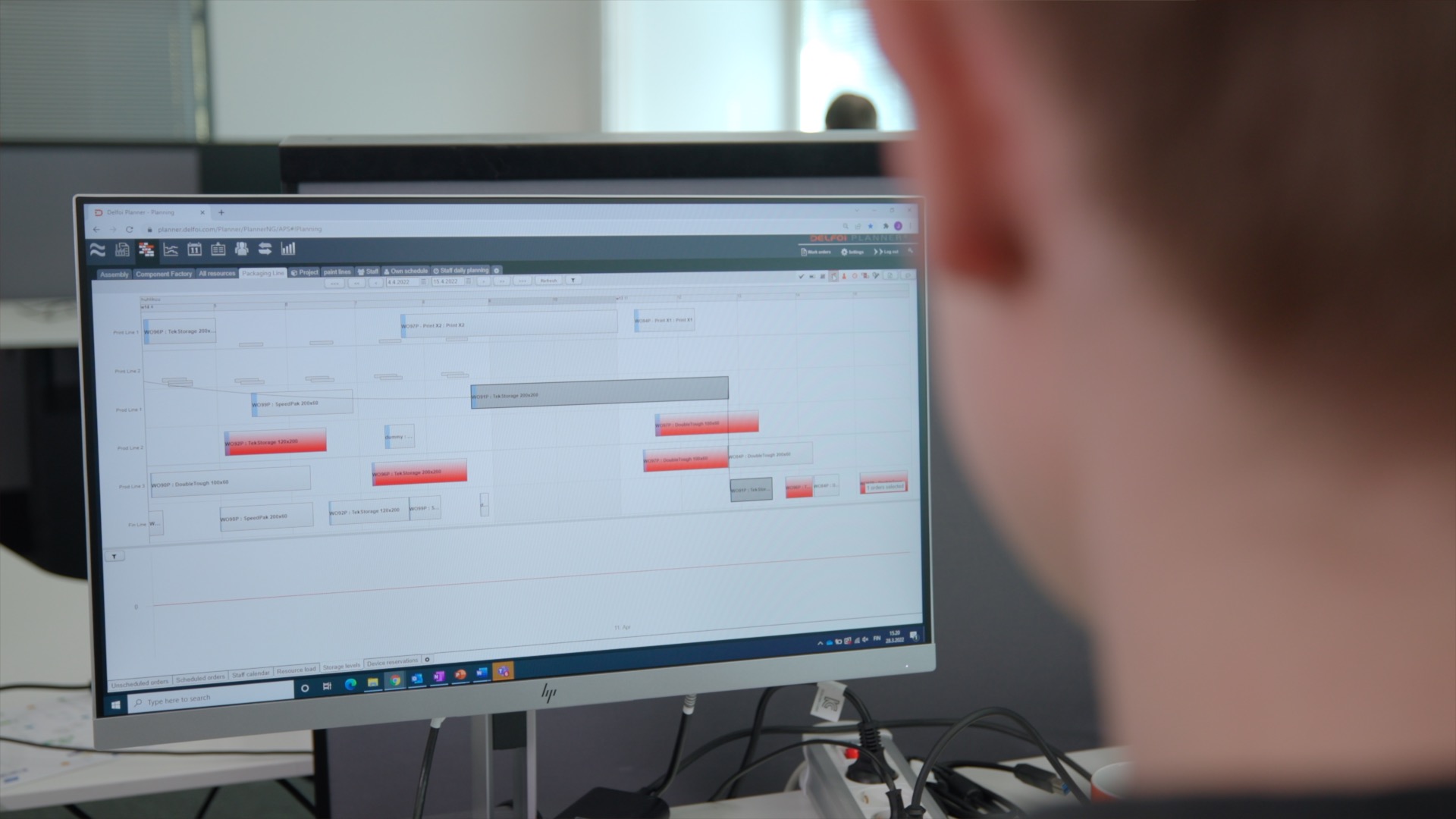
The solution transforms how manufacturers approach production planning within the NetSuite ecosystem. While NetSuite provides excellent financial management, inventory tracking, and basic work order functionality, Delfoi Planner adds the manufacturing intelligence needed for complex scheduling scenarios. This includes drag-and-drop Gantt charts for visual planning, what-if scenario modelling, and real-time capacity analysis that manufacturing operations require.
We designed this integration specifically for NetSuite users who need more sophisticated production planning while maintaining their investment in NetSuite’s comprehensive business management platform. The result is a unified system where financial data, inventory levels, and production schedules work together seamlessly.
How does the integration between Delfoi Planner and NetSuite actually work?
The integration operates through real-time data synchronisation between NetSuite’s ERP modules and Delfoi Planner’s advanced planning system via certified APIs and SuiteApp architecture. Bills of materials, routings, work orders, resource calendars, and inventory levels flow automatically between systems, ensuring planning decisions are based on current NetSuite master data.
This technical connection eliminates manual data entry and reduces the risk of planning with outdated information. When you create or modify work orders in NetSuite, they appear immediately in Delfoi Planner’s visual scheduling environment. Similarly, production confirmations and progress updates made through Delfoi’s shop-floor interface automatically update work order statuses in NetSuite.
The cloud-based architecture means both systems operate in the same SaaS environment, providing consistent performance and reliability. Setup involves configuring data mapping between NetSuite fields and Delfoi planning parameters, establishing user permissions, and defining which production data should synchronise in real time versus batch updates.
This approach maintains NetSuite as your single source of truth for business data while giving planners the advanced tools they need for effective production scheduling and optimisation.
What specific NetSuite limitations does Delfoi Planner address for manufacturers?
NetSuite’s standard manufacturing capabilities focus on work order management and inventory tracking but lack the visual scheduling and capacity optimisation tools that complex manufacturing operations require. Delfoi Planner for NetSuite specifically addresses these gaps by adding sophisticated production planning capabilities that NetSuite doesn’t provide natively.
The most significant limitation is NetSuite’s approach to capacity planning. While NetSuite can track resource availability, it doesn’t offer visual capacity analysis or the ability to optimise schedules across multiple constraints simultaneously. Manufacturers often resort to spreadsheets for actual production planning, losing the benefits of integrated data.
Delfoi Planner transforms this by providing drag-and-drop scheduling boards where planners can visualise workloads, identify bottlenecks, and optimise production sequences in real time. The system considers material availability, resource capacity, and delivery requirements simultaneously—something NetSuite’s standard functionality cannot achieve.
Another key enhancement is scenario planning. NetSuite shows current work order status but doesn’t support what-if analysis for different production strategies. Our solution enables planners to test alternative schedules, compare outcomes, and implement the most effective approach while maintaining full integration with NetSuite’s financial and inventory systems.
Which manufacturing processes benefit most from Delfoi Planner’s NetSuite integration?
Complex manufacturing environments with multiple production resources and varying order priorities gain the most value from combining NetSuite ERP with Delfoi Planner’s advanced scheduling capabilities. This includes make-to-order manufacturers, job shops, and facilities managing diverse product lines with different routing requirements.
Operations involving multi-step production processes particularly benefit from the visual scheduling and optimisation features. When production involves sequential operations across different work centres, the ability to see the entire production flow and identify potential conflicts becomes essential. Traditional ERP scheduling often misses these interdependencies.
Demand-driven manufacturing scenarios also see significant improvements. Companies dealing with changing customer priorities, rush orders, or supply chain disruptions need the agility to reschedule quickly while maintaining delivery commitments. The drag-and-drop interface makes rapid replanning possible without losing sight of capacity constraints or material availability.
Manufacturers with shared resources across multiple product lines find particular value in the capacity-balancing features. The system helps optimise resource utilisation while ensuring each product line meets its delivery requirements—a complex balancing act that standard NetSuite functionality cannot handle effectively.
The combination works exceptionally well for growing manufacturers who need more sophisticated planning capabilities but want to maintain NetSuite’s comprehensive business management features. Rather than replacing their ERP investment, they enhance it with specialised manufacturing intelligence that scales with their operational complexity.