Your NetSuite production planning system has served your manufacturing operations well, but subtle warning signs might indicate it’s time for an upgrade. As production demands evolve and market pressures intensify, even robust ERP systems can reach their operational limits in specific areas such as advanced scheduling and real-time production optimisation.
Manufacturing efficiency depends heavily on having the right production planning system in place. When NetSuite production planning begins to show strain, the impact ripples through your entire operation—from shop floor productivity to customer satisfaction. Recognising these signs early allows you to address limitations before they significantly affect your bottom line.
This guide explores five critical indicators that suggest your current NetSuite setup might benefit from enhanced production planning capabilities. We examine how these challenges manifest in daily operations and explore practical approaches to address them, helping you make informed decisions about your manufacturing planning upgrade needs.
Frequent manual interventions disrupting workflow
When production planners spend considerable time manually adjusting schedules, correcting capacity allocations, or overriding system recommendations, it signals that your production planning system is not fully aligned with your operational reality. These frequent interventions create a cascade of inefficiencies that extend far beyond the planning department.
Manual corrections typically emerge when the system lacks sophisticated algorithms to handle complex scheduling scenarios. Your planners might find themselves constantly adjusting for machine changeover times, skill-based resource constraints, or multi-level priority conflicts that the standard NetSuite production planning module does not automatically optimise. Each manual intervention requires time to analyse, implement, and communicate across departments.
The hidden costs accumulate quickly. Planners spend valuable time on repetitive adjustments rather than strategic planning activities. Production teams receive frequent schedule changes, leading to confusion and reduced productivity. Quality control processes may be rushed when last-minute manual changes compress timelines.
Manual interventions often indicate that your planning system is working with incomplete logic rather than comprehensive production intelligence.
Consider tracking the percentage of production orders that require manual schedule adjustments after initial planning. If this figure exceeds 30–40%, your system likely needs enhanced manufacturing efficiency capabilities. Advanced planning solutions can integrate with NetSuite while providing sophisticated scheduling algorithms that significantly reduce the need for manual intervention.
Limited real-time visibility into production status
Production visibility gaps create blind spots that compromise decision-making across your entire manufacturing operation. When managers cannot access current work-in-progress status, actual versus planned production rates, or real-time bottleneck information, they are essentially navigating complex production challenges without adequate instrumentation.
Standard NetSuite implementations often rely on periodic updates rather than continuous data flow from the shop floor. This means production status information might be hours or even days behind actual conditions. By the time problems surface in reports, they have already impacted delivery schedules, inventory levels, and customer commitments.
The ripple effects extend throughout your organisation. Sales teams cannot provide accurate delivery dates to customers. Purchasing decisions are based on outdated production forecasts. Quality issues are not identified quickly enough to prevent larger batches from being affected. Maintenance scheduling becomes reactive rather than predictive.
Real-time visibility enables proactive management rather than reactive firefighting. Modern production planning solutions can complement NetSuite by providing live dashboards that show actual production progress, resource utilisation, and emerging bottlenecks. This transparency allows managers to make informed decisions quickly, whether that means reallocating resources, adjusting priorities, or communicating realistic timelines to stakeholders.
Manufacturing organisations increasingly require the ability to respond to disruptions within hours rather than days. Without real-time production visibility, your competitive responsiveness remains constrained by information delays that may no longer be acceptable in your market environment.
Inflexible scheduling that cannot adapt to changes
Static production schedules become a liability when your manufacturing environment demands agility. If your current NetSuite production planning struggles to accommodate rush orders, equipment breakdowns, or sudden material shortages without extensive manual rework, you are experiencing the limitations of inflexible scheduling systems.
Modern manufacturing faces constant variability. Customer demands shift unexpectedly. Equipment requires unplanned maintenance. Suppliers deliver materials late or early. Staff availability changes due to illness or training requirements. Rigid planning systems treat these variations as exceptions rather than normal operational conditions, requiring planners to essentially rebuild schedules from scratch.
The business impact compounds over time. Delivery commitments become unreliable because schedules cannot quickly adapt to new realities. Resource utilisation suffers as the system cannot efficiently rebalance workloads when disruptions occur. Customer satisfaction declines when promised delivery dates frequently change due to scheduling inflexibility.
| Scheduling Challenge | Rigid System Response | Flexible System Response |
|---|---|---|
| Rush order insertion | Manual schedule reconstruction | Automatic priority-based rescheduling |
| Equipment breakdown | Complete replanning required | Dynamic resource reallocation |
| Material delay | Cascading manual adjustments | Intelligent dependency management |
Advanced scheduling solutions can work alongside NetSuite to provide dynamic production scheduling that treats change as a normal operating condition rather than an exception. These systems use sophisticated algorithms to evaluate multiple scheduling scenarios quickly and automatically propose optimal adjustments when disruptions occur.
Integration challenges with other business systems
Data silos between production planning and other critical business functions create operational friction that impacts overall performance. When your NetSuite production planning does not seamlessly communicate with inventory management, procurement, customer relationship management, or quality control systems, information gaps emerge that compromise decision-making across departments.
Integration challenges manifest in various ways. Production planners might work with outdated inventory information, leading to schedules based on unavailable materials. Procurement teams may not receive timely updates about changed production requirements, resulting in excess inventory or material shortages. Customer service representatives cannot provide accurate delivery information because they lack visibility into current production status.
These disconnects create inefficiencies that compound throughout your operation. Staff spend time manually transferring information between systems. Data accuracy suffers due to multiple entry points and timing differences. Strategic decisions are delayed because comprehensive information is not readily available in integrated formats.
System integration becomes increasingly critical as manufacturing operations grow more complex. Modern production planning solutions address this by providing robust APIs and pre-built connectors that facilitate smooth data flow between NetSuite and other business systems. This integration enables automated data synchronisation, reducing manual effort while improving information accuracy.
Consider evaluating how much time your team spends manually coordinating information between systems. If staff regularly export data from one system to import into another, or if departments frequently request production status updates because they cannot access current information directly, your integration capabilities may need enhancement. Solutions that complement NetSuite can provide unified interfaces that bring together production, inventory, and business data in coherent, actionable formats.
Inadequate capacity planning and resource optimisation
Effective capacity planning requires sophisticated analysis of multiple constraints simultaneously—machine availability, workforce skills, material flow, and quality requirements. When your current NetSuite production planning provides limited visibility into capacity bottlenecks or cannot optimise resource allocation across complex constraint matrices, production efficiency suffers significantly.
Basic capacity planning often focuses on individual resources rather than comprehensive system-wide optimisation. This approach misses opportunities to balance workloads efficiently, identify potential bottlenecks before they impact production, or maximise throughput by intelligently sequencing orders based on resource requirements and availability patterns.
The operational consequences become apparent through various symptoms. Some resources remain consistently overloaded while others are underutilised. Delivery promises are frequently missed because capacity constraints were not properly evaluated during planning. Production costs remain higher than necessary because the system cannot identify opportunities for efficiency improvements through better resource allocation.
Advanced capacity planning considers multiple variables simultaneously to optimise resource utilisation. This includes evaluating setup times, skill requirements, maintenance schedules, and quality considerations when determining optimal production sequences. Modern planning solutions can model complex scenarios and identify improvement opportunities that are not apparent through manual analysis.
Effective capacity planning transforms resource constraints from limiting factors into competitive advantages through intelligent optimisation.
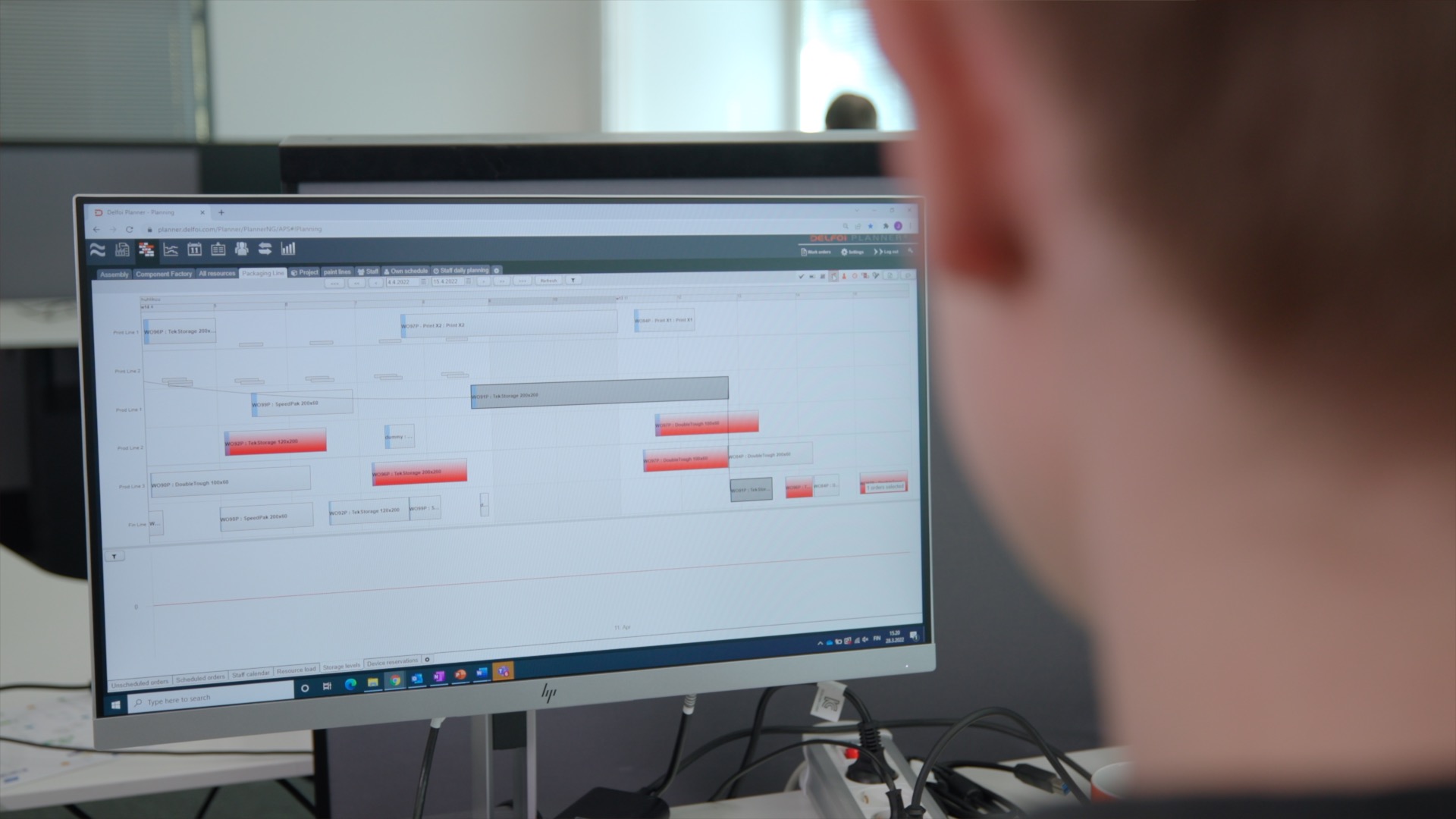
Manufacturing organisations benefit from planning tools that can simulate different production scenarios and quantify the impact of various decisions on overall capacity utilisation. Solutions such as Delfoi Planner for NetSuite provide these capabilities through integrated optimisation algorithms that work with your existing NetSuite data while offering enhanced capacity planning functionality. These tools enable planners to evaluate what-if scenarios quickly and make data-driven decisions that improve overall manufacturing efficiency and resource optimisation.
Recognising these signs early allows you to address production planning limitations before they significantly affect your competitive position. Whether through enhanced NetSuite configurations or complementary planning solutions, investing in improved production planning capabilities typically delivers measurable returns through increased efficiency, better resource utilisation, and improved customer satisfaction.