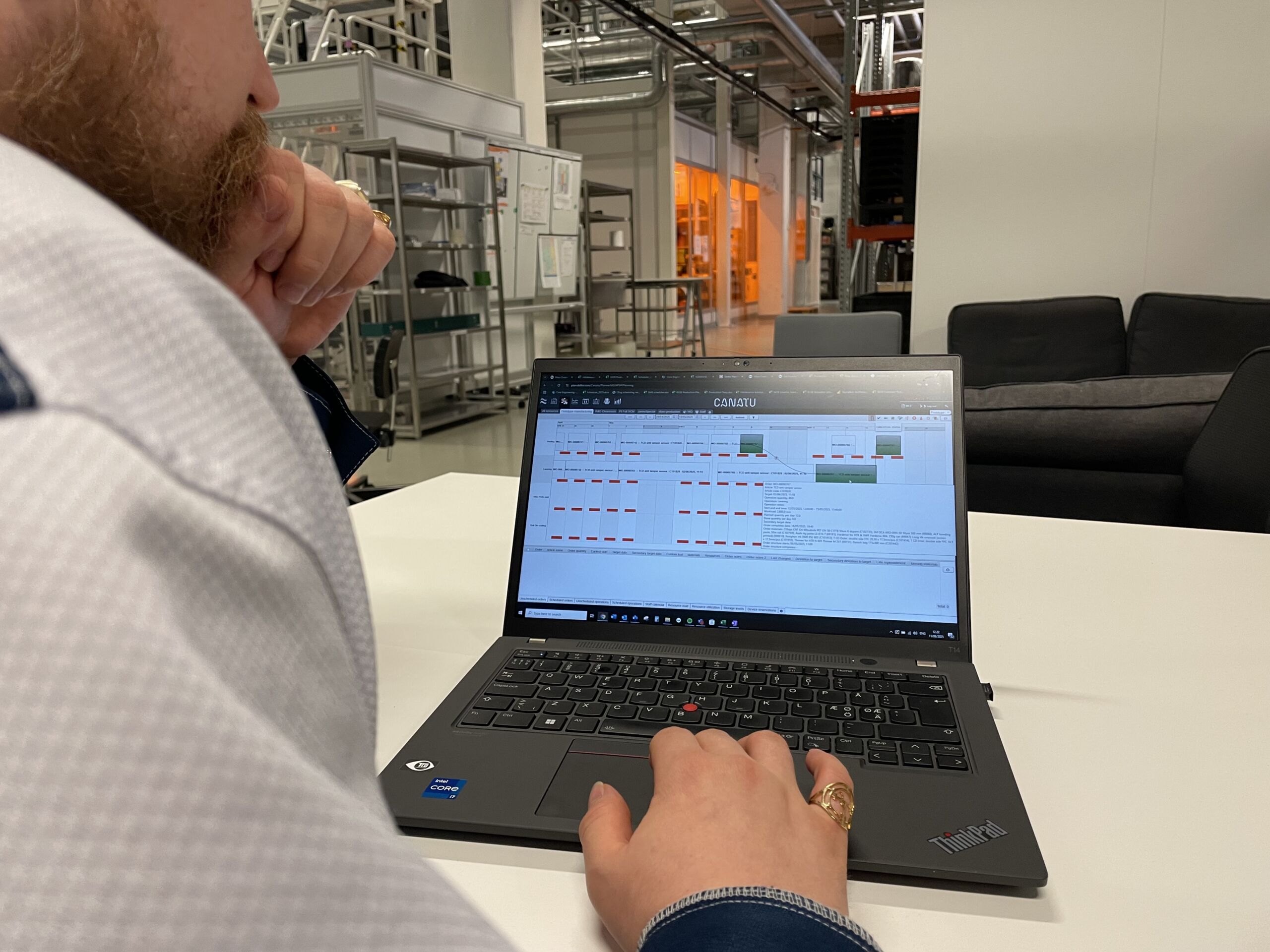
Production planning plays a crucial role in enhancing a company’s competitive advantage by optimizing resource allocation, improving production timelines, and reducing costs. In industries like manufacturing and healthcare, strategic planning ensures that resources are used efficiently, timelines are adhered to, and expenses are minimized. This leads to improved operational transparency and flexibility, allowing businesses to respond effectively to market changes and customer demands, thus maintaining a competitive edge.
What is production planning and why is it important?
Production planning is a strategic process that involves the scheduling, allocation, and management of resources to meet production goals efficiently. It’s significant because it ensures that resources are optimally utilized, production timelines are maintained, and costs are minimized. In manufacturing, it helps to ensure that each component is available when needed, while in healthcare, it ensures the availability of necessary equipment and personnel. This meticulous planning is essential for maintaining competitive advantage through efficient operations and cost management.
How does production planning enhance operational efficiency?
By streamlining processes and optimizing resource utilization, production planning significantly enhances operational efficiency. It reduces waste by ensuring that materials and resources are used optimally, and it improves process flow, leading to faster production cycles. The use of advanced planning systems like Delfoi Planner can further enhance efficiency by providing real-time visibility into production processes, enabling quick adjustments and reducing downtime.
A less visible but financially significant driver of inefficiency is lead time composition. In many manufacturing environments, only a small fraction of total lead time represents actual value-adding work — the rest is queue time, waiting for materials, or idle machine time. This ratio worsens as Work-in-Progress (WIP) accumulates on the shop floor: more jobs in the system means longer queues, which in turn extends lead times and ties up working capital. Constraint-based scheduling addresses this directly by synchronizing work order release with confirmed downstream capacity, so that jobs enter production only when the next stage is ready to receive them. The result is measurable lead time reduction, tighter WIP management, and a shop floor that is easier to plan and control — outcomes that translate directly into lower inventory carrying costs and improved cash flow for CFOs evaluating the financial case for better planning.
What are the key components of effective production planning?
Effective production planning involves several key components, including:
- Scheduling: Timely allocation of tasks and resources to ensure smooth production flow.
- Resource allocation: Efficient distribution of materials, labor, and equipment.
- Demand forecasting: Anticipating customer demand to align production accordingly.
- Inventory management: Maintaining optimal inventory levels to meet production needs while minimizing costs.
These elements work together to create a robust production strategy that boosts competitiveness by reducing inefficiencies and improving responsiveness to market demands.
How can production planning improve competitiveness in manufacturing?
In manufacturing, strategic production planning enhances competitiveness by improving flexibility and reducing lead times. Companies can respond more swiftly to changes in market demand and customer preferences, maintaining high service levels. By optimizing operations and reducing waste, manufacturers can lower costs, offering competitive pricing without sacrificing quality. Advanced planning solutions enable manufacturers to adapt quickly, supporting continuous improvement and innovation.
The specific benefits of structured production planning vary considerably by industry context. Different production environments face distinct planning constraints, and recognizing these differences is the first step toward meaningful improvement:
- Automotive supply chain tiers: Discrete manufacturing scheduling must account for sequence-dependent setups, where the order in which jobs run directly affects changeover time and line utilization. Poor sequencing accumulates cost quickly at scale.
- Aerospace and defense: Manufacturers managing long-lead-time components and strict compliance windows need planning systems that can model material availability and regulatory constraints simultaneously, rather than treating them as separate problems.
- Engineer-to-order environments: Capital equipment and industrial machinery producers must balance custom job routing with shared machine capacity — a challenge where finite scheduling provides a clear financial advantage over spreadsheet-based approaches.
- High-mix, low-volume production: Electronics and specialty component manufacturers benefit from optimizing changeover frequency and batch sizing, where high-mix production planning directly reduces the cost per unit and shortens customer lead times.
What challenges might companies face in implementing production planning?
Implementing production planning systems can be challenging due to several factors:
- Technological barriers: Integrating new systems with existing infrastructure can be complex.
- Resistance to change: Employees may be reluctant to adopt new processes and tools.
- Data integration issues: Ensuring all relevant data is accurately captured and utilized can be difficult.
Overcoming these challenges requires careful planning, stakeholder engagement, and often, expert guidance to ensure successful implementation.
How can technology aid in overcoming production planning challenges?
Advanced technologies like AI, IoT, and data analytics play a crucial role in overcoming production planning challenges. AI can optimize scheduling and resource allocation by analyzing vast amounts of data, IoT devices provide real-time data for improved decision-making, and data analytics offer insights into production trends and performance. Our solutions leverage these technologies to enhance planning efficiency and accuracy, helping businesses streamline operations and improve competitiveness.
Mastering Production Planning: Next Steps
For CFOs and operational leaders weighing the financial case for a new planning system, one of the most important questions is how to validate the investment before committing to full deployment. Leading manufacturers address this by running a structured proof-of-concept (PoC) — testing the solution against real company data, actual machine constraints, and representative planning scenarios before rollout. This production planning software evaluation approach allows finance and operations teams to see concrete outputs, such as schedule feasibility, lead time projections, and capacity utilization rates, and to quantify the expected return before any large-scale organizational change is required. It significantly reduces the financial and operational risk associated with adopting a new planning platform.
To fully capitalize on the benefits of production planning, businesses should:
- Start with a scoped pilot or PoC: Validate the planning solution against your own production data and constraints to confirm measurable outcomes — such as lead time reduction and improved capacity utilization — before committing to full implementation.
- Invest in change management and staff training: Technology adoption succeeds when teams understand both the tools and the reasoning behind new processes. Structured training and clear communication reduce resistance and accelerate time-to-value.
- Build data-driven continuous improvement into the process: Use real-time planning data to refine scheduling parameters, identify recurring bottlenecks, and make incremental gains that compound over time into significant competitive and financial advantage.
By focusing on these areas, companies can ensure they remain agile and competitive in a rapidly changing market. Embracing technology and strategic planning will not only enhance current operations but also pave the way for future growth and innovation.