Integrating ERP systems into production planning and control enables manufacturers to gain real-time insights, streamline communication, and enhance decision-making. By unifying disparate production data into a centralized platform, ERP integration provides immediate visibility into operations, resources, and bottlenecks. This comprehensive transparency allows manufacturers to quickly identify inefficiencies, respond proactively to demand fluctuations, and optimize the manufacturing process, ultimately driving productivity, reducing costs, and improving overall operational efficiency.
What is ERP integration in manufacturing?
ERP integration in manufacturing involves connecting various production systems, processes, and data streams into a unified software environment. By integrating key aspects such as inventory management, scheduling, human resources planning, and real-time production insights, ERP systems create a cohesive view of the entire production flow. This interconnectedness ensures that every department shares accurate, timely information, enabling smoother and more efficient manufacturing operations, optimized workflows, and reduced operational disruptions.
Why does ERP integration enhance production visibility?
Enhanced production visibility is one of the primary advantages of ERP integration. By centralizing critical production data, manufacturers gain immediate access to real-time production insights, allowing them to monitor operations continuously and react promptly to changing conditions. ERP integration streamlines communication between departments, reduces information silos, and empowers informed decision-making. Manufacturers can better plan resource allocation, track performance metrics, and readily adapt to market shifts or unexpected disruptions with minimal delay.
How can ERP integration reduce production bottlenecks?
ERP integration effectively identifies and mitigates bottlenecks by providing comprehensive visibility into the manufacturing process. The following are concrete examples of common production issues and ERP solutions:
- Material shortages: Real-time inventory tracking highlights supply deficits early, allowing planners to adjust procurement schedules proactively.
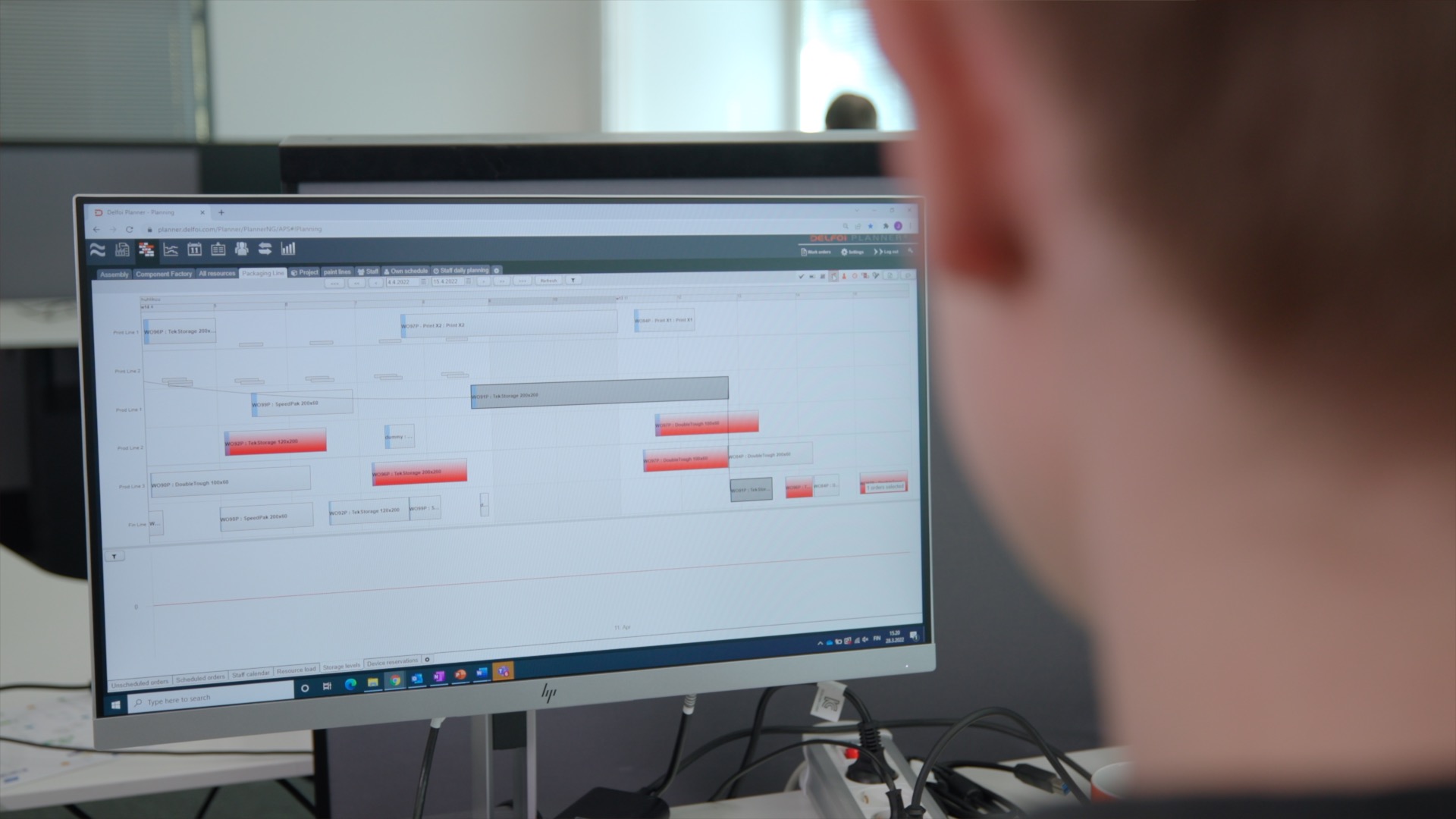
- Resource overload: Finite scheduling algorithms, such as those offered in Delfoi Planner, balance workloads across available resources, preventing over-allocation and downtime.
- Human resource constraints: HR planning modules identify skill gaps and availability issues, enabling managers to schedule shifts and allocate labor efficiently.
By addressing these common bottlenecks, ERP integration significantly improves productivity, reduces delays, and enhances delivery reliability.
When should a business consider integrating ERP into their production process?
A business should consider ERP integration into its manufacturing processes when encountering these key indicators:
- Frequent delays or missed delivery deadlines due to poor scheduling visibility
- Difficulty tracking real-time production status across different production lines or facilities
- High levels of work-in-progress (WIP) inventory or excessive lead times
- Reliance on manual or spreadsheet-based scheduling methods that cannot scale with business growth
- Persistent communication breakdowns between departments, resulting in operational inefficiencies
ERP integration helps resolve these issues, delivering immediate and sustainable improvements in production efficiency and market responsiveness.
What are the best practices for successful ERP integration in production?
To ensure successful ERP integration, manufacturers should adhere to the following best practices:
- Clearly defined goals: Identify specific visibility, efficiency, or productivity goals before implementation.
- Engage stakeholders early: Involve key users and stakeholders from all departments to ensure acceptance and effective utilization of the ERP system.
- Choose user-friendly solutions: Select intuitive, visual ERP solutions, such as Delfoi Planner, that facilitate user adoption and minimize resistance.
- Prioritize integration: Ensure smooth interoperability between the ERP solution and existing systems (e.g., SAP S/4HANA, Dynamics 365) to leverage existing IT investments and data resources.
- Ongoing training and support: Provide continuous training and support to users, allowing them to maximize ERP capabilities and respond effectively to changes.
By following these practices, businesses can significantly enhance visibility, streamline production, and avoid common ERP integration pitfalls.
Applying ERP integration knowledge effectively
Implementing ERP integration requires careful planning, strategic execution, and ongoing improvement. To effectively leverage ERP integration:
- Evaluate current production processes to pinpoint areas needing improved visibility.
- Select ERP solutions designed specifically for manufacturing, with proven capabilities in production scheduling, HR planning, and real-time data analysis.
- Utilize advanced scheduling algorithms to optimize resource management and reduce bottlenecks.
- Establish regular reviews to measure ERP performance, identifying further opportunities for process refinement.
The continuous evolution of ERP technologies like Delfoi Planner ensures manufacturers can adapt to future challenges, maintain competitiveness, and sustainably improve productivity through ongoing integration and optimization.