For manufacturing operations under pressure to reduce costs and improve output, production scheduling is one of the most direct levers available. When manufacturing production scheduling is done well, it aligns machine capacity, labor availability, and material supply into a coherent, executable plan that eliminates waste before it occurs. When it is done poorly, the consequences compound quickly: overtime climbs, inventory builds up, and deliveries slip. This article examines how to reduce costs in manufacturing through better scheduling practices, what problems poor scheduling creates, and how modern scheduling tools make precision planning achievable at scale.
How Can Effective Product Scheduling Lower Manufacturing Costs?
Product scheduling involves organizing and timing each stage of the manufacturing process to maximize efficiency and resource utilization. By accurately aligning workloads with resource availability, manufacturers can eliminate unnecessary downtime, reduce inventory holding costs, and prevent costly delays. Improving scheduling practices can reduce overtime expenses by evenly distributing workload and avoiding production bottlenecks, which translates directly into lower labor costs on the income statement. Precise scheduling also supports better material planning, minimizing excess inventory and the working capital tied up in it.
Finite vs. Infinite Scheduling: Which Approach Fits Your Operation?
Not all scheduling methodologies produce equally executable plans. Understanding the difference between finite and infinite scheduling is essential for any organization evaluating how to bring greater discipline and cost control to its production planning process.
Finite scheduling: working within real constraints
Finite scheduling builds production plans that respect the actual capacity limits of machines, labor, and materials. Rather than assuming unlimited availability, the system sequences jobs based on what is genuinely possible within a given time window. This makes finite scheduling the standard approach for shop-floor-level planning in complex manufacturing environments, where overcommitting capacity is a direct cause of overtime costs, missed deliveries, and unplanned disruptions. From a financial perspective, a finite schedule is a more reliable basis for cost forecasting because it reflects what production can actually achieve.
Infinite scheduling and where it falls short
Infinite scheduling ignores capacity constraints and is typically used in high-level demand planning, such as in MRP systems, to project future material and resource requirements. While useful for visibility at the planning horizon, it produces unrealistic execution plans when capacity is tight. Acting on an infinite schedule without adjustment often results in overloaded workcenters, expediting costs, and the kind of last-minute firefighting that erodes both productivity and margin.
Advanced manufacturing production scheduling systems address this by combining both layers: infinite scheduling provides demand visibility across the planning horizon, while finite scheduling translates that demand into executable, constraint-aware shop-floor sequences. The result is a planning process that is both strategically informed and operationally realistic.
Top Advantages of Implementing Effective Product Scheduling
Well-executed scheduling does more than keep production running smoothly. Each of the core benefits it delivers has a direct financial counterpart, from reduced labor costs to improved cash flow and capital efficiency.
Reduced operational costs
Optimized job sequencing reduces machine setup times and prevents idle labor between jobs, lowering the cost per unit produced. When workloads are distributed evenly and bottlenecks are resolved before they escalate, overtime requirements fall and resource expenditure becomes more predictable, which makes budgeting and cost control more reliable.
Minimized downtime
Effective scheduling allows maintenance windows to be planned during periods of lower demand, avoiding unplanned stoppages that halt production and generate emergency repair costs. Reducing unplanned downtime protects throughput and keeps fixed asset costs from being wasted on idle equipment.
Improved resource utilization
Accurate schedules balance workload across shifts and workcenters, ensuring that labor, machinery, and materials are deployed where they are needed rather than sitting idle or being overworked. Better utilization of existing capacity can delay or reduce the need for new capital investment in machinery, improving return on assets already in place.
Enhanced production throughput
Streamlined operations result in higher output from the same resource base, which shortens lead times and improves the organization’s ability to accept new orders without expanding capacity. Shorter lead times also reduce work-in-progress inventory levels, releasing working capital that would otherwise be tied up in partially completed goods.
The Importance of Effective Scheduling in Manufacturing Operations
Scheduling plays a pivotal role in manufacturing by ensuring operational predictability and efficiency. An effective schedule provides clarity, aligning production activities to business goals, deadlines, and quality standards. It enables streamlined processes, significantly reduces waste through improved material management, and ensures timely completion of orders. Moreover, scheduling facilitates proactive problem-solving and helps manufacturers maintain consistently high-quality outputs, thereby enhancing customer satisfaction and strengthening competitive advantage.
Common Issues Caused by Poor Product Scheduling in Manufacturing
Poorly managed product scheduling can lead to numerous operational and financial issues, including:
- Increased expenses: Inefficient allocation of resources and overtime costs escalate operational expenditures.
- Production delays: Misalignment between resource availability and production needs results in missed deadlines and delayed deliveries.
- Resource wastage: Improper scheduling causes underutilization or overuse of machinery, labor, and materials, leading to wasteful spending.
- Lower customer satisfaction: Delays and inconsistencies negatively impact customer trust, loyalty, and overall brand reputation.
Leveraging Technology for Improved Product Scheduling in Manufacturing
What problems does production scheduling software solve?
Production scheduling software is designed to address the operational problems that manual or spreadsheet-based planning cannot reliably solve. Each of these problems carries a financial cost, and resolving them systematically is where the return on a scheduling software investment is realized.
- Capacity conflicts: the software identifies overloaded workcenters and redistributes jobs before the conflict causes a delay.
- Last-minute re-planning: when a machine breaks down or a priority order arrives, the system generates a revised schedule automatically, reducing the cost of disruption and expediting.
- Poor material synchronization: by linking the schedule to inventory and procurement data, the software prevents jobs from starting when required materials are not yet available, cutting unnecessary work-in-progress accumulation.
- Limited visibility: real-time dashboards show planners the current status of every job, workcenter, and resource in a single view, enabling faster, better-informed decisions.
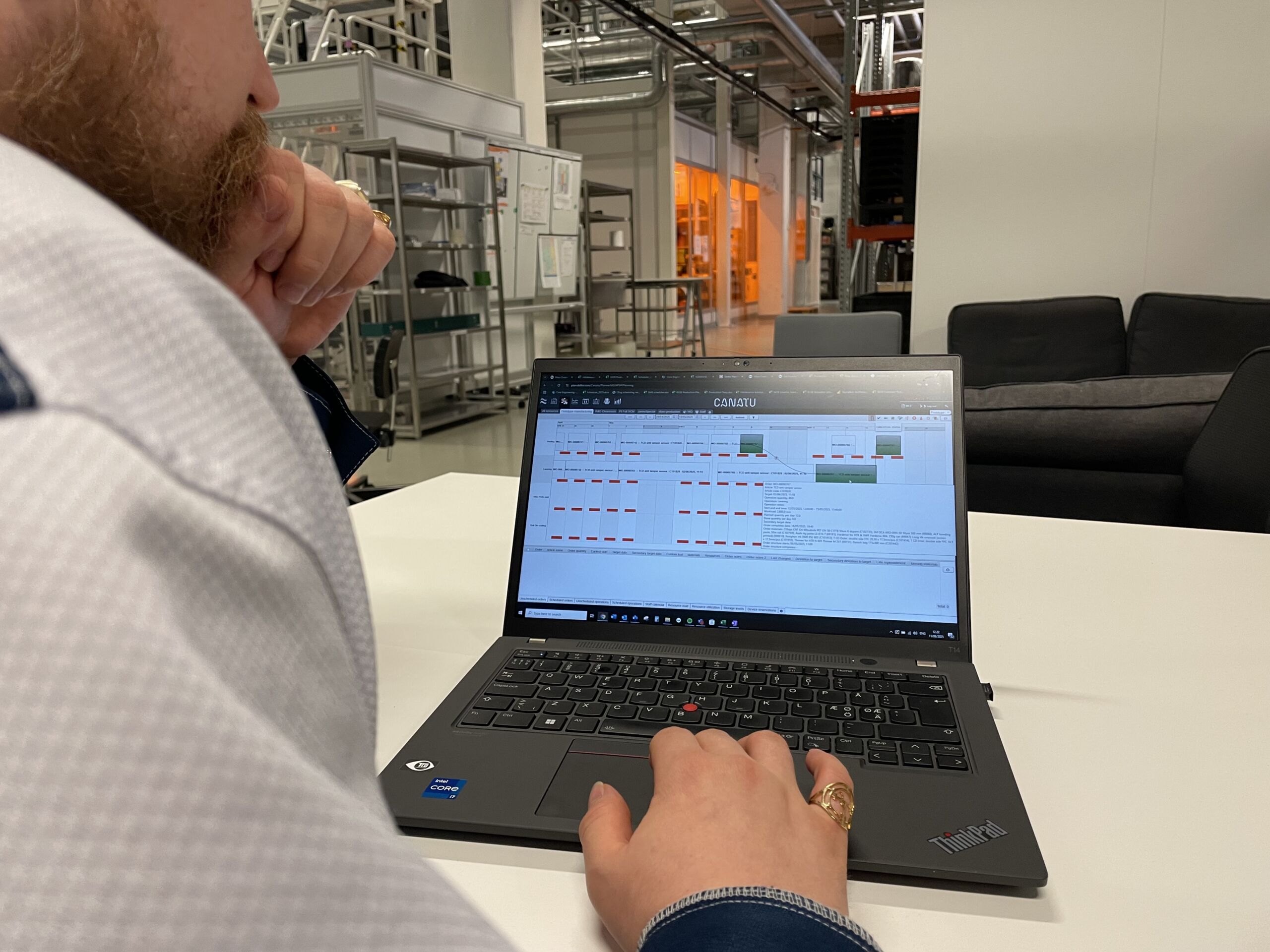
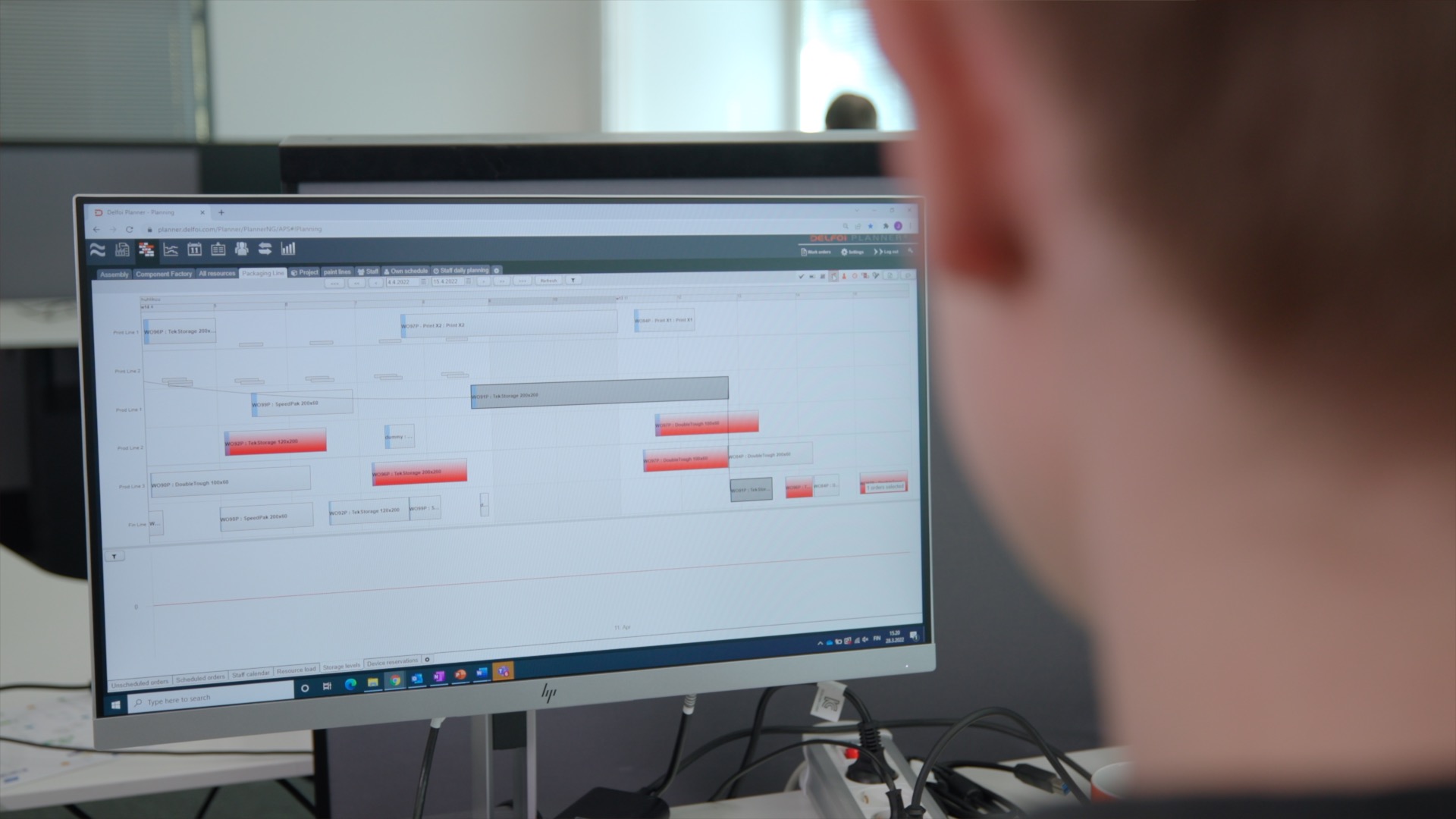
Technological advancements significantly boost scheduling accuracy, responsiveness, and cost management. Modern scheduling tools, such as automation software, AI-driven solutions, and predictive analytics, empower manufacturers to create precise, dynamic schedules tailored to real-time conditions. For example, AI-driven scheduling systems can predict potential bottlenecks and proactively adjust resource allocation, ensuring smooth operations. Solutions like Delfoi Planner leverage advanced planning capabilities, providing real-time visibility, intuitive user interfaces, and seamless integration with ERP systems, helping manufacturers stay agile, efficient, and competitive.
Key Insights for Effective Product Scheduling in Manufacturing
Effectively implemented product scheduling transforms manufacturing operations, enabling organizations to reduce costs, improve efficiency, and deliver consistently high-quality outcomes. The following practices are the ones that consistently separate high-performing operations from those still absorbing the financial cost of preventable scheduling failures.
Use scheduling software built for your environment
General-purpose planning tools often lack the finite scheduling logic needed for complex shop floors, leading to plans that look feasible on paper but break down in execution. Purpose-built scheduling systems provide the constraint awareness and real-time recalculation that manual planning cannot, and they also improve the return on existing investments in ERP, machinery, and production technology by making those assets easier to plan around and utilize fully.
Build real-time visibility into daily operations
Planners who can see the current state of every job and workcenter can intervene before a delay becomes a missed delivery, avoiding the revenue risk and customer retention costs that come with unreliable delivery performance. Real-time visibility also makes production-related cost forecasting more accurate, because the data feeding financial reports reflects what is actually happening on the floor.
Measure and improve schedule adherence over time
Tracking schedule attainment rate and analyzing the root causes of deviations creates a feedback loop that continuously improves planning accuracy. Over time, this reduces the frequency of costly disruptions and gives financial management a more stable, predictable cost base to work from.
Putting these practices into effect requires both the right process and the right tools. We have built our production planning solutions specifically for manufacturing environments where complexity, variability, and cost pressure make precise scheduling essential. If you are evaluating how to strengthen your scheduling capabilities, contact our experts today to discuss your specific operational challenges.